Decrease in Earned and Business Income in the First Quintile... "Impact of Elderly Influx"
Automobile Purchases Plummet 29%... Also Reduced Income in the Fifth Quintile
Household income in the fourth quarter of last year increased by 3.8%, marking six consecutive quarters of growth. However, earned income and business income for households in the first income quintile declined. In particular, earned income decreased for the first time in five years since 2019 based on fourth-quarter data. This was largely due to the influx of elderly poor households.
Household expenditures for the quarter rose by 2.5%, continuing an increase for 16 consecutive quarters. However, the rate of increase slowed. While spending on domestic and international group travel was notable, automobile purchases sharply declined. It was also assessed that household consumption was affected by political turmoil following the emergency martial law situation in December last year.
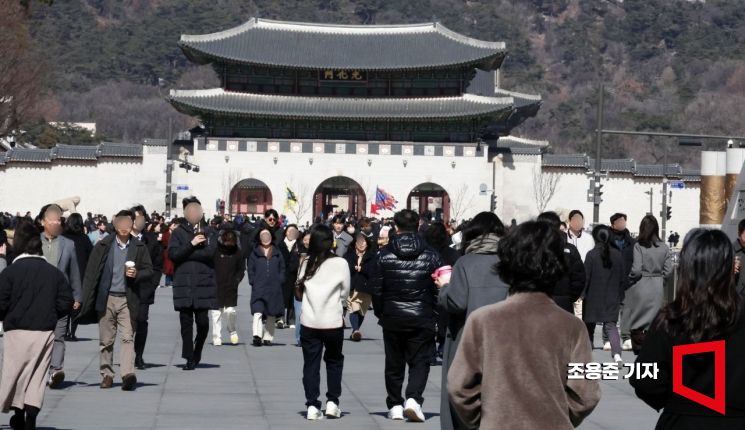
Decrease in Earned and Business Income in the First Quintile... "Impact of Elderly Influx"
According to the '2024 Fourth Quarter Household Trends Survey Results' released by Statistics Korea on the 27th, the average monthly income per household in the fourth quarter of last year was 5,215,000 KRW, a 3.8% increase compared to the same period the previous year. The average monthly income per household showed an increasing trend for six consecutive quarters since the third quarter of 2023 (3.4%). Real income adjusted for inflation was shown to have increased by 2.2% in the fourth quarter of last year.
Earned income, which accounts for the largest portion of household income, was 3,241,000 KRW, increasing by 2.3%, a lower growth rate compared to other income types. Although the upward trend has continued since the first quarter of last year (-1.1%), the rate of increase has gradually slowed. Business income was 1,091,000 KRW, up 5.5%, and transfer income increased by 5.6% to 709,000 KRW. This marks the third consecutive quarter in which earned, business, and transfer incomes all increased.
The average monthly income for households in the first quintile was 1,213,000 KRW, up 3.0%. However, when isolating earned income (295,000 KRW) within current income, it was found to have decreased by 4.3%. This marks the first negative growth in five years since 2019 (-6.2%) based on fourth-quarter data. Business income (140,000 KRW) also decreased significantly by 7.9%. The average monthly income for households in the fifth quintile increased by 3.7% to 11,199,000 KRW.
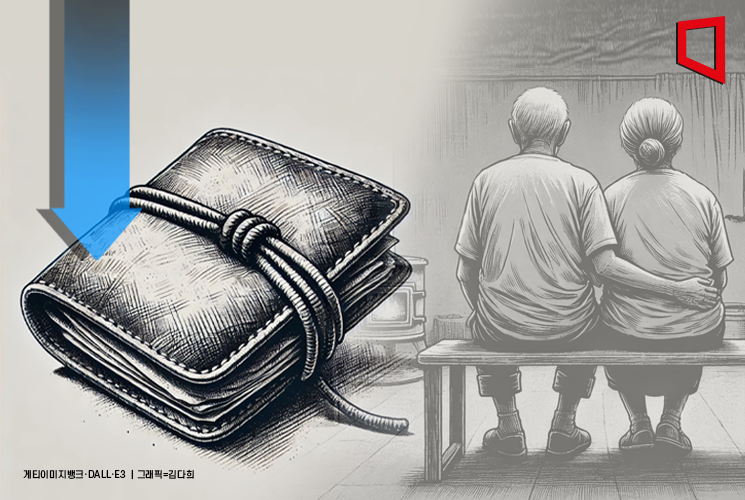
Lee Ji-eun, Director of Household Income and Expenditure Trends at Statistics Korea, said, "Income increased across all quintiles, but in the first quintile, earned and business incomes decreased due to an increase in elderly households." She also noted, "The influx of elderly households is not limited to the fourth quarter but is a continuous trend." Director Lee explained, "While the proportion of elderly is slightly increasing in other quintiles, it has risen particularly sharply in the first quintile."
The government evaluated that household income increased in the fourth quarter of last year due to wage growth and the expansion of the social safety net. The Ministry of Economy and Finance stated, "We will strengthen efforts to create jobs and stabilize prices to sustain the trend of household income growth," adding, "We will also make thorough efforts to support vulnerable groups such as small business owners."
Automobile Purchases Plummet 29%... Also Reduced Income in the Fifth Quintile
Household expenditures in the fourth quarter of last year were 3,910,000 KRW, a 2.5% increase compared to the same period the previous year. Consumption expenditures rose by 2.5% to 2,903,000 KRW, and non-consumption expenditures increased by 2.8% to 1,008,000 KRW. Consumption expenditures have increased for 16 consecutive quarters since the first quarter of 2021 (1.6%), marking the longest period of growth since related statistics began. However, the rate of increase was lower than in the first quarter (3.0%), second quarter (4.6%), and third quarter (3.5%) of last year.
Director Lee interpreted, "Durable goods items such as automobile purchases decreased among consumption expenditure items," adding, "This likely contributed to the slowdown in retail expenditure growth." She also pointed out that the political turmoil following the emergency martial law situation in December last year dampened consumer sentiment, saying, "The slowdown in the consumption expenditure growth rate itself likely had an impact."
Looking at consumption expenditures, housing, water, and utilities (7.6%), food and accommodation (5.1%), and recreation and culture (11.1%) increased. Within housing, water, and utilities, expenditures increased in actual housing costs such as monthly rent (12.9%). Director Lee explained, "During this period, the volume of monthly rent transactions and the price index increased, which had an impact." In food and accommodation, group travel expenses for domestic and international trips surged by 29.8%, making the figures stand out.
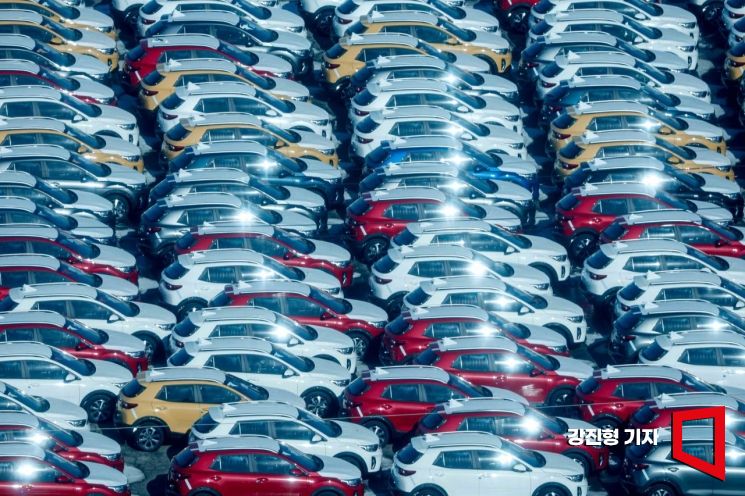
Consumption expenditures in transportation (-9.6%), household goods and services (-3.7%), and communications (-2.4%) decreased. In particular, automobile purchase expenditures in transportation plummeted by 29.0%, pulling down the overall figures. This is the lowest figure since 2021 (-29.7%) based on fourth-quarter data. Director Lee said, "Consumption expenditures in the fifth income quintile decreased, with a significant negative in transportation (-25.9%)," adding, "The decrease in automobile purchases had an impact."
The average monthly consumption expenditure per household last year was 2,890,000 KRW, a 3.5% increase. The highest proportions were food and accommodation (15.5%), food and non-alcoholic beverages (14.3%), housing, water, and utilities (12.2%), and transportation (11.6%). Compared to the previous year, food and accommodation (5.2%), housing, water, and utilities (6.5%), recreation and culture (7.9%), and food and non-alcoholic beverages (3.8%) increased. Real consumption expenditure rose by 1.2%. However, considering consumer price inflation, real consumption expenditures decreased in transportation (-2.9%), clothing and footwear (-1.8%), communications (-1.5%), and alcoholic beverages and tobacco (-3.0%).
© The Asia Business Daily(www.asiae.co.kr). All rights reserved.














