Average Price of a Dozen Eggs Soars by 237%
Trump Administration to Invest up to $1 Billion
to Stabilize Egg Prices
"Impact of Ongoing Avian Influenza Outbreaks"
Recently, as avian influenza (AI) has been spreading in the United States, causing egg prices to soar continuously, the Donald Trump administration has decided to invest up to $1 billion (approximately 1.43 trillion KRW) to stabilize egg prices.
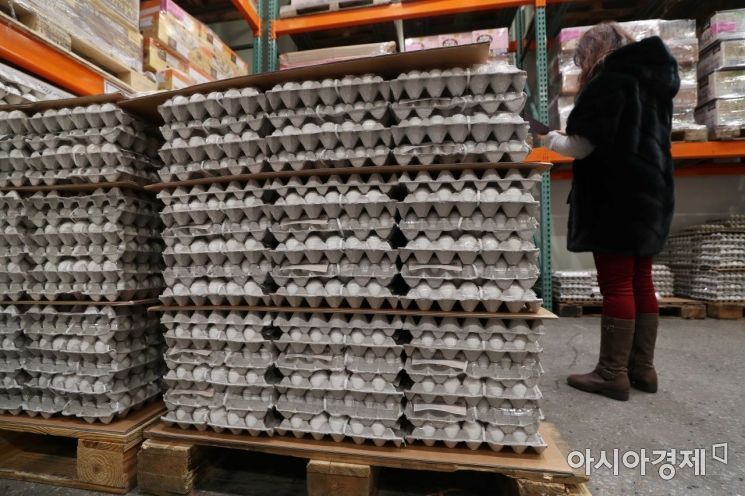
On the 26th (local time), Brook Rollins, U.S. Secretary of Agriculture, revealed this plan in an article titled "A Plan to Lower Egg Prices" published in the Wall Street Journal (WSJ).
Secretary Rollins stated, "During former President Biden's administration, grocery prices rose by more than 20%," adding, "The average price of a dozen eggs surged 237%, from $1.47 in January 2021 to $4.95 last month." He further pointed out, "Currently, consumers are facing egg prices (per dozen) exceeding $10."
He diagnosed, "This is partly due to the ongoing outbreaks of highly pathogenic AI over the past two years, which have devastated U.S. poultry farms and disrupted egg supply." He also said, "The Trump administration takes this issue seriously and will announce a comprehensive strategy to combat AI," adding, "The Department of Agriculture will invest up to $1 billion to stop this crisis and make eggs affordable again."
According to the announcement by Secretary Rollins, the Department of Agriculture has devised five strategies to combat AI. First, it will provide a total of $500 million to poultry farms to implement infection prevention measures called 'Wildlife Biosecurity Assessment,' developed by the government. Additionally, $400 million will be allocated to farms that culled chickens due to AI to help them restore their farms and resume poultry farming. Up to $100 million will also be invested in AI vaccine and treatment research and development.

Furthermore, to increase egg supply, regulations such as the 'minimum space requirements for laying hens' applied in California will be relaxed, and it will be made easier for ordinary households to raise chickens in their backyards, according to Secretary Rollins. He also added that, in the short term, the administration will consider temporarily importing eggs from abroad to lower egg prices.
According to CBS News, since the outbreak of avian influenza in 2022, 148 million poultry, including chickens and ducks, have been culled in the United States. Egg shortages are even occurring in American grocery stores. According to the U.S. Consumer Price Index (CPI) released on the 12th, egg prices surged 15.2% month-over-month in January. Compared to a year ago, prices rose by 53%. The U.S. Department of Labor explained that the January egg price increase was the highest monthly rise since June 2015 and contributed two-thirds of the increase in household food prices in January.
As egg prices skyrocketed, the number of people raising chickens at home in the U.S. has increased. On the 15th, Axios, citing the latest data from the American Pet Products Association (APPA), reported that 11 million U.S. households were raising chickens in their backyards. In 2018, the estimated number of households raising chickens was 5.8 million. This means the number has nearly doubled in about six years. Additionally, companies have emerged that rent chickens or install chicken coops for individual households. They lend 2 to 4 hens, chicken feed, and feeding dishes for 5 to 6 months, allowing people to raise chickens in their backyards.
Amid concerns that the tariff war initiated by President Donald Trump could fuel inflation in the U.S., rising food prices such as eggs are expected to pose a burden on Trump, who pledged to control inflation. The WSJ pointed out in an article on the 13th, "Inflation, which helped President Trump's election, has now become a problem for him."
© The Asia Business Daily(www.asiae.co.kr). All rights reserved.


















