14-Day Public Review of the Draft Plan Until March 13
Strengthening the Role of Wangsimni Station and Efficient Land Use
Establishing Rational Management Measures for Large-Scale Sites
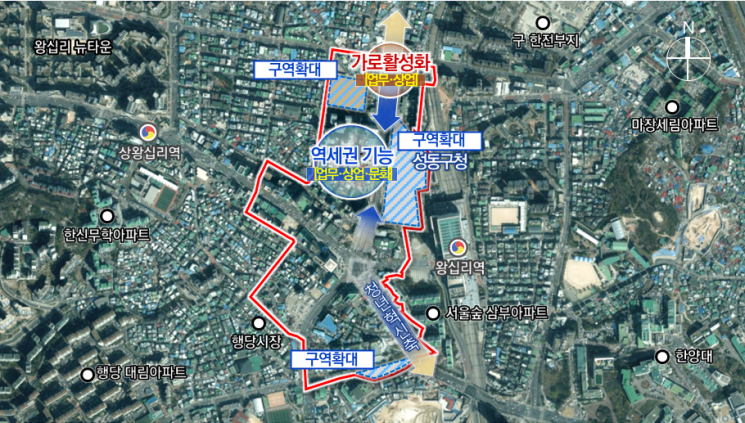
The Wangsimni area in Seongdong-gu is being developed as a metropolitan center with buildings reaching up to 300 meters in height.
Seongdong-gu (Mayor Jung Won-oh) will conduct a 14-day public review starting February 28 on the ‘Wangsimni Metropolitan Center District Unit Plan Decision (Amendment) (Draft).’ The ‘Wangsimni Metropolitan Center District Unit Plan’ covers a redevelopment draft for an area of 251,877㎡ around Wangsimni Station, including Haengdang-dong, Doseon-dong, Hongik-dong, and Ha Wangsimni-dong. It was first designated as a district unit plan area in 1999 and was reorganized in 2016 as the ‘Wangsimni Metropolitan Center District Unit Plan.’
As the transportation network expansion and development demand in the Wangsimni area increased, and in response to changes in local conditions and urban environment, the district established the ‘Wangsimni Metropolitan Center District Unit Plan Amendment (Draft)’ to supplement the existing plan and strengthen the metropolitan center functions around Wangsimni Station and to devise efficient land use management measures.
In particular, the plan actively reflects higher-level laws and related legal amendments such as the ‘2040 Seoul Urban Basic Plan’ and the ‘2040 Seongdong Urban Development Basic Plan,’ strengthening the role as a transportation hub with the opening of the Dongbuk Line light rail and the new GTX-C line scheduled for the first half of 2026.
The district plans to prioritize strengthening functions as a commercial, business, and cultural center and establishing the role of a metropolitan center by expanding the special planning (possible) zones around Seongdong-gu Office and the back streets of Gosan-ro. Considering the demand for large-scale site development, the target area has been expanded from 218,000㎡ to 251,877㎡ with tailored urban management measures proposed.
The district is promoting the ‘2040 Seongdong Urban Development Basic Plan,’ which encompasses four major leaps in economy, administration, education, and culture. The special planning zone around Seongdong-gu Office includes development guidelines allowing flexible mid- to short-term development with a maximum height of up to 300 meters and zone expansion. Following the revision of the floor area ratio system in Seoul in April last year, the plan aims to enable large-scale development by raising the standard and allowable floor area ratios and adjusting height plans.
The ‘Wangsimni Metropolitan Center District Unit Plan (Draft)’ can be viewed from February 28 to March 13 on the Seongdong-gu Office website’s public announcement section and at the Urban Planning Division of Seongdong-gu Office and the resident centers of Haengdang 1-dong, Wangsimni Doseon-dong, and Wangsimni 2-dong. If there are any opinions on the draft, they can be submitted in writing by visiting or faxing the Urban Planning Division of Seongdong-gu Office within the viewing period.
After the public review of the district unit plan (draft), the district will seek advice from the Seongdong Urban and Architectural Joint Committee and then apply to Seoul City for approval of the plan (draft). Jung Won-oh, Mayor of Seongdong-gu, said, “Wangsimni, a transportation hub and metropolitan center in northeast Seoul, is expected to further enhance its urban competitiveness as a complex hub for residential, commercial, business, and cultural functions through this metropolitan center district unit plan reorganization.” He added, “We will continue to strive for systematic urban management so that Seongdong-gu can grow into a world-class city leading future urban development.”
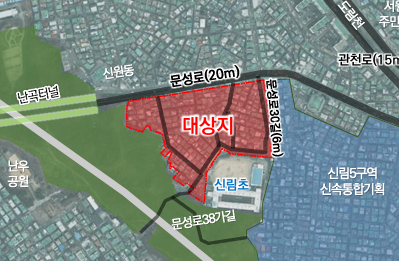
Gwanak-gu Holds Resident Briefing on Shillim 6 District Rapid Integrated Planning Proposal
Increased allowable floor area ratio enhances project feasibility... Over 200 residents including landowners attended, many inquiries on building floors, rental ratios, and number of households
Targeting establishment of maintenance plan and designation of maintenance district in the second half of the year
Gwanak-gu (Mayor Park Jun-hee) held a ‘Shillim 6 District Rapid Integrated Planning Proposal Resident Briefing’ to address residents’ questions and accelerate the designation of the maintenance district.
Shillim 6 District was selected as a candidate site for the rapid integrated planning housing redevelopment project in March last year. The area covers 37,771㎡ and consists of a mix of Type 1 general residential area with low-rise housing and Type 2 general residential area (up to 7 floors) with mid-rise buildings.
The briefing, held at Shillim Elementary School gymnasium, was attended by over 200 landowners and others, along with officials from Gwanak-gu, Seoul City, and project-related consultants.
The event proceeded with presentations on ▲background of Shillim 6 District rapid integrated planning ▲planning issues ▲key contents of the rapid integrated planning (draft) ▲Q&A session. The main concern among residents was the ‘feasibility’ of the Shillim 6 District redevelopment project, with many questions about apartment floor standards, rental ratios, and number of households.
In response, Seoul City officials explained that according to the revised 2030 Seoul Urban and Residential Environment Maintenance Basic Plan, a newly introduced ‘feasibility correction coefficient’ was applied to increase the ‘allowable floor area ratio incentive range.’
This means that the lower the land price and the smaller the site area, the higher the correction coefficient is calculated to improve project feasibility. Additionally, to create a harmonious landscape between the project site and surrounding areas, a ‘tent-shaped skyline’ that gradually lowers from the center to the periphery will be formed.
Gwanak-gu’s Shillim 7 District rapid integrated planning proposal for the area around 675 Shillim-dong was designated as a redevelopment maintenance district in May last year, and a resident briefing for Shillim 5 District rapid integrated planning was held in August last year. Park Jun-hee, Mayor of Gwanak-gu, said, “We will prepare the Shillim 6 District rapid integrated planning guidelines around April this year and devote all efforts to establishing the maintenance plan and designating the maintenance district by the second half of the year.”
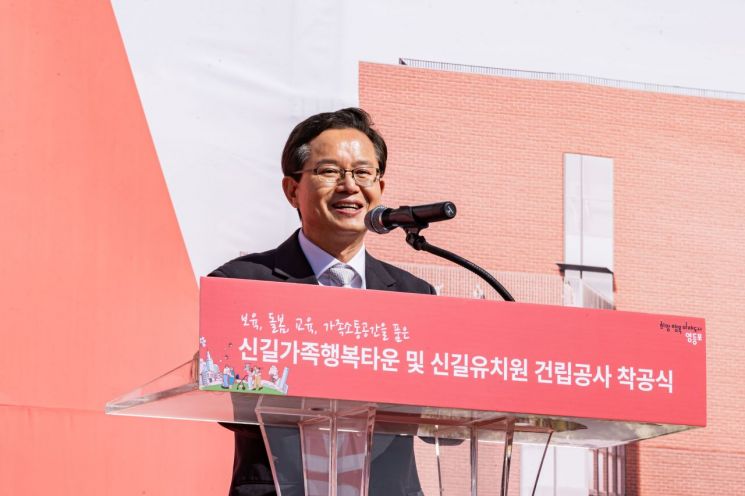
A Center for Childcare, Education, and Communication... Yeongdeungpo-gu Breaks Ground on ‘Singil Family Happiness Town’
Located at 4966 Singil-dong, total floor area 8,266㎡, 2 basement floors to 4 above-ground floors
Family-tailored complex facility including public daycare center, kindergarten, kids caf?, and youth cultural space
Scheduled for completion in August 2027... Realizing a family-friendly city in Yeongdeungpo
Yeongdeungpo-gu (Mayor Choi Ho-kwon) announced the groundbreaking of the ‘(tentative name) Singil Family Happiness Town,’ a cultural and welfare complex facility that families from children to parents can use together, aiming to create a family-friendly care environment.
Singil Family Happiness Town is the district’s first family-tailored complex facility where care, education, and communication take place in one space. The groundbreaking ceremony was held on the 26th, marking the start of construction.
The site was donated from the Singil 12 redevelopment zone and was designated as a social welfare facility in 2007. Residents have waited nearly 20 years for this project to begin.
The facility will be built with a total floor area of 8,266㎡ (about 2,500 pyeong), spanning from 2 basement floors to 4 above-ground floors, equipped with various facilities for all age groups from children to youth and parents.
The basement 2nd floor will have a parking lot with 36 spaces; basement 1st floor will house a kids caf?, toy library, and multipurpose auditorium. The 1st floor will have a public daycare center; the 2nd floor will feature a comprehensive childcare support center for parent education and childcare support; the 3rd floor will include an after-school care ‘Kiwoom Center’ and a family communication cultural space; the 4th floor will provide a youth autonomous cultural space for free use by teenagers.
Notably, Singil Kindergarten will also be established, making it a ‘Happy Love Room’ where childcare, education, and care are integrated in one place.
The district aims to complete the facility by August 2027, reducing parenting burdens and creating a child-friendly environment, establishing a leading model for care and family support. Choi Ho-kwon, Mayor of Yeongdeungpo-gu, said, “As residents have waited a long time, we will build the safest and most splendid building in Seoul that all family members can use,” adding, “We will continue to do our best to create a child-friendly environment suitable for a young city.”
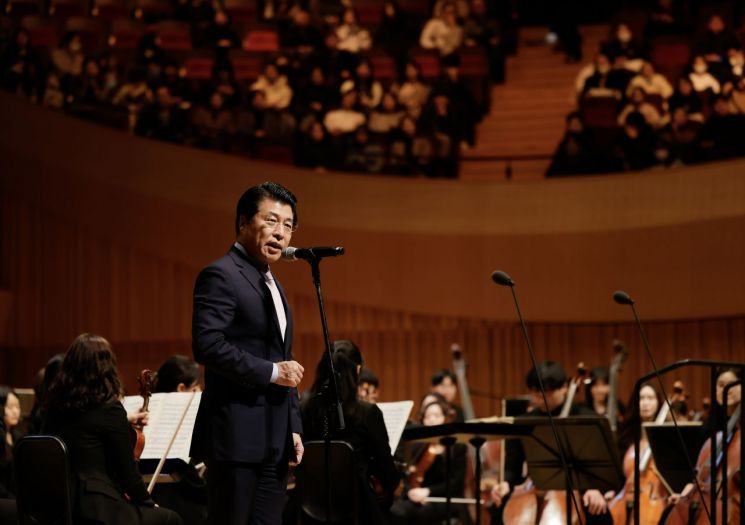
Riding the Spring Breeze... Songpa-gu Hosts New Year’s First Cultural Performance ‘Spring Concert’ at Lotte Concert Hall
March 10, 5 PM at Lotte Concert Hall, inviting residents... The first of this year’s ‘Cultural Performance Series’
Featuring classical music, traditional Korean orchestra, fusion performances by sorikkun Kim Juri and Lee Bong-geun, a meeting of Eastern and Western music
Welcoming the rejuvenating new spring, Songpa-gu (Mayor Seo Gang-seok) announced it will hold the ‘2025 Songpa Spring Concert’ on March 10 at 5 PM at Lotte Concert Hall.
The district, in partnership with the Songpa Cultural Foundation during the 8th elected term, has been staging regular performances of diverse genres including classical, musicals, crossover, and traditional Korean music at Lotte Concert Hall through the ‘Cultural Performance Planning Series.’ This is to provide residents with broad opportunities to enjoy culture and arts in daily life.
The ‘Spring Concert,’ opening this year’s cultural performances, is designed to let audiences savor the vitality of spring in advance. The 110-minute harmony created by skilled musicians and singers promises warm emotions like a spring day.
The highlight of this performance is the fusion of classical and traditional Korean music. In the first half, the Songpa-gu Philharmonic Orchestra will perform with male and female vocal ensembles and a soprano soloist. The second half features the National Gugak Center’s creative orchestra performing traditional Korean orchestral music, pansori, and fusion gugak stages.
First, the first half will present authentic classical music based on the solid performance of the Songpa-gu Philharmonic Orchestra. Soprano Kim Seo-young, male quartet ‘Voce Lumina,’ and female trio will showcase their beautiful tones. The program includes refreshing pieces singing the hope of spring such as ‘Nella Fantasia,’ ‘Waltz of the Sound of Spring,’ and ‘Flower Duet.’
The second half begins with the grand traditional Korean orchestral performance by the National Gugak Center’s creative orchestra, followed by collaborations showcasing various charms of gugak. This includes the soulful ‘Simcheongga’ by master singer Lee Joo-eun, leader of the National Gugak Center’s folk orchestra, and lively fusion gugak performances by popular sorikkun Kim Juri and Lee Bong-geun. Notably, the world-famous idol group BTS’s ‘Spring Day’ will be presented in gugak style, making it a highlight.
The concert is free of charge. Reservations open online via Naver at 11 AM on the 28th. For more details, contact the Songpa Cultural Foundation’s Cultural Business Team.
Last year, over 6,000 residents enjoyed four free concerts organized by the district at Lotte Concert Hall. The events were highly popular, often selling out early, and satisfaction surveys rated 4.8 out of 5. Seo Gang-seok, Mayor of Songpa-gu, said, “We hope everyone enjoys a warm and happy time feeling the spring energy through the Spring Concert,” adding, “We will continue to enrich residents’ lives with diverse cultural and artistic performances throughout the year.”
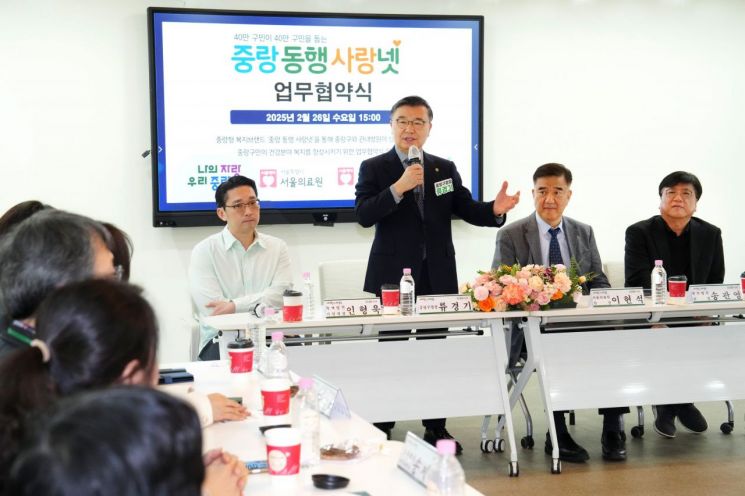 Ryu Kyung-gi, Mayor of Jungnang-gu (standing), attends the 'Jungnang Donghaeng Sarangnet' business agreement ceremony and greets local hospital officials.
Jungnang-gu Signs Business Agreement with Local Hospitals for ‘Jungnang Together Love Net’
Jungnang-gu (Mayor Ryu Kyung-gi) signed a business agreement on the afternoon of the 26th with local private hospitals to expand support in the health sector of the ‘Jungnang Together Love Net.’
‘Jungnang Together Love Net’ is a community sharing platform where 400,000 residents help each other, operating five major sectors: donation, networking, talent sharing, health, and education. It connects residents more easily and conveniently to create a warm community, serving as Jungnang’s welfare brand. This agreement strengthens cooperation between public and private sectors to expand and promote health-related projects and build a healthy community.
Participating hospitals include ▲Seoul Medical Center ▲Bukbu Hospital ▲Green Hospital. The district will collaborate with hospitals to connect volunteers, donors, and residents needing medical services, while hospitals will discover and register public medical projects to provide practical support. The agreement also includes promoting the hospitals’ medical support programs linked with ‘Jungnang Together Love Net’ and encouraging participation.
Ryu Kyung-gi, Mayor of Jungnang-gu, said, “I hope this agreement will further spread the meaning of ‘Jungnang Together Love Net,’ where residents help residents, into the medical field,” adding, “We will continue to work hard to activate Jungnang Together Love Net through close public-private cooperation.”
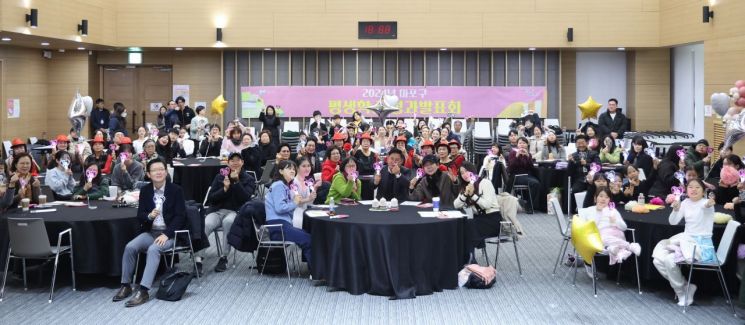
“Looking for Vibrant Lifelong Education” Mapo-gu Calls for Institutions to Operate ‘Silppuri Learning Centers’
Applications accepted from March 5 to March 7, at least three lifelong learning programs required
A total of 8 institutions will be selected, with up to 4.5 million KRW in program operation support per institution
Mapo-gu (Mayor Park Kang-soo) is recruiting participants for the ‘Silppuri Learning Center Public Support Project’ until March 7 to establish a local learning network and discover diverse lifelong education programs.
‘Silppuri Learning Center’ is a concept of a ‘dong lifelong learning center’ targeting Mapo residents, aiming to improve residents’ quality of life and promote social integration through lifelong education.
Applicants must be non-profit institutions located in Mapo-gu, institutions registered under the Lifelong Education Act, or other lifelong education operating institutions under relevant laws.
Institutions must operate at least three programs composed of three or more sessions each and implement at least one specialized program and one community return program.
Mapo-gu will select a total of eight institutions and provide up to 4.5 million KRW in operating expenses per institution. Operating expenses can be used for instructor fees, meeting costs, teaching materials, and supplies but cannot be used for staff salaries, office rent, or utilities.
After application, eligibility, plan validity and effectiveness, and program creativity will be comprehensively reviewed, and final institutions will be selected in early April through the Local Subsidy Management Committee.
Interested institutions should submit the project application, project plan, and organization introduction via the Botaem e-System from March 5 to March 7 by 6 PM.
For more details, refer to the Mapo-gu website or contact the Lifelong Learning Division at 02-3153-8975. Park Kang-soo, Mayor of Mapo-gu, said, “We ask for much interest and participation so that lifelong education programs enriching residents’ lives can be discovered,” adding, “Mapo-gu will establish a solid lifelong education foundation so that all generations can continue their learning journey and strive for sound operation.”
Last year, Mapo-gu supported 11 institutions and conducted 59 lifelong learning programs across eight neighborhoods.
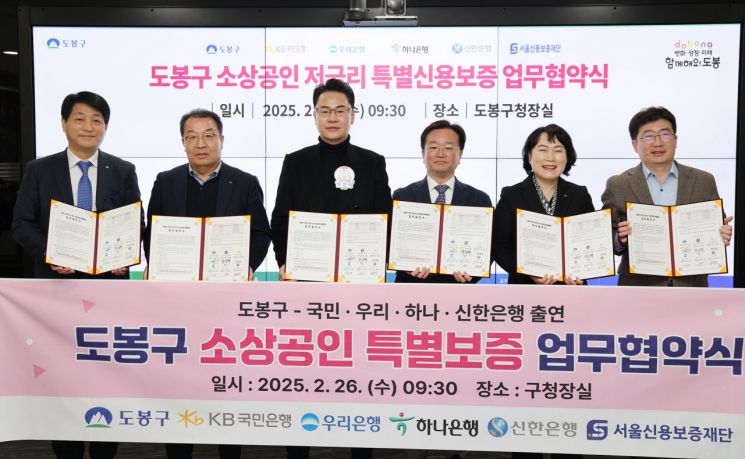
Dobong-gu Provides 25 Billion KRW in Low-Interest Special Credit Guarantees for Small Businesses, 5 Billion KRW Increase from Previous Year
For small and medium enterprises and small businesses... Up to 200 million KRW per company
District supports 1% interest for 1 year, city supports 1.8% interest for 4 years
Dobong-gu (Mayor Oh Eun-seok) is providing 25 billion KRW in low-interest special loan support to local small and medium enterprises and small businesses struggling with funding due to the economic downturn, an increase of 5 billion KRW from last year.
On February 26, the district signed a ‘Dobong-gu Small Business Low-Interest Special Credit Guarantee Business Agreement’ with Kookmin Bank, Woori Bank, Hana Bank, Shinhan Bank, and the Seoul Credit Guarantee Foundation.
Under the agreement, Dobong-gu and the four banks will jointly contribute 2 billion KRW to the Seoul Credit Guarantee Foundation, which will provide credit guarantees worth 25 billion KRW, 12.5 times the contribution amount.
The special credit guarantee limit is up to 200 million KRW per company. The loan interest rate as of February 1, 2025, is between 1.93% and 2.13% for the first year.
The interest rate is calculated by adding the base rate and additional rate, then subtracting 1.8% city interest support and 1% district interest support. Seoul City supports interest for four years from loan execution, and Dobong-gu supports for one year.
Applications and consultations are available from March 4 at the Seoul Credit Guarantee Foundation Dobong branch or any branch of Kookmin Bank, Woori Bank, Shinhan Bank, and Hana Bank in the area. The application period is until funds are exhausted. Oh Eun-seok, Mayor of Dobong-gu, said, “We hope this low-interest special loan support will serve as a stepping stone for local small and medium enterprises and small businesses struggling due to the economic downturn to take off again,” adding, “We will continue to develop and implement policies that provide practical help.”
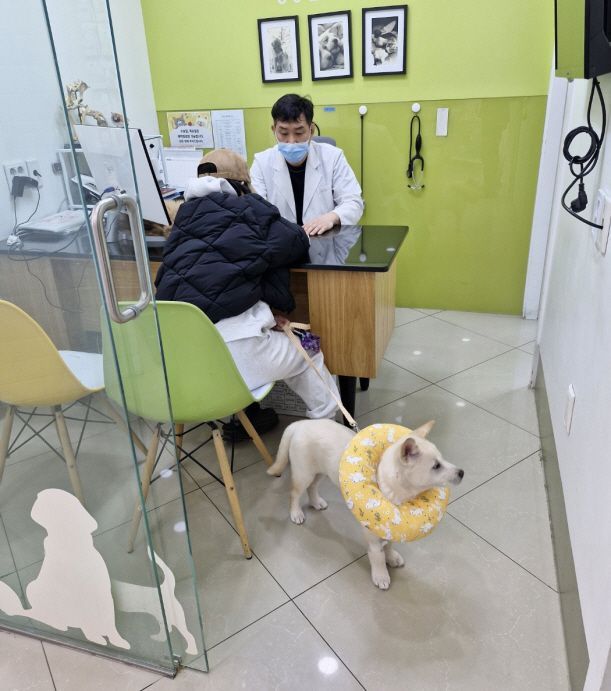
Guro-gu Supports Medical and Boarding Fees for Pets of Vulnerable Groups... Up to 250,000 KRW Adoption Support for Rescued Pets
Up to 200,000 KRW each for essential and optional medical treatments per household for up to two pets
Boarding fees of 50,000 KRW per day for up to 10 days for vulnerable groups
Guro-gu announced support for medical and boarding expenses for pets of vulnerable groups to alleviate economic burdens related to pet care.
Medical expenses are divided into essential and optional treatments and are provided to vulnerable groups (basic livelihood security recipients, near-poverty groups, single-parent families) registered as residents in Guro-gu for registered pets. Essential treatments, including checkups, vaccinations, and heartworm prevention, are supported up to 200,000 KRW, and optional treatments such as disease treatment found during checkups and neutering surgery are also supported up to 200,000 KRW, for up to two pets per household.
Pet owners must pay a consultation fee of 10,000 KRW and any treatment or neutering costs exceeding 200,000 KRW. Additionally, the newly operated pet boarding service supports boarding fees of 50,000 KRW per day for up to 10 days for vulnerable groups.
The district expects that pet owners who have difficulty caring for their pets due to outings or hospitalization can entrust their pets to professional boarding facilities with reduced financial burden. Medical expenses can be claimed at eight designated animal hospitals: Kangaroo Animal Hospital, Dream Animal Hospital, I Love Pet Animal Hospital, Good Morning Animal Hospital, Danaeun Animal Hospital, Geumgang General Animal Hospital, Hansem General Animal Hospital, and 24-Hour Myeongdong Animal Medical Center. Boarding fees can be claimed at two designated pet boarding facilities: Danaeun Animal Hospital and Daengdaengs Boarding Management. Required documents include a copy of the animal registration certificate.
Furthermore, when adopting lost or abandoned animals rescued in Guro-gu, adoption-related expenses such as diagnosis, treatment, vaccination, neutering, and grooming are supported up to 250,000 KRW regardless of the adopter’s residence.
To receive adoption support, adopters must complete education for prospective adopters on the ‘Animal Love Learning Center’ website, complete microchip animal registration after adoption, and submit adoption confirmation and expense claim documents within six months to the Disease Control Division of Guro-gu Health Center.
For more details on pet support, visit the Guro-gu Office website or contact the Disease Control Division of Guro-gu Health Center. A Guro-gu official said, “This support will reduce residents’ medical expenses for their pets and contribute to fostering a mature pet culture,” adding, “We will continue to prepare various support projects so that residents can enjoy a happy daily life with their beloved pets.”
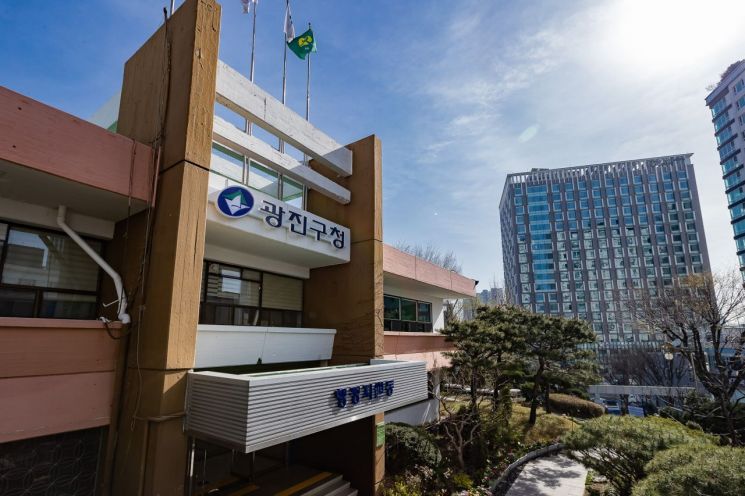
Gwangjin-gu Offers Up to 1.25 Million KRW Support for Electric Vehicle Purchases
1 million KRW for electric and hydrogen vehicles, additional 250,000 KRW for small business owners purchasing electric cargo vehicles
Up to 750,000 KRW subsidy for electric two-wheelers, operated until 80 million KRW budget is exhausted
Gwangjin-gu (Mayor Kim Kyung-ho) is providing up to 1.25 million KRW to promote the spread of eco-friendly vehicles (electric vehicles, hydrogen fuel cell vehicles) and electric two-wheelers.
Eco-friendly vehicles refer to those that reduce or eliminate air pollutant emissions. As of 2024, there are 1,750 eco-friendly vehicles and 754 electric two-wheelers registered in Gwangjin-gu, with growth slowing. Although national and city subsidies are provided annually to encourage purchases, subsidy amounts have been decreasing.
Therefore, the district will provide additional subsidies to buyers of electric and hydrogen vehicles and electric two-wheelers. Electric and hydrogen vehicles receive 1 million KRW, and electric two-wheelers receive 600,000 KRW. Small business owners purchasing electric cargo vehicles receive an additional 250,000 KRW, and those purchasing electric two-wheelers for delivery receive an additional 150,000 KRW.
Eligible applicants include individuals, businesses, corporations, and foreigners with a Gwangjin-gu address for over 90 days. The subsidy applies to vehicles newly registered after January 1, 2024, that qualify for the 2025 Ministry of Environment subsidy. Subsidies are provided on a first-come, first-served basis until the 80 million KRW budget is exhausted. Eligible vehicle models can be checked on the Zero Emission Vehicle Integrated Website.
Applications can be submitted in person or by mail with required documents such as the subsidy application form, business registration certificate, and vehicle registration certificate. For details, contact the Environmental Division of Gwangjin-gu Office. Kim Kyung-ho, Mayor of Gwangjin-gu, said, “As government and Seoul City subsidies for eco-friendly vehicles decrease annually, we have prepared additional subsidies from the district budget. We ask for much interest and participation,” adding, “We will continue to implement environmental policies that effectively reduce greenhouse gas emissions and promote carbon neutrality.”
Last year, the district supported 104 vehicles with about 99 million KRW, contributing to the spread of eco-friendly vehicles.
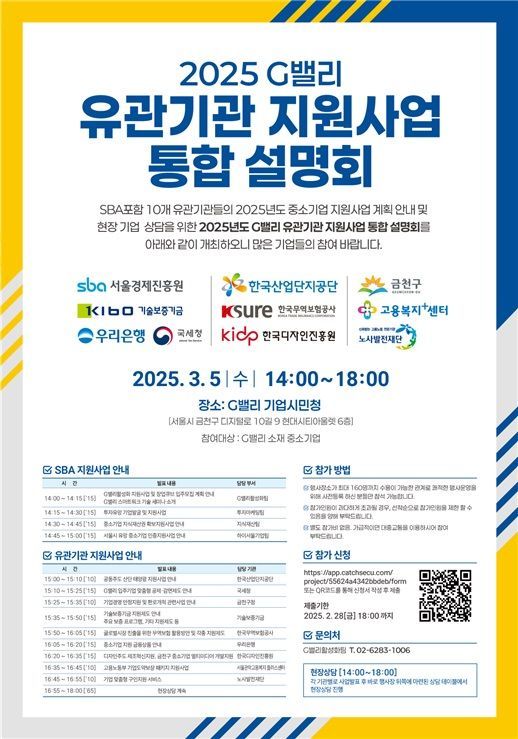
G-Valley Small Business Support Information in One Place... Geumcheon-gu Holds Integrated Briefing Session
March 5 at 2 PM at G-Valley Corporate Citizen Hall, comprehensive guidance on small business support projects from 10 institutions including Seoul Business Agency
Geumcheon-gu (Mayor Yoo Sung-hoon) announced it will hold the ‘G-Valley Small Business Support Project Integrated Briefing Session’ on March 5 at 2 PM at the G-Valley Corporate Citizen Hall.
Recently, the number of G-Valley small businesses facing difficulties due to high exchange rates and economic recession has increased, raising demand for various support projects.
Accordingly, the district prepared this briefing to comprehensively guide existing and new support projects to promote business stability and competitiveness.
The briefing will be attended by 10 institutions including Geumcheon-gu Office, Seoul Business Agency, Korea Industrial Complex Corporation, National Tax Service, Korea Technology Finance Corporation, Korea Trade Insurance Corporation, Woori Bank, Korea Design Development Promotion Agency (DK Works), Seoul Gwanak Employment Welfare Plus Center, and the Labor-Management Development Foundation.
Participating companies can receive information on various support projects necessary for business operations such as startup, funding, guarantees, export, and R&D all in one place. Customized consultations will also be available at institution-specific booths on site.
Applications for participation are open to G-Valley small business stakeholders until 6 PM on February 28 via the CatchCQ website or QR code on promotional materials. Participation is free. Yoo Sung-hoon, Mayor of Geumcheon-gu, said, “We hope this integrated briefing will be a practical help for the growth and competitiveness of G-Valley small businesses,” adding, “We expect many companies to participate and gain useful information.”
The district operates various customized support projects to alleviate management burdens of small businesses. It provides 5 billion KRW in ‘Small Business Development Fund’ at the lowest interest rate among Seoul districts (0.8% annually). Loans up to 100 million KRW per company are available with a one-year grace period followed by equal installments over three years.
Additionally, to help local small businesses develop domestic and overseas markets, the district operates an ‘Advanced Industry Exhibition Participation Support Project.’ This year, 30 companies will be selected, each receiving up to 3 million KRW to cover costs such as dedicated booth installation at advanced industry exhibitions domestically and abroad.
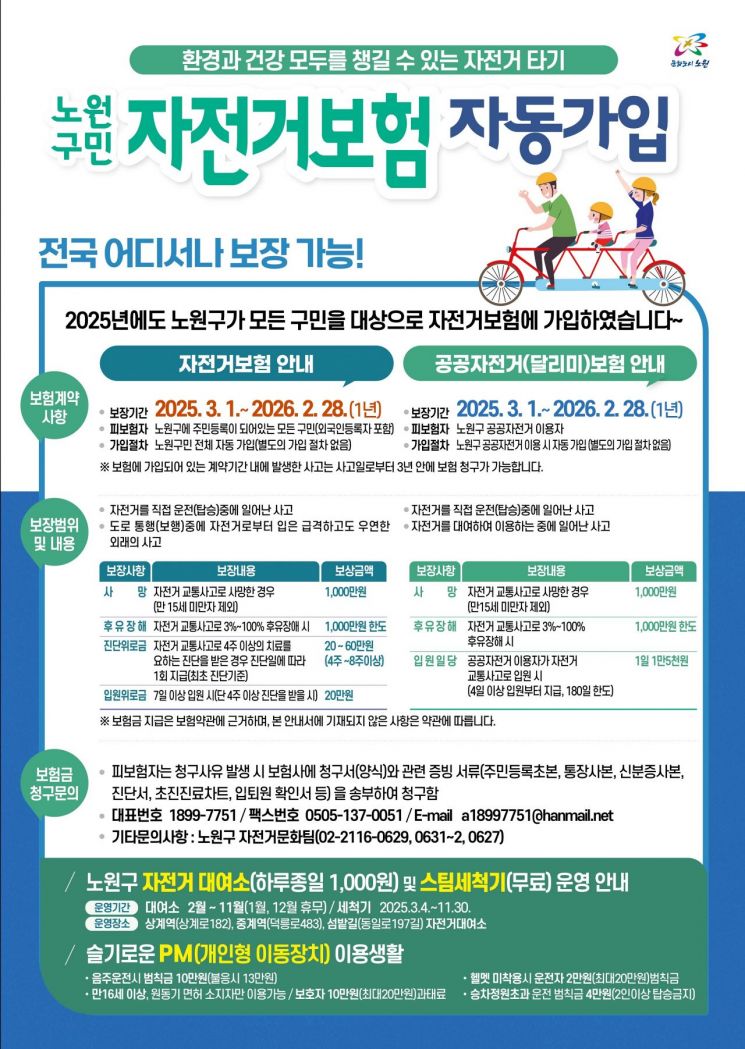
Nowon-gu Provides Bicycle Insurance for All Residents for Safe Riding
From March 1, 3,758 residents covered by bicycle insurance through 2024, with total payouts exceeding 2 billion KRW
Automatic enrollment for all Nowon residents... Creating a safe environment for bicycle use through insurance coverage
Nowon-gu (Mayor Oh Seung-rok) announced the operation of ‘Nowon Resident Bicycle Insurance’ to prepare for unexpected accidents involving residents using bicycles.
Since 2015, Nowon-gu was the first Seoul district to enroll all residents in bicycle insurance to encourage bicycle use and provide practical assistance in case of accidents.
Not only residents registered in Nowon-gu (including registered foreigners) but also users of Nowon-gu public bicycles (total 191 units) are automatically enrolled and can receive insurance benefits regardless of where accidents occur nationwide.
The coverage period for the ‘2025 Bicycle Insurance’ is one year from March 1, 2025, to February 28, 2026. No separate enrollment procedure is required, and coverage is automatically terminated if the resident moves out of Nowon-gu.
The insurance covers accidents occurring while riding or riding as a passenger on a bicycle, as well as collisions with bicycles operated by others while walking.
Detailed coverage includes ▲1,000,000 KRW for death due to bicycle accidents ▲up to 1,000,000 KRW for disability caused by accidents ▲diagnosis consolation money of 200,000 to 600,000 KRW for diagnoses lasting 4 to 8 weeks, equally applied to Nowon residents and public bicycle users. Public bicycle users additionally receive up to 100,000 KRW (with a 50,000 KRW deductible) for bicycle damage or theft.
Hospitalization coverage varies by user type. Nowon residents diagnosed for more than 4 weeks and hospitalized for more than 7 days receive 200,000 KRW consolation money. Public bicycle users receive 150,000 KRW per day of hospitalization due to bicycle accidents.
Since introducing bicycle insurance, Nowon-gu has paid about 2 billion KRW to 3,758 residents through 2024, strongly supporting the safety of bicycle users. The district also offers free bicycle steam cleaning services and operates the Nowon-gu Bicycle School to enhance convenience for residents. Oh Seung-rok, Mayor of Nowon-gu, said, “For bicycle promotion, a safe environment where users feel secure must come first,” adding, “We will continue to prepare various safety support measures including bicycle insurance so residents can ride bicycles without worry.”
© The Asia Business Daily(www.asiae.co.kr). All rights reserved.
!["The Woman Who Threw Herself into the Water Clutching a Stolen Dior Bag"...A Grotesque Success Story That Shakes the Korean Psyche [Slate]](https://cwcontent.asiae.co.kr/asiaresize/183/2026021902243444107_1771435474.jpg)


















