Live-fire drills break notification protocol
A countermove to U.S. military exercises in the Taiwan Strait
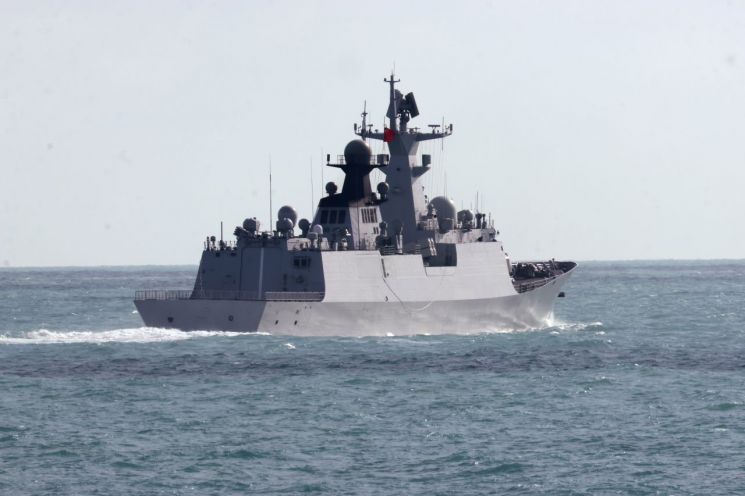 On the 11th (local time), a Chinese warship entering the Torres Strait in northern Australia. The Chinese fleet conducted live-fire exercises in the Tasman Sea between Australia and New Zealand on the 21st and 22nd. AP·Yonhap News
The Chinese navy has unusually conducted large-scale live-fire exercises in international waters between Australia and New Zealand, heightening military tensions across the South Pacific region. This move is seen as a countermeasure to recent military drills conducted by the U.S. and Canadian navies in the Taiwan Strait. As the U.S.-China power struggle spreads to Oceania, regional countries are accelerating defense cooperation efforts to contain China.
Live-fire drills between Australia and New Zealand... Civilian flight routes abruptly changed
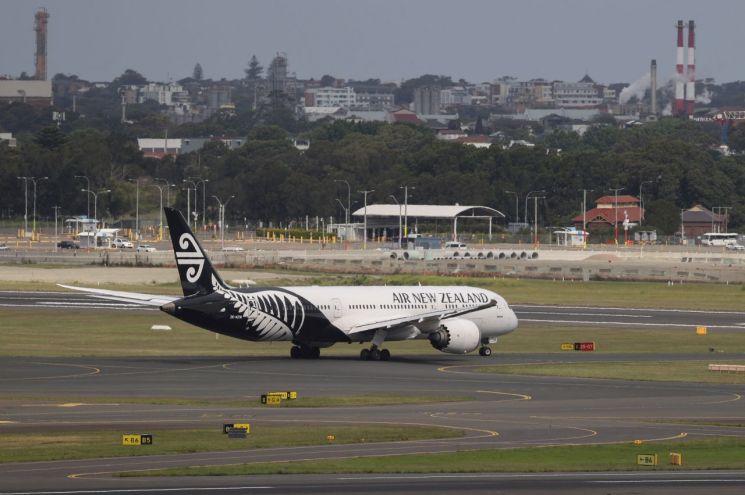 An Air New Zealand passenger plane flying between Australia and New Zealand. On the 21st, Chinese naval forces suddenly notified that they would conduct live-fire exercises in the Tasman Sea between Australia and New Zealand, prompting civilian aircraft to urgently change their routes. Photo by Reuters and Yonhap News Agency
Judith Collins, New Zealand’s Minister of Defence, recently appeared on the public broadcaster Radio New Zealand (RNZ) and expressed concern, saying, "The live-fire exercises conducted by the Chinese navy on the 21st and 22nd of last month in the Tasman Sea, in international waters between Australia and New Zealand, were very unusual. The Chinese navy’s weapons were very powerful, and we have never before seen the Chinese military conduct live-fire exercises of this scale in this area."
Last month, three Chinese naval vessels entered international waters in the Tasman Sea between Australia and New Zealand to conduct live-fire drills. The Chinese government notified nearby countries, including Australia and New Zealand, only a few hours before the exercises began. As a result, all civilian flights traveling between Australia and New Zealand abruptly changed their routes.
Minister Collins criticized, "According to international customs, notifications of live-fire exercises in international waters with heavy air and maritime traffic are usually given at least 12 to 24 hours in advance, but the Chinese government notified only a few hours before, leaving no time for civilian flights to prepare. If the exercises were truly urgent, they could have been conducted in other international waters away from civilian flight paths." Earlier, Australian Defence Minister Richard Marles also stated in a briefing, "We raised concerns because China notified the exercise schedule too late, but the Chinese side did not provide a valid reason."
Nevertheless, the Chinese government has pushed back, claiming the exercises complied with international law. The Chinese Ministry of Defence stated, "The training area of the Chinese fleet was far from the Australian coast, and the area was international waters," adding, "China repeatedly issued safety notices in advance before conducting live-fire exercises at sea. China’s actions fully comply with international law and practices and do not affect aviation safety."
Protesting U.S. drills in the Taiwan Strait... Military provocations in the South Pacific
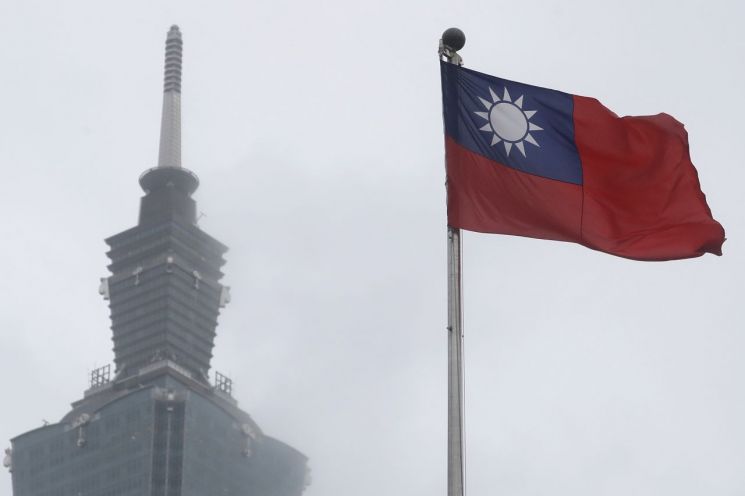
The main reason China conducted the unusual live-fire exercises in the Tasman Sea is interpreted as a countermeasure to the U.S. and Canadian naval drills in the Taiwan Strait earlier. The strategy appears to be to showcase the Chinese navy’s operational capabilities off the Australian coast, farther than the Taiwan Strait, to militarily pressure the U.S. and regional allies.
On the 12th of last month, the U.S. destroyer USS Ralph Johnson and the oceanographic survey ship USNS Bowditch passed through the Taiwan Strait for the first time since President Donald Trump’s inauguration. Then, on the 15th, the Canadian frigate HMCS Ottawa conducted navigation exercises in the Taiwan Strait. The U.S. and Canadian navies jointly conducted navigation drills around Taiwan to pressure China. Taiwan’s Ministry of Foreign Affairs also welcomed and positively evaluated Canada’s firm stance on treating the Taiwan Strait as international waters on the 17th.
Colin Koh, a researcher at the Rajaratnam School of International Studies at Nanyang Technological University in Singapore, told CNN, "It is very unusual for the Chinese navy to conduct live-fire exercises off the Australian coast, which shows growing confidence in China’s blue-water operations. Although it is not yet comparable to the U.S. Navy, the fact that Chinese fleets have recently appeared regularly in the South Pacific can cause unease not only for the U.S. but also for Australia and New Zealand."
South Pacific countries unite to counter Chinese military threat... Accelerating defense cooperation
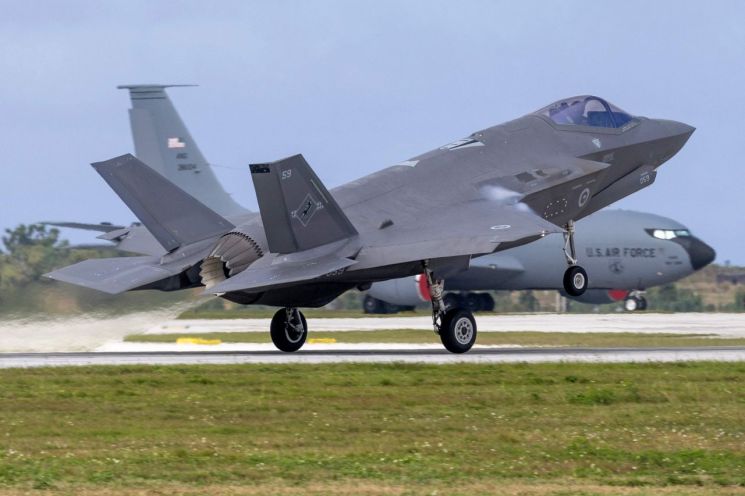 On the 4th (local time), an F-35A fighter jet belonging to the Australian Air Force takes off for joint training with the United States and Japan. Photo by AFP·Yonhap News
As the Chinese navy begins to demonstrate military power in the South Pacific, regional countries with growing security concerns are rapidly concluding defense agreements. The strategy is to jointly respond to China’s threat, reduce security anxieties, and strengthen deterrence.
According to Bloomberg News, the governments of the Philippines and New Zealand announced on the 21st of last month that they had completed negotiations on a 'Visiting Forces Agreement (VFA)' between their militaries. The VFA is an agreement that defines the legal status of troops deployed for joint training and is usually signed when planning large-scale joint military exercises. The two countries plan to sign a new defense agreement in the second quarter of this year to enable large-scale military exercises by deploying troops to each other’s countries.
Australia and Papua New Guinea are also strengthening defense cooperation. It is reported that the two countries have begun negotiations to conclude a defense treaty, which is a stronger form of cooperation than the current defense partnership. Once a mutual defense treaty is signed, joint operations and integrated training will be possible in emergencies. Previously, in May 2023, Papua New Guinea, under U.S. pressure, abandoned security agreement negotiations with China and instead signed a defense agreement with the U.S.
Billy Joseph, Papua New Guinea’s Minister of Defence, emphasized, "We have consciously chosen who should be our friends in terms of security. Although we have many allies, we consider Australia to be closer."
© The Asia Business Daily(www.asiae.co.kr). All rights reserved.

![Clutching a Stolen Dior Bag, Saying "I Hate Being Poor but Real"... The Grotesque Con of a "Human Knockoff" [Slate]](https://cwcontent.asiae.co.kr/asiaresize/183/2026021902243444107_1771435474.jpg)

















