Highest Level Since Moody's Began Tracking in 1989
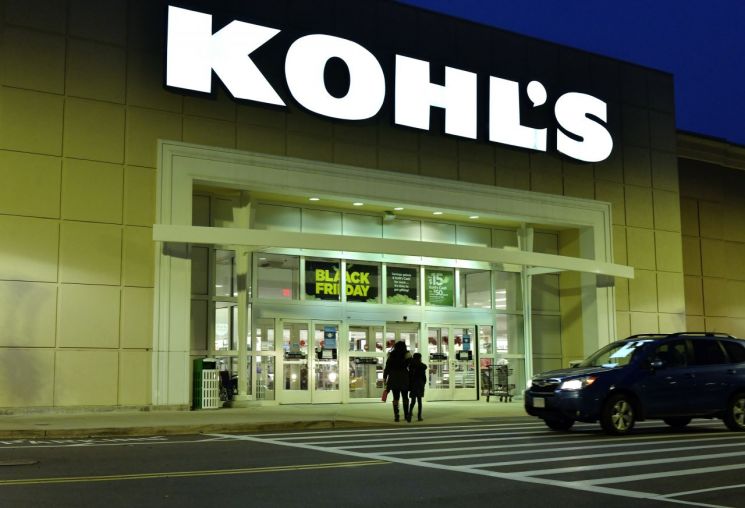 Pedestrians are passing in front of the American discount store Kohl's. The Wall Street Journal (WSJ) reported on the 23rd (local time) that statistical analysis shows the top 10% of U.S. households with an annual income of $250,000 (approximately 330 million KRW) or more account for nearly half (49.7%) of total U.S. consumption. Photo by AP Yonhap News
A statistical analysis revealed that the top 10% of U.S. households with an annual income of $250,000 (approximately 330 million KRW) or more account for nearly half (49.7%) of total U.S. consumption.
The Wall Street Journal (WSJ) reported on the 23rd (local time), citing Moody's Analytics' statistical analysis, that the U.S. economy's dependence on the wealthy has reached an all-time high.
According to Moody's statistical analysis, the share of total U.S. consumption by the top 10% of households reached 49.7%, the highest level since data collection began in 1989. This is 13.7 percentage points higher than the figure of 36% from 30 years ago.
WSJ pointed out that this indicates that U.S. economic growth is abnormally dependent on the continuous consumption of the wealthy. Mark Zandi, Chief Economist at Moody's, noted, "Consumption by the top 10% alone accounts for nearly one-third of the U.S. Gross Domestic Product (GDP)."
From September 2023 to September 2024, consumption by high-income earners increased by 12%, while consumption by workers and the middle class declined. Economist Zandi stated, "The financial situation of the wealthy is better than ever, and their consumption is stronger than ever," adding, "The U.S. economy is more dependent on the wealthy than ever before."
WSJ cited Federal Reserve (Fed) data, attributing the increased spending power of the wealthy to a surge in asset values. Thanks to substantial gains from stocks, real estate, and other assets during the COVID-19 pandemic, it is analyzed that they have been able to maintain their spending power despite the global inflationary environment.
In fact, the net worth of the top 20% income earners has increased by more than $35 trillion (approximately 46,000 trillion KRW) since the end of 2019. During the same period, the net worth increase for the remaining 80% totaled only $14 trillion (approximately 18,000 trillion KRW). Although the ratios are similar, the difference in the amount of increase was significant.
There is also analysis that corporate performance is becoming polarized depending on the target consumer group. The gap between companies targeting the wealthy and those targeting low-income groups is widening. For example, Big Lots, a discount retailer primarily serving low-income customers, filed for bankruptcy last fall. Kohl's and Family Dollar have reduced the number of their stores.
Matthew Boss, an analyst at JP Morgan Chase, said, "Extreme polarization is occurring even among companies," adding, "These companies are fiercely competing over shrinking consumer wallets."
© The Asia Business Daily(www.asiae.co.kr). All rights reserved.












