Won-Dollar Exchange Rate Expected to Average 1,410 Won in Q2
Trump's Tariff Threats and Global Economic Indicators Influence Market
Volatility Remains, but Strong Dollar Pressure Seen Easing
The won-dollar exchange rate showed an upward trend in the early trading session on the 24th. However, the increase was limited, with the rate moving around the 1,435 won level.
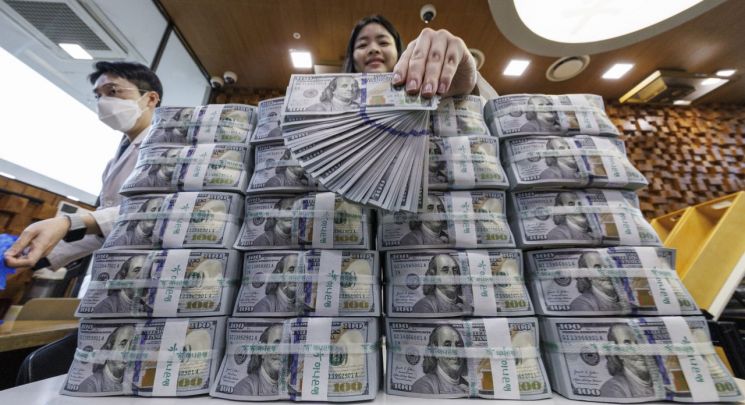
As of 9:21 a.m., in the Seoul foreign exchange market, the won-dollar exchange rate is trading at 1,434.7 won, up 0.4 won from the previous trading day's daytime closing price. On this day, the won-dollar exchange rate opened at 1,437.0 won, up 2.7 won from the previous day, and has been fluctuating in the mid-1,430 won range.
Last week, risk appetite weakened as U.S. economic indicators came out weak. The University of Michigan's February U.S. Consumer Sentiment Index plunged nearly 10% from the previous month, marking the lowest level since November 2023. The one-year expected inflation rose to 4.3%. The Standard & Poor's (S&P) U.S. Services Purchasing Managers' Index (PMI) for February also fell to 49.7, below the benchmark of 50 for the first time in 25 months since January 2023. The dollar index, which shows the value of the dollar against the currencies of six major countries, is at about 106.380, similar to the previous trading day's closing price of 106.530.
Meanwhile, the market expects that the easing of tariff threats from U.S. President Trump will reduce strong dollar pressure, leading to a stabilization of the won-dollar exchange rate for the time being. Korea Investment & Securities forecasted that upward pressure on the exchange rate both domestically and internationally will gradually ease, and the won-dollar exchange rate will average down to 1,410 won in the second quarter of this year. Researcher Moon Da-woon said, "Throughout February, the exchange rate has been volatile, fluctuating as attention focused on Trump's remarks," but added, "The strong dollar pressure stimulated by Trump's uncertainties is gradually easing."
Although U.S. President Trump continues to threaten mutual tariffs, the implementation date has been postponed to April, causing the market to be skeptical about the actual imposition. Additionally, with active efforts toward a Russia-Ukraine ceasefire negotiation, the situation supports the easing of strong dollar pressure. Researcher Moon said, "High volatility is still expected depending on Trump's policy patterns, but its impact will continue to ease, showing a trend of lowering the downside through the second quarter."
© The Asia Business Daily(www.asiae.co.kr). All rights reserved.












