Vice Minister for Trade Holds High-Level Meetings in the U.S.
Industry Minister Proposes Expanded Cooperation in Meeting with U.S. Ambassador
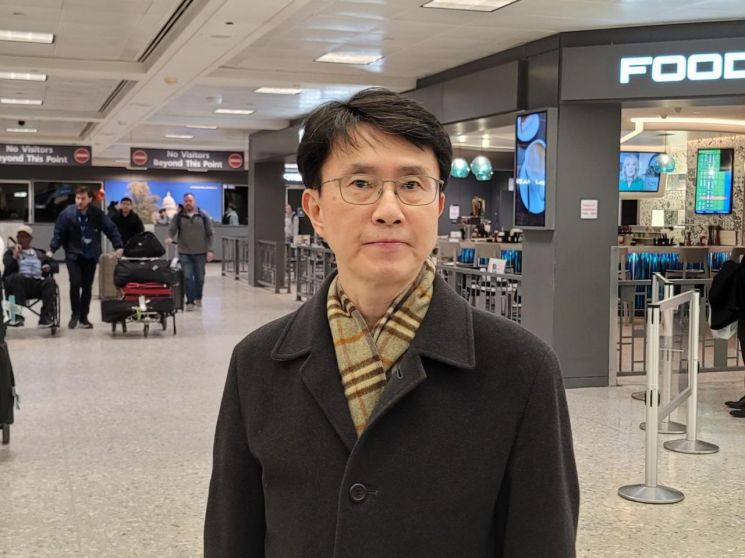
The government has launched a diplomatic campaign to ease trade pressures and strengthen industrial cooperation with the United States. As the U.S. enforces additional tariffs on steel and aluminum and tightens subsidy criteria for semiconductors and batteries under the guise of protecting its domestic industries, South Korea has entered negotiations to ensure it does not suffer disadvantages. The Korean government emphasized that since the signing of the Korea-U.S. Free Trade Agreement (FTA), Korean companies have contributed significantly to large-scale investments in the U.S. and the stabilization of supply chains, actively expressing concerns about discrimination arising from changes in U.S. policies.
According to the Ministry of Trade, Industry and Energy on the 21st, Park Jong-won, Deputy Minister for Trade, visited Washington D.C. from February 17 to 20 (local time) and held successive meetings with senior officials from the White House, the Department of Commerce, and the U.S. Trade Representative (USTR).
Deputy Minister Park stressed to these officials that "Korea is a country where tariffs have already been eliminated on most items through the Korea-U.S. FTA, and U.S. trade measures should not target its ally, Korea." In particular, he requested that Korea be excluded from additional tariff measures being pursued in key industries such as steel and aluminum.
He also engaged with key members of the U.S. Congress and think tank experts, urging cooperation to ensure that subsidies under the Semiconductor Act and the Inflation Reduction Act (IRA) are not applied discriminatorily against Korean companies.
In fact, Korean companies have made multi-billion-dollar investments in the U.S., expanding production facilities domestically, but concerns have been consistently raised about potential disadvantages due to the discontinuation of support for U.S. investment companies under the IRA and Semiconductor Act subsidies. The government plans to closely analyze the impact of changes in U.S. trade and commerce policies on Korean companies and continue additional consultations if necessary.
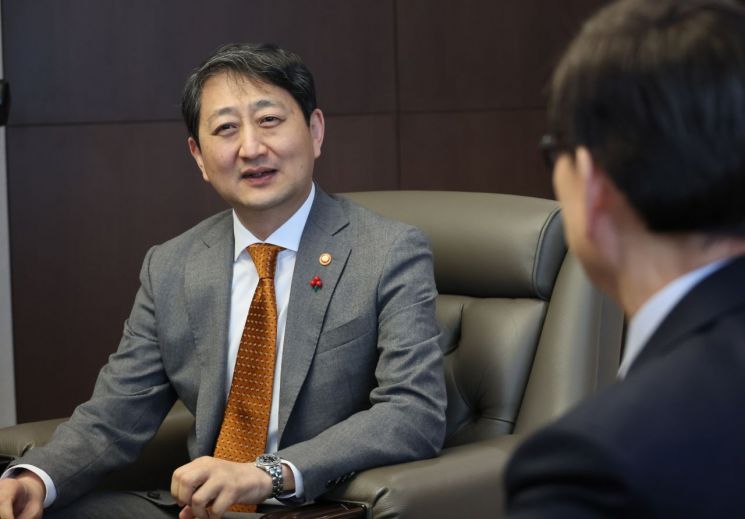
On the same day, Ahn Duk-geun, Minister of Trade, Industry and Energy, met with Joseph Yun, Charg? d’Affaires at the U.S. Embassy in Korea, to discuss strengthening Korea-U.S. economic cooperation. Minister Ahn evaluated that "the Korea-U.S. relationship has evolved beyond a simple trade partnership to an economic alliance based on advanced industries and technological cooperation." He added, "This cooperative framework must be maintained even after the inauguration of the new U.S. administration."
Minister Ahn particularly mentioned the need to expand cooperation not only in semiconductors and batteries but also in shipbuilding and energy sectors. Given that the Korean shipbuilding industry is currently leading the global market in LNG carriers and offshore plants, this is interpreted as a willingness to seek new growth opportunities through cooperation with the U.S.
In response, Charg? d’Affaires Yun stated, "The Korea-U.S. alliance has been closely maintained for over 70 years across security, economy, and other areas, and we will actively support efforts to further strengthen it going forward."
© The Asia Business Daily(www.asiae.co.kr). All rights reserved.