At the end of last year, the default option (pre-designated operation system) reserve amount exceeded 40 trillion won.
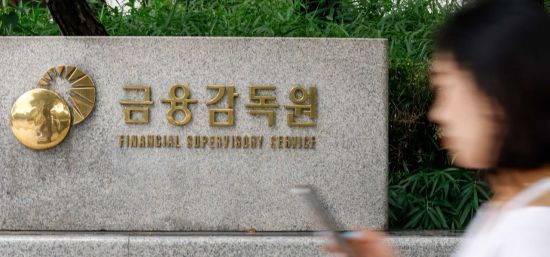
According to the Financial Supervisory Service on the 18th, the default option reserve amount exceeded 40 trillion won and the number of designated subscribers surpassed 6.3 million in the fourth quarter of last year. Compared to the same period last year, the reserve amount increased by 219%, and the number of designated subscribers grew by 32%.
By business, KB Kookmin Bank had the largest amount with 7.733 trillion won. It was followed by Shinhan Bank with 7.1157 trillion won, IBK Industrial Bank (5.663 trillion won), Hana Bank (4.3362 trillion won), and NongHyup Bank (3.8795 trillion won) in order of reserve size.
Currently, 315 products from 41 financial institutions have received government approval for the default option. Despite the unstable financial market conditions last year, these products demonstrated stable returns, proving their competitiveness in the retirement pension market. In particular, 68 products classified as medium-risk or high-risk showed a one-year return exceeding 15%.
Among high-risk products, Korea Investment & Securities' Default Option High-Risk BF1 had the highest one-year return at 35.99%. It was followed by Tongyang Life Insurance's Default Option High-Risk BF2 (26.12%) and Samsung Life Insurance's Default Option High-Risk TDF1 (25.73%). Among medium-risk products, Korea Investment & Securities' Default Option Medium-Risk Portfolio 2 ranked first with a 20.89% return. It was followed by Samsung Life Insurance's Default Option Medium-Risk BF2 (20.08%) and Hanwha Life Insurance's Default Option Medium-Risk BF1 (20.08%).
The government plans to continuously promote institutional improvements to alleviate the concentration on principal-guaranteed products, as the purpose of introducing the default option system is to enhance returns.
First, starting from April this year, the product names of all default options will be changed. Specifically, they will be renamed as Stable Type (previously called Ultra-Low Risk), Stable Investment Type (Low Risk), Neutral Investment Type (Medium Risk), and Active Investment Type (High Risk).
The current default option product names emphasize "risk," which has hindered rational investment. However, going forward, the names will be changed to focus on "investment." This aims to help subscribers select default option products that suit their preferences.
Additionally, starting from this year's disclosure, the Financial Supervisory Service will additionally disclose the proportion of reserves (sales) by risk grade for each financial institution. This will inform subscribers about the degree of concentration in relatively low-return principal-guaranteed products and encourage active investment. The Financial Supervisory Service expects this to act as a catalyst for financial institutions to strengthen subscriber support services.
© The Asia Business Daily(www.asiae.co.kr). All rights reserved.

















