Relocation Began During COVID-19 Pandemic
Pressure Intensifies with Trump’s Return
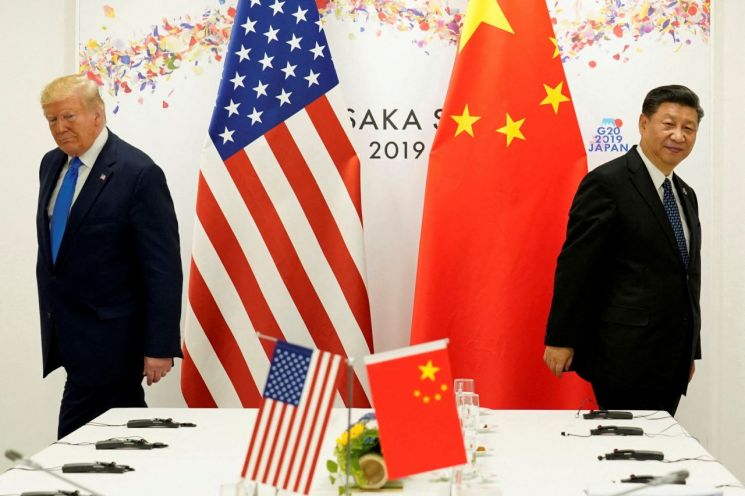
Tensions between the United States and China are escalating, accelerating the trend of technology companies moving away from China. This exodus is expected to deepen as the US-China trade war intensifies.
In recent years, multinational corporations have pursued a so-called 'China Plus 1' strategy, supplementing China-based supply chains with suppliers from other countries to reduce dependence on Chinese suppliers. However, the Wall Street Journal (WSJ) reported on the 17th (local time) that the new principle now is the 'Anything But China (ABC)' strategy, which involves relocating factories entirely outside of China.
During the COVID-19 pandemic, factory shutdowns due to China's lockdown measures prompted Western companies to begin relocating production bases from China to Vietnam and India in large numbers. Subsequently, the US-China competition over advanced technology dominance has further strengthened this trend. Especially with Donald Trump’s return to the White House, pressure has increased to diversify supply chains away from China, WSJ analyzed. Earlier, President Trump imposed an additional 10% tariff on China immediately after taking office last month, and as China retaliated with counter-tariffs, trade tensions between the two countries have escalated.
The 'ABC' trend is particularly prominent in semiconductor-related products, which are at the core of US-China technological competition. Over the past two years, the US has banned China’s access to cutting-edge chips and equipment, prompting China to push for its own chip development. China was one of the largest hubs for global server production, but since the US restricted AI chip exports to China in October 2022, AI servers have increasingly been assembled in countries like Mexico and Malaysia.
Semiconductor equipment manufacturers and suppliers are also joining the movement to reduce dependence on China. Applied Materials and Lam Research excluded Chinese companies from their supply chains last year under US government pressure, and Advanced Energy Industries, which produces power systems and electrical components, plans to close its last factory in China by July.
The corporate 'exodus' from China is occurring across the board, from smartphones to laptops. According to the annual survey by the American Chamber of Commerce in China, 30% of 360 respondents said they are considering or have already started relocating production bases, and about a quarter of technology and research & development (R&D) companies have begun shifting their supply chains. The components sector is no exception. According to a recent report by Standard & Poor’s (S&P), unlike before when companies only moved product assembly outside China, factories producing components such as sensors, printed circuit boards (PCBs), and power electronic devices are now also being relocated.
Southeast Asia is benefiting from this shift away from China. Foreign direct investment in Southeast Asia increased from $155 billion in 2018 to $230 billion in 2023. Chip manufacturers Intel, Infineon, and Micron have invested billions of dollars in Malaysia and Singapore, and laptop manufacturer HP has added Thailand to its assembly bases over the past three years. In Malaysia, semiconductor, computer, and other electronics exports reached a record high of $137 billion last year. As a result, while China produced most of the world’s laptops in 2023, its share is expected to drop to 80% this year, with Vietnam and Thailand’s shares increasing.
Many Chinese companies are also expanding overseas to respond to requests from Western customers. Xinyexing Communication Technology, a Chinese manufacturer of optical transceivers for data centers, expanded its factory in Thailand to increase supply to overseas customers and avoid the fallout from US-China tensions. Vital New Materials, which produces soldering materials for laptops, solar panels, and industrial machinery, has established subsidiaries in Southeast Asia and Mexico.
From the perspective of companies needing to reduce dependence on China, there are concerns about increased cost burdens. Mario Morales, an analyst at market research firm IDC, said, "In the long term, creating new production lines can be more expensive and risky," adding, "Companies switching supply chains will face greater challenges."
© The Asia Business Daily(www.asiae.co.kr). All rights reserved.

















