Gwangjin-gu Announces Results of Resident Satisfaction Survey
Survey Targeted 1,000 Adult Men and Women Aged 18 or Older Living in Gwangjin-gu
6 Out of 10 Respondents Say "District Administration Is Doing Well," Communication Score Also Exceeds 70 Points
Top 10 Outstanding Projects Most Satisfying to Residents Selected During the 8th Elected Term
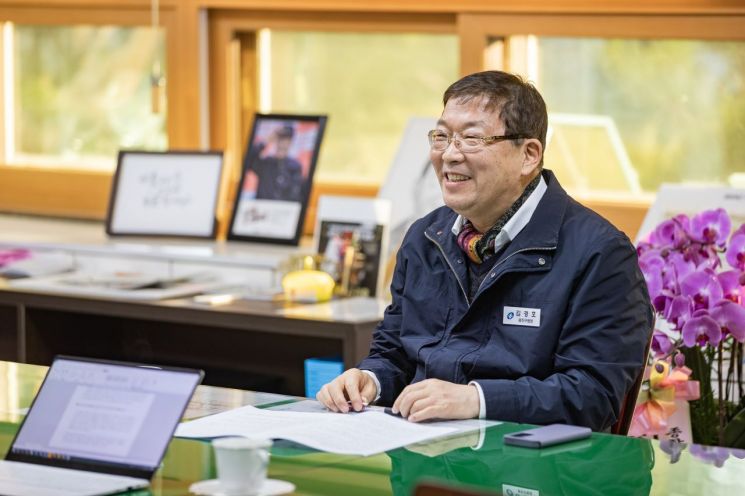
9 out of 10 residents in Gwangjin-gu responded that they want to continue living in Gwangjin-gu five years from now.
This result came from a resident satisfaction survey conducted by Gwangjin-gu (Mayor Kim Kyung-ho) at the end of last year.
In the third year of the 8th elected term and the first year of the 2040 Gwangjin Re-creation, the survey was conducted to gather diverse opinions from residents and reflect them in district administration.
The survey was conducted from November to December last year, targeting 1,000 adult men and women aged 18 or older living in Gwangjin-gu through one-on-one face-to-face interviews. It was carried out by the professional polling agency Korea Gallup Research Institute, with a 95% confidence level and a sampling error of ±3.1%p.
In the evaluation of district administration, 61.1% of respondents answered that the administration is "doing well," while only 4.7% said it is "not doing well." This figure is similar to last year’s, indicating a continued positive evaluation of the 8th elected term’s administration.
The residential environment is gradually improving. Satisfaction increased by 3.9%p from last year to 78.8%. Notably, 93.7% of respondents said they want to live in Gwangjin-gu even five years from now, recognizing it as a good place to live.
The most satisfying policy areas were ▲cleaning and environment ▲parks and green spaces ▲safety ▲welfare ▲roads and traffic, in that order. The communication score also exceeded 70 points, receiving a satisfactory evaluation. Areas where Gwangjin-gu should focus include local economy, urban planning, and residential living environment, while necessary facilities were identified as parking facilities, cultural and sports facilities, parks and green spaces, and welfare facilities.
Additionally, the top 10 projects that contributed most to regional development and happiness promotion during the 8th elected term were selected. The six-day-a-week household waste collection system ranked first, expansion of leisure facilities in Achasan Mountain ranked second, and the establishment of the ‘2040 Gwangjin Re-creation Plan’ ranked third. Projects that directly help residents’ daily lives generally received high scores.
Kim Kyung-ho, Mayor of Gwangjin-gu, said, “We have worked hard for the past two and a half years to meet the interest and expectations of residents. I thank all residents who have given us high evaluations.” He added, “This year is the first year of Gwangjin Re-creation. We will do our best to actively reflect residents’ opinions and thoughts in district administration and complete a happy Gwangjin that develops through communication.”
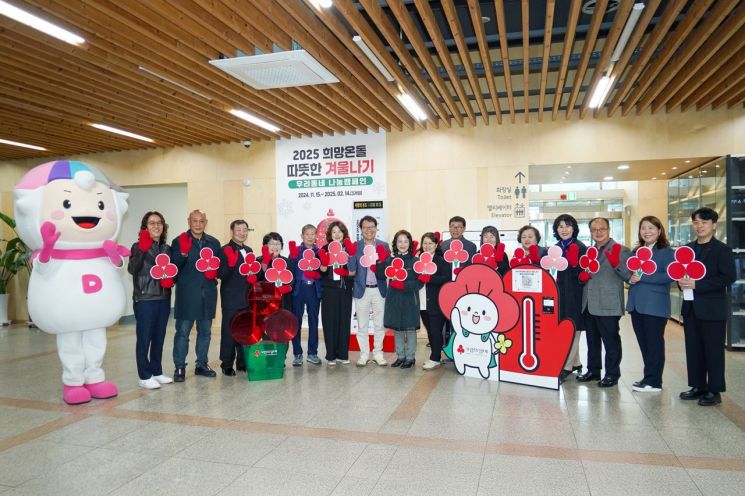
Dongdaemun-gu Raises 1.42 Billion Won for Warm Winter Campaign
340 Million Won in Cash, 1.07 Billion Won in Donated Goods... Achieved 105% of Target
891 Donations from Various Sectors... Used to Support Residents Below 120% of Median Income
Dongdaemun-gu (Mayor Lee Pil-hyung) announced on the 17th that approximately 1.42 billion won was raised over three months from November last year to February 14 this year, setting a record high for the ‘Warm Winter Campaign’.
Despite difficult economic conditions, a total of 891 donations were made by individuals, companies, and organizations, resulting in approximately 340 million won in cash and about 1.07 billion won worth of donated goods (converted value).
The cash donations are used to support low-income residents below 120% of the median income, including low-income families struggling to make ends meet, neighbors with illnesses who cannot receive proper treatment, and low-income youth needing tuition support. Various donated goods such as rice and kimchi were immediately delivered to vulnerable groups.
Lee Pil-hyung, Mayor of Dongdaemun-gu, said, “I deeply thank everyone who delivered warm support to our neighbors.” He added, “We will carefully ensure that the cash and goods are properly provided to those in need.”
The district sends thank-you letters to all donors who participated in the fundraising, and for outstanding donors, their names (or organizations) are displayed on the ‘Wall of Sharing’ in the first-floor lobby of the district office to express gratitude.
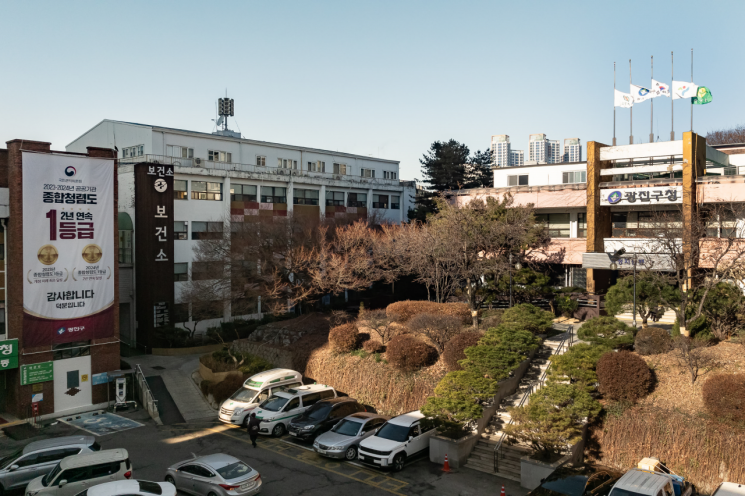
Gwangjin-gu Selected as an Excellent Institution in the ‘2024 Data-Based Administration Inspection’
Scored 88.79 Points, Achieving the Highest Grade of Excellent Institution
Evaluation Conducted on 679 Public Institutions Including Central Administrative Agencies... Assessed in 3 Areas and 10 Detailed Indicators
Gwangjin-gu (Mayor Kim Kyung-ho) was selected as an excellent institution with the highest grade in the ‘2024 Data-Based Administration Inspection’ conducted by the Ministry of the Interior and Safety.
This inspection is conducted annually on a total of 679 public institutions, including central administrative agencies and local governments, comprehensively evaluating ▲data analysis and utilization ▲shared data ▲management systems.
The evaluation is divided into three grades: excellent, average, and insufficient. Institutions scoring 80 points or higher out of 100 receive the ‘excellent’ grade. Gwangjin-gu scored 88.79 points, an increase of 10.53 points from the previous year, earning the highest grade of excellent institution.
In this inspection, which evaluates 10 detailed indicators across 3 areas, the district made efforts to activate ‘data-based administration’ by publishing and utilizing quarterly big data analysis reports and hosting big data analysis contests, which contributed to the high score.
Additionally, Gwangjin-gu received near-perfect scores in the ‘shared data’ area, which evaluates the level and efforts of data sharing and utilization held by all institutions, and the ‘management system’ area, which assesses the institution’s infrastructure and participation in education to smoothly implement data-based administration policies.
Kim Kyung-ho, Mayor of Gwangjin-gu, said, “Being selected as an excellent institution in this inspection is the result of Gwangjin-gu’s efforts to activate data-based administration.” He added, “We will continue to implement policies that residents can feel through active use of data.”
© The Asia Business Daily(www.asiae.co.kr). All rights reserved.

![Clutching a Stolen Dior Bag, Saying "I Hate Being Poor but Real"... The Grotesque Con of a "Human Knockoff" [Slate]](https://cwcontent.asiae.co.kr/asiaresize/183/2026021902243444107_1771435474.jpg)

















