Unofficial Emergency Meeting Held to Discuss Defense Plans
EU and UK Militaries Helpless After US Troop Withdrawal
The Donald Trump administration in the United States has signaled a de facto withdrawal from European security, complicating the calculations of European countries. While Germany, the largest economy in the European Union (EU), has stepped back due to domestic political circumstances, the United Kingdom is expanding its presence, but it is insufficient to fill the gap left by the U.S. military.
On the 16th (local time), the political media outlet Politico reported, citing a NATO (North Atlantic Treaty Organization) official, that NATO countries have begun revising their defense plans to reduce dependence on the U.S. and to have Europe bear a greater burden.
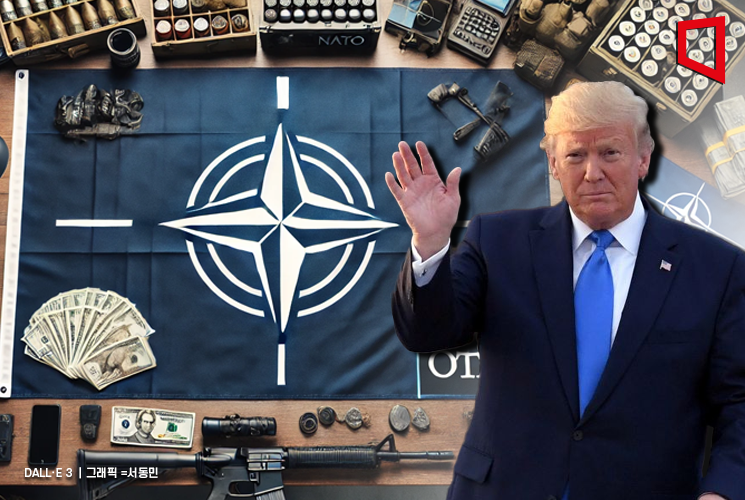
President Trump has consistently criticized Europe for 'free-riding' on security. To convey President Trump's intentions, U.S. Secretary of Defense Pete Hegseth, who traveled to Europe, indicated on the 14th that "the U.S. military is currently in Europe, but what happens in 5, 10, or 15 years requires a bigger discussion," suggesting adjustments to U.S. troop deployments in Europe. A former NATO official commented on this statement, saying, "Europe will realize that we are alone."
According to BBC and other outlets, French President Emmanuel Macron will hold an informal emergency meeting on the 17th in Paris, inviting leaders of major European countries. The meeting will discuss not only the Ukraine ceasefire negotiations but also future European defense plans.
Germany is in a situation where it is difficult to present a clear solution until the general election concludes this month, while UK Prime Minister Keir Starmer is expanding the UK's presence within NATO, including publishing an op-ed in The Telegraph on the same day suggesting the deployment of peacekeeping forces to Ukraine. Poland, which borders Ukraine, now has the third-largest military within NATO, and Italy is leading NATO's joint response forces.
A NATO member country's security official told Politico that the roles of the UK, Denmark, and the Netherlands are expected to expand in the future. Another NATO member's lawmaker mentioned that the UK could play a greater role in leading NATO, citing that UK Secretary of Defense John Healey chaired the Ukraine Defense Contact Group (UDCG) meeting on the 14th. This is the first time in three years that the UDCG has been led by a defense minister from a country other than the U.S.
However, if the Trump administration withdraws from Europe, the UK and European militaries will be helpless in filling the gap. Currently, about 80,000 U.S. troops are stationed in Europe, a number that has increased by more than 25% since Russia invaded Ukraine three years ago. Ukrainian President Volodymyr Zelensky warned in an interview with NBC News released on the same day, "If Russia believes there is no risk of U.S. retaliation, it will begin to occupy parts of Europe, including former Soviet regions," adding, "It will start with small countries, and Lithuania and Poland are also at risk."
For now, NATO's collective defense treaty is the only reliance. A NATO official told Politico, referring to the collective defense treaty, "Russian President Vladimir Putin still believes in it, and it is important that he does."
A European official said that to effectively deter Russia, NATO member countries need to strengthen their military capabilities, including funding new weapons purchases. He added that during the Trump administration, there was public opinion that President Putin would not start a new war, giving NATO members four years to prepare.
Another German official said, "We have been receiving a wakeup call for quite some time, but we kept hitting the snooze button."
© The Asia Business Daily(www.asiae.co.kr). All rights reserved.