Abuse of Tariff Policy as a 'Negotiation Weapon' by Trump
Major Republican Donor: "Damaging America's Credibility"
Global Investment Banks and Trust Companies Release Consecutive Impact Analysis Reports
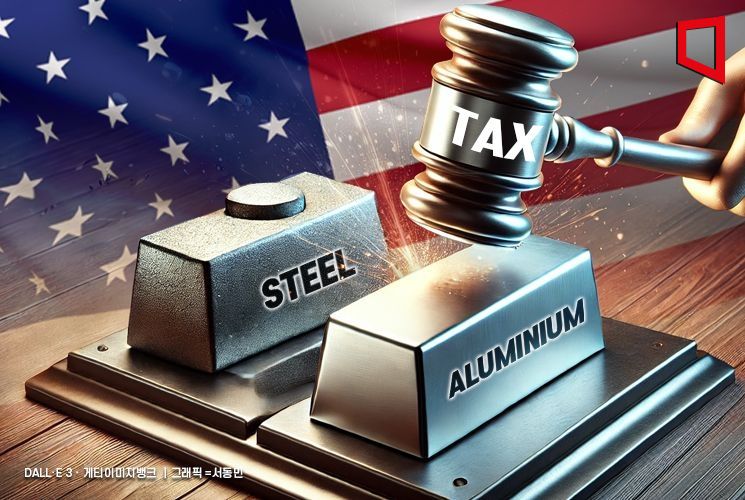
The global financial market is trembling with anxiety due to the tariff war sparked by Trump. While global investment banks (IBs) and trust companies are flooding the market with analysis reports on the impact of tariffs, a major hedge fund CEO, once known as a 'big player' in the US Republican Party, sharply criticized Trump for abusing tariff policies as a 'negotiation weapon,' saying it has a "negative impact on America's credibility."
According to US CNBC on the 11th (local time), Ken Griffin, CEO of Citadel, expressed concern at the UBS Financial Services Conference held in Florida that President Trump's remarks on tariffs would negatively affect the credibility of the United States.
Griffin, who has donated large sums of political funds to the US Republican Party, pointed out, "It is a big mistake for President Trump to use such rhetoric when trying to extract negotiations," adding, "This instills in the minds of CEOs of (foreign) companies and policymakers the perception that the US cannot be a reliable trade partner."
He expressed concerns about the uncertainty brought by tariff policies, saying, "For multinational companies, it becomes difficult to plan looking 5 to 20 years ahead," and "especially if trade conditions with major Western countries deteriorate, long-term capital investments, which could be negatively affected, may be significantly impacted."
Michael Medeiros, a macro strategist at Wellington Management, also pointed out that "the tariff threat is ongoing and will not disappear easily," noting that the uncertainty leads companies to seek short-term trading strategies.
Major US financial firms such as global investment bank JP Morgan and Northern Trust, one of the top three US trust companies, are also releasing weekly analysis reports on the impact of tariffs. This is evidence of the high level of market anxiety. Haibin Zhu, JP Morgan’s chief China economist, recently said in an interview with CNBC, "It is unclear whether China and the US can agree on a tariff truce," adding, "There remains uncertainty about the timing, speed, and scale of additional tariff increases."
However, some argue that investors are already becoming accustomed to the second US-China trade war triggered by Trump. Jason Brown, CEO of Alexis Investment Partners, claimed in a Reuters interview that the impact of tariffs on the market is diminishing.
Alexis’s CEO said, "Concerns about tariffs, retaliatory trade, and trade wars continue, but people are getting used to it," adding, "When tariff talks first emerged, there was a significant market adjustment, but despite the steel talk today, the market reaction was not large."
He also countered, "There are companies negatively affected by tariffs, but there are also companies that could be compensated through benefits such as tax cut extensions or deregulation," and "While inflation and raw material price increases caused by tariffs are concerning, we are in an innovative environment, so we must consider the possibility that productivity improvements could offset the impact of tariffs."
© The Asia Business Daily(www.asiae.co.kr). All rights reserved.
!["The Woman Who Threw Herself into the Water Clutching a Stolen Dior Bag"...A Grotesque Success Story That Shakes the Korean Psyche [Slate]](https://cwcontent.asiae.co.kr/asiaresize/183/2026021902243444107_1771435474.jpg)
















