Deutsche Bank Simulates Reciprocal Tariffs
"U.S. Effective Tariff Rate Rises from 1.5% to 4.8%"
Developing Countries Like India with High Tariffs Expected to Be Hit
EU Also Targeted Due to High Car Tariffs and VAT
"Reciprocal Tariffs Could Raise Inflation by 0.5 Percentage Points Annually"
Donald Trump, the President of the United States, who officially announced a 25% tariff on steel and aluminum, is expected to raise the effective U.S. tariff rate from the current 1.5% to about 5% if the "reciprocal tariffs" he predicted are introduced. It is anticipated that India, which has a high tariff rate against the U.S., will be hit directly. The European Union (EU), which applies a 20% value-added tax and has been repeatedly criticized by President Trump, is also expected to be a major target. However, there are growing concerns both inside and outside the U.S. that the introduction of such reciprocal tariffs could provoke retaliatory measures from trading partners and backfire on the U.S. economy through inflation and other effects.
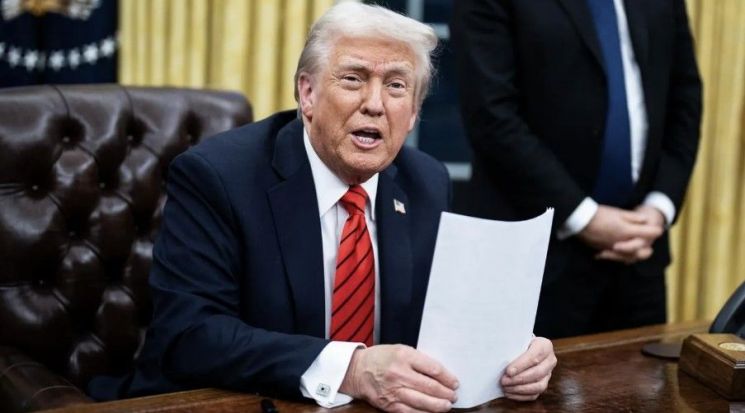
"If reciprocal tariffs are introduced, U.S. effective tariff rate rises from 1.5% to 4.8%"
According to Deutsche Bank on the 11th (local time), if President Trump introduces reciprocal tariffs, the effective tariff rate imposed by the U.S. on imports is estimated to rise from 1.5% in 2022 to 4.8%.
This estimate is based on the weighted average tariff rate of the top 10 major import countries that account for 70% of total U.S. imports. China, Mexico, Canada, Japan, and Vietnam are included among the major import countries where the U.S. has a large trade deficit.
Reciprocal tariffs mean that the U.S. would impose the same tariff rates on foreign imports as those imposed by foreign countries on U.S. imports. During his presidential campaign, President Trump pledged to introduce a universal tariff of 10-20% on all imports worldwide along with the implementation of reciprocal tariffs. For now, early in his administration, it appears that the reciprocal tariff card is being played as a substitute for the universal tariff pledge.
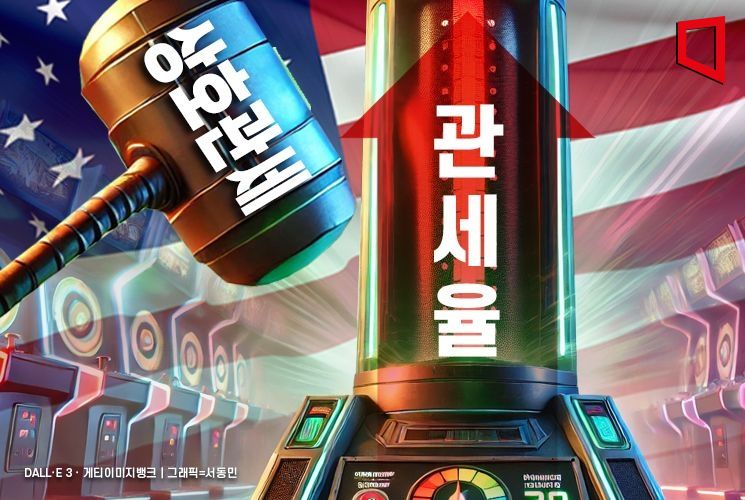
Developing countries like India expected to be hit... Car tariffs and VAT-heavy EU also targeted
India and the European Union (EU) are considered the main targets of the reciprocal tariffs predicted by President Trump. The U.S. applied an average tariff of 3% on India in 2022, but India's tariff rate against the U.S. was more than three times higher at 9.5%. Scott Lincicome, a trade policy expert at the Cato Institute, predicted, "Mainly developing countries, especially India, will be most affected." Accordingly, the trade imbalance issue is expected to be a major topic at the U.S.-India summit scheduled for the 13th.
The EU also seems unlikely to avoid repercussions if reciprocal tariffs are introduced. The EU applies high tariffs on U.S.-made automobiles and imposes a value-added tax of up to 20%, which has been a focus of President Trump's attacks. Last month, President Trump criticized the EU, saying, "They impose a 20% value-added tax, and that is almost a tariff." The EU applies a value-added tax of around 20% on most consumer goods, with some items exempted or subject to reduced rates.
Automobile tariffs are also relatively high. The U.S. currently imposes a 2.5% tariff on European cars, but the EU imposes a 10% tariff on U.S.-made cars. Considering the automobile VAT of 21.6%, President Trump judges that the effective tariff on U.S. cars is nearly 30%. Steven Miller, Deputy Chief of Staff for Policy at the White House, previously stated that the EU's value-added tax should be considered when setting reciprocal tariffs.
President Trump also announced the imposition of item-specific tariffs on automobiles, semiconductors, and pharmaceuticals the day before, and how these will be applied together with reciprocal tariffs in the future remains a key issue.
In the case of South Korea, most products have no tariffs due to the Free Trade Agreement (FTA) with the U.S. However, since South Korea recorded a record-high trade surplus with the U.S. of $55.7 billion last year, President Trump may raise this issue.
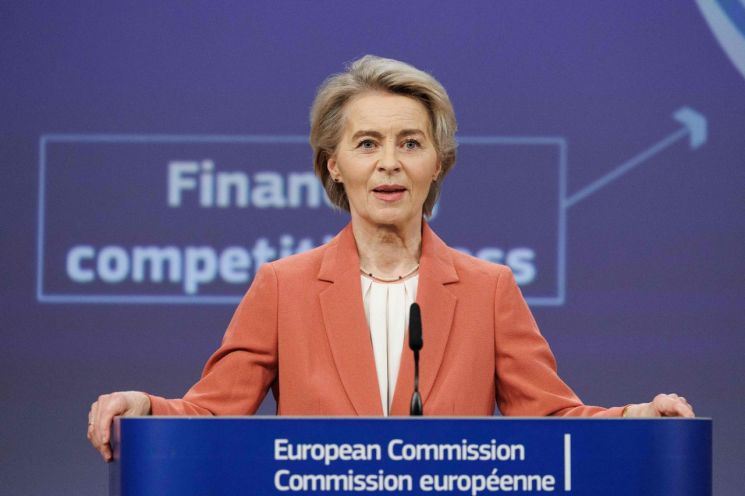
Reciprocal tariffs, a boomerang for inflation? "Annual increase of 0.5% expected"

There are concerns that the introduction of reciprocal tariffs by President Trump will inevitably lead to higher inflation in the U.S. Deutsche Bank estimates that the effective tariff rate will increase by 3.3 percentage points due to reciprocal tariffs, and the core Personal Consumption Expenditures (PCE) price index could rise by up to 0.5 percentage points annually. This calculation assumes that the burden of reciprocal tariffs is fully passed on to consumers, based on the fact that imports account for 16% of the core PCE price index. If consumers absorb only half of the reciprocal tariff increase shock, the core PCE inflation is analyzed to rise by an additional 0.25 percentage points. The core PCE inflation rate, which the Federal Reserve (Fed) places the most importance on, was 2.8% as of December last year, already significantly exceeding the target of 2%. With the introduction of reciprocal tariffs by President Trump, inflation could rise well above 3%. This could further delay the Fed's resumption of monetary easing, which had indicated cautious rate cuts due to concerns about inflation rebounding.
However, if reciprocal tariffs replace universal tariffs, there is a cautious expectation that the worst-case scenario of a trade war initially feared could be avoided. Goldman Sachs stated regarding reciprocal tariffs, "President Trump's remarks suggest that he views this policy as an alternative to the previously discussed 10-20% universal tariffs," and "If President Trump withdraws universal tariffs and moves forward with reciprocal tariffs, a larger trade war could be avoided."
© The Asia Business Daily(www.asiae.co.kr). All rights reserved.














