U.S. President Donald Trump mentioned the possibility of imposing tariffs on the semiconductor sector, leading to expectations of selective regulations on certain semiconductor items linked to China. The industry is concerned about the impact of high tariffs on the global semiconductor market and the resulting economic losses.
On the 11th, the electronics industry is on high alert regarding semiconductor items that could become major targets for tariffs during the second Trump administration. Semiconductors are essential components for building data centers in the U.S., the growth of the AI industry, and the development of defense and aerospace technologies. Therefore, comprehensive tariff imposition could also burden the U.S. economy. In particular, advanced process semiconductors below 5 nanometers, AI semiconductors, and semiconductors for data centers are core components required by U.S. companies, so tariff increases could lead to higher costs for domestic companies and a decline in technological competitiveness.
Nevertheless, the reason the U.S. is considering tariffs on semiconductors is interpreted as a strategic aim to block supply chains linked to China. Although the U.S. is expanding domestic semiconductor production through the CHIPS Act, it still depends on semiconductor products from Korean and Taiwanese companies. Accordingly, the industry expects that rather than comprehensive tariffs, selective regulations targeting semiconductor products and manufacturing facilities directly connected to China are more likely to be introduced.
From this perspective, advanced process semiconductors below 5 nm are likely to be the primary regulatory targets. These semiconductors are used in smartphones, high-performance computing, and AI semiconductors. The U.S. has continuously imposed regulations to prevent China from acquiring this technology.
However, since semiconductors below 5 nm are also components needed by U.S. companies, it is more likely that limited measures will be taken only on supply chains linked to China rather than comprehensive tariffs. There is also a forecast that some products may be subject to exceptions.
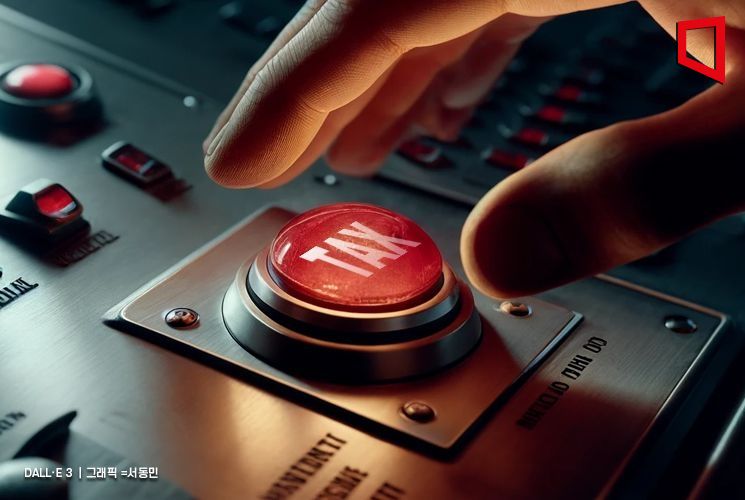
AI semiconductors are also likely to be major targets. Semiconductors such as graphics processing units (GPUs) and neural processing units (NPUs) used in AI servers and data centers are closely related to military and security technologies, so the U.S. is expected to strictly control them. High-bandwidth memory (HBM) supplied by Samsung Electronics and SK Hynix may also be included in the regulatory targets.
The U.S. has previously strengthened export controls related to semiconductors to China, restricting the export of extreme ultraviolet (EUV) lithography equipment essential for advanced semiconductor manufacturing and high-performance semiconductor production technologies. Additionally, Chinese semiconductor companies such as Huawei and SMIC (Zhongxin Guoji) have been added to export control lists (blacklists), making it difficult not only for U.S. companies but also for foreign companies to conduct business with them. As a result, it has become difficult for Korean semiconductor companies to circumvent U.S. regulations when exporting semiconductors to China, and the contraction of semiconductor production and technology development in China has become an obstacle to market expansion for Korean companies.
An Gi-hyun, Executive Director of the Korea Semiconductor Industry Association, pointed out, "Tariffs on semiconductors are not for protecting domestic industries, so their purpose is unclear, making it difficult to predict the tariff rates." He added, "If tariffs increase, the cost burden will rise for both sellers (Korea) and buyers (the U.S.). Semiconductors supplied to the U.S. market are used more for building AI data center servers like Google than for electronic products, so if high tariffs are applied, there will be strong opposition from U.S. companies."
© The Asia Business Daily(www.asiae.co.kr). All rights reserved.












