Second Highest Annual Sales Surpass 300 Trillion KRW
Record-High Annual R&D and Facility Investments
Samsung Electronics posted an operating profit of 2.9 trillion KRW in its semiconductor business in the fourth quarter of last year. The mainstay general-purpose (legacy) memory semiconductors underperformed due to weak demand in PCs and mobiles and a low-price supply offensive from China, while high-bandwidth memory (HBM), which saw a surge in demand due to the expansion of the artificial intelligence (AI) market, failed to deliver expected results.
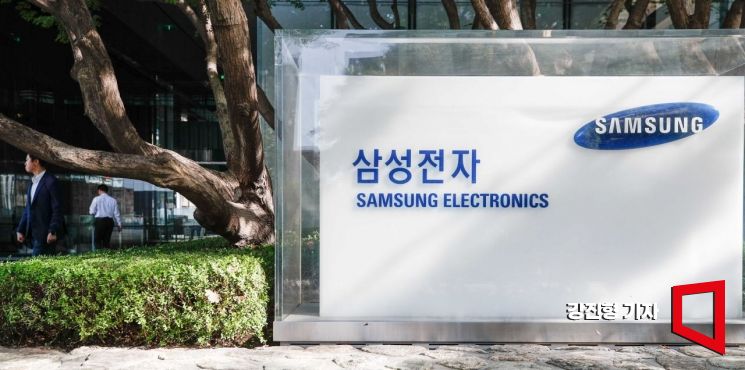
Samsung Electronics announced on the 31st that its consolidated operating profit for last year was provisionally estimated at 32.726 trillion KRW, a 398.34% increase from the previous year. Sales rose 16.2% year-on-year to 300.8709 trillion KRW. This is the second time Samsung Electronics' annual sales have reached the 300 trillion KRW mark, following 2022 (302.2314 trillion KRW).
Net profit increased by 122.45% to 34.4514 trillion KRW. Fourth-quarter operating profit was 6.4927 trillion KRW, falling short of market expectations. Fourth-quarter sales recorded 75.7883 trillion KRW, down 4% from the previous quarter.
The Device Solutions (DS) division, responsible for the semiconductor business, saw a 3% increase quarter-on-quarter due to expanded sales of high-value-added memory products for servers, but the Device eXperience (DX) division, which handles finished products, declined 10% quarter-on-quarter due to a decrease in the effect of new smartphone model launches. Fourth-quarter net profit was 7.7544 trillion KRW. Breaking down the fourth-quarter results by division, the DS division posted sales of 30.1 trillion KRW and an operating profit of 2.9 trillion KRW. Despite continued weak demand for mobile and PC memory, DRAM average selling prices (ASP) rose due to increased sales of HBM and high-capacity DDR5 for servers, achieving record-high sales for the fourth quarter. However, operating profit slightly decreased quarter-on-quarter due to increased research and development expenses and initial ramp-up costs for expanding advanced process production capacity. System LSI and foundry saw operating profit decline due to weak mobile demand and increased R&D expenses.
The DX division recorded fourth-quarter sales of 40.5 trillion KRW and an operating profit of 2.3 trillion KRW. The Mobile eXperience (MX) segment, responsible for smartphones, saw a decline in sales and operating profit quarter-on-quarter due to reduced effects from flagship new model launches. The TV and home appliance business experienced weakened profitability amid intensified competition among companies.
Samsung Electronics' capital expenditure in the fourth quarter of last year increased by 5.4 trillion KRW from the previous quarter to 17.8 trillion KRW, with approximately 16 trillion KRW allocated to semiconductors and 1 trillion KRW to displays. The annual capital expenditure reached a record high of 53.6 trillion KRW, with 46.3 trillion KRW invested in semiconductors and 4.8 trillion KRW in displays. As a result of continued aggressive research and development investments for future growth, fourth-quarter R&D expenses reached a quarterly record of 10.3 trillion KRW. On an annual basis, R&D expenses also hit a record high of 35 trillion KRW.
© The Asia Business Daily(www.asiae.co.kr). All rights reserved.

















