US Startup Succeeds in Test Flight
First Supersonic Passenger Plane Flight by a Private Company
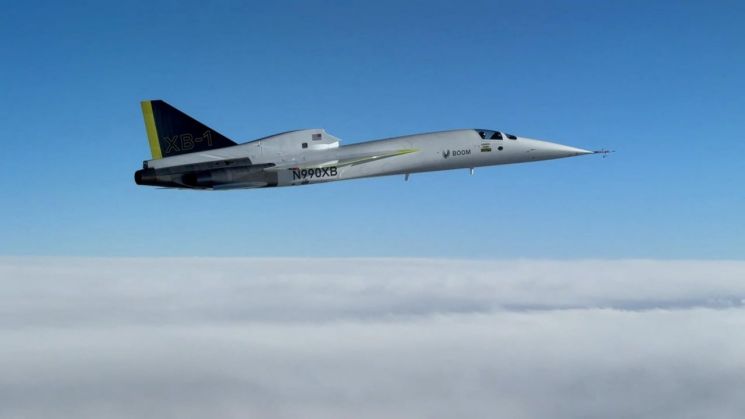 On the 28th of last month (local time), the XB-1, a supersonic passenger aircraft developed by the US startup Boom Supersonic, conducted a test flight over the Mojave Desert in California, USA. On this day, the XB-1 became the first passenger aircraft developed by a private company to successfully achieve supersonic flight. Photo by Reuters and Yonhap News.
American aircraft startup 'Boom Supersonic' has become the first among civilian airlines to successfully complete a test flight of a supersonic passenger plane. As a result, there is a high possibility that supersonic passenger planes, which were withdrawn from the aviation market in 2003 due to safety concerns and high costs, will resume commercial operations. A new supersonic aviation market capable of covering anywhere in the world within 4 hours is expected to open.
US Startup Achieves First Supersonic Passenger Plane Test Flight in Civilian Sector
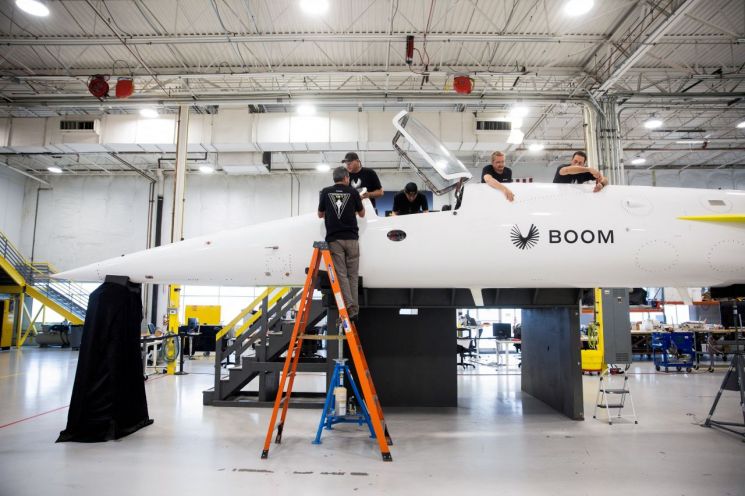 On the 28th of last month (local time), the XB-1, a supersonic passenger aircraft developed by the US startup Boom Supersonic, is seen undergoing pre-flight inspection. Photo by Reuters and Yonhap News Agency
Boom Supersonic's self-developed supersonic passenger plane prototype, the XB-1 model, successfully completed a supersonic test flight last month. During the test flight over the Mojave Desert in California, USA, it reached an altitude of 35,290 feet (approximately 9,933 meters) and recorded a speed of Mach 1.122 (1.122 times the speed of sound) just 12 minutes after takeoff.
This is the first time a passenger plane developed by a private company has succeeded in supersonic flight. The Mojave Desert, where the test flight took place under special permission from the US Federal Aviation Administration (FAA), holds symbolic significance as the site where Captain Chuck Yeager, one of the best pilots of his time and a US Air Force officer in 1947, first achieved supersonic flight in level flight in aviation history.
The success of this test flight has attracted interest from many airlines. According to Boom Supersonic, more than 130 pre-orders have been made by global airlines including American Airlines and United Airlines. If mass production of the XB-1 model is implemented, actual operations are expected to be possible within 2030.
Will the Concorde Revive After 20 Years? Safety, Noise, and Cost Are Key
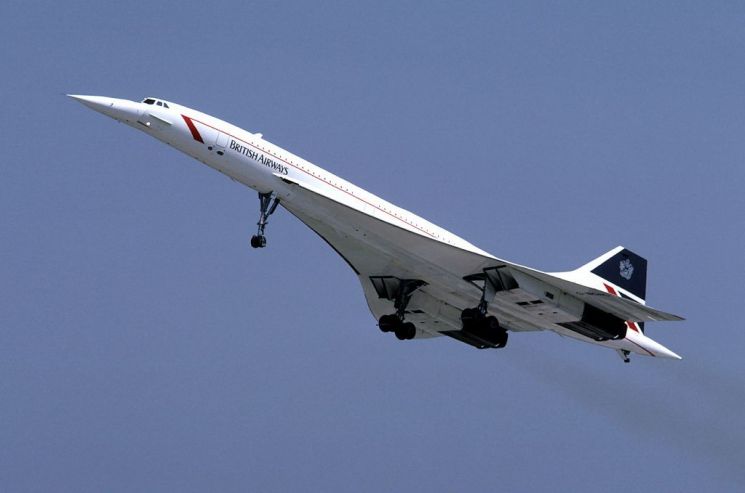 The Concorde, a supersonic passenger plane that ceased operation in 2003 due to unresolved safety issues, noise, and cost problems. British Airways website
With Boom Supersonic's successful test flight, expectations are rising that the supersonic passenger plane market, which was withdrawn from the aviation market for over 20 years after the Concorde passenger plane ceased operations in 2003, will reopen.
The Concorde passenger plane was a supersonic passenger aircraft jointly developed by the UK and France in 1969, carrying about 100 passengers and flying at a fast speed of Mach 2.02. Its flight range per refueling was about 7,000 km, so its routes were mainly concentrated on the Atlantic route connecting London and New York, a distance of 6,000 km. The speed itself was incredibly fast, covering the distance between London and New York in just 3 hours and 30 minutes.
However, the huge costs of aviation fuel and maintenance made ticket prices prohibitively expensive. At the start of commercial flights in 1969, economy class tickets cost $15,000 (about 21.8 million KRW), more than three times the price of first-class tickets on regular planes at the time. Additionally, safety concerns raised after a crash in 2000 and problems such as extreme noise immediately after takeoff were not resolved, leading to its eventual withdrawal from the market.
Boom Supersonic plans to address the issues faced by the Concorde and establish supersonic passenger planes in the aviation market. Blake Scholl, CEO of Boom Supersonic, told CNN, "Our goal is to offer flights that can cover anywhere in the world within 4 hours at twice the speed of conventional passenger planes, Mach 1.7, for just $100 (about 140,000 KRW) within the next 10 years."
© The Asia Business Daily(www.asiae.co.kr). All rights reserved.
![Clutching a Stolen Dior Bag, Saying "I Hate Being Poor but Real"... The Grotesque Con of a "Human Knockoff" [Slate]](https://cwcontent.asiae.co.kr/asiaresize/183/2026021902243444107_1771435474.jpg)


















