LG Energy Solution and Samsung SDI Turn to Losses
Despite Investment Efficiency Measures This Year
ESS Production Capacity for North America to Be Expanded
Accelerating Development of Solid-State and 46-Series Batteries
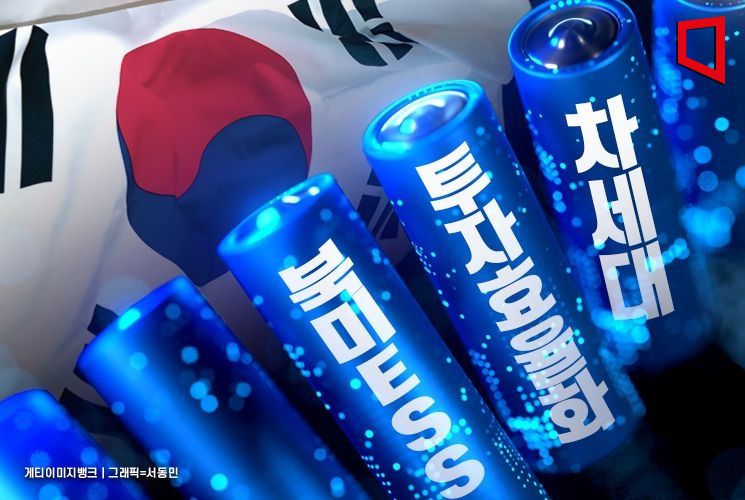
Due to weak electric vehicle demand, domestic battery companies that turned to losses in the fourth quarter of last year are expected to gradually recover demand starting from the first quarter of this year. Despite plans to reduce facility investments amid stagnation in electric vehicle growth, domestic battery companies intend to aggressively respond to the energy storage system (ESS) market. They also presented a vision to lead the next-generation battery market, including solid-state batteries and the 46-series (46mm diameter) cylindrical batteries.
On the 24th, LG Energy Solution and Samsung SDI, which announced their fourth-quarter 2024 earnings respectively, projected in a conference call that the battery market will grow by over 20% this year, with the first quarter being the bottom.
"Demand to Gradually Recover After Bottoming Out in Q1"
Lee Chang-sil, Chief Financial Officer (CFO) and Vice President of LG Energy Solution, said, "After comprehensive analysis, the global electric vehicle battery market is expected to grow by the mid-to-high 20% range in terms of capacity," adding, "Based on discussions with electric vehicle manufacturers, we expect volumes to gradually recover starting from the first quarter."
Kim Jong-sung, Vice President of the Management Support Office at Samsung SDI, also said, "Major customers are adjusting their inventories, so a quick recovery in performance seems unlikely, but we expect improvements around the second half of the year when uncertainties are somewhat resolved and inventory adjustments are completed," adding, "This year's performance will bottom out in the first quarter and gradually improve from the second quarter." Vice President Kim also forecasted, "The global electric vehicle market will grow by 21% this year, centered on the U.S. and Europe, compared to last year, shifting from China-centered growth in 2024."
Amid stagnation in global electric vehicle demand and increasing policy uncertainties due to the inauguration of Donald Trump's second administration in the U.S., domestic battery companies appear to be focusing on investment efficiency this year.
Vice President Lee said, "In a situation where demand volatility and downside risks are concerning, it is more important than anything else to actively maximize operational efficiency," adding, "The Stellantis and Honda joint ventures (JVs) will respond to customer demand without disruption, but the speed and scale of capacity (CAPA) expansion will be flexibly adjusted based on conservative demand forecasts."
LG Energy Solution specifically announced that capital expenditures (CAPEX) will be reduced by 20-30% compared to the previous year. While it spent 12.547 trillion won on facility investments last year, it is expected to decrease by about 3 trillion won this year.
Kim Yoon-tae, Vice President of the Management Support Office at Samsung SDI, also said, "We are reviewing investment plans considering market conditions and adjusting them under a generally conservative stance," adding, "Facility investments are expected to decrease compared to last year." However, he did not disclose specific figures. Samsung SDI executed 6.6 trillion won in facility investments last year, a 53% increase from the previous year's 4.3 trillion won, but it is expected to decrease this year.
"Investment Efficiency, North American ESS, and Next-Generation"
As electric vehicle demand does not recover quickly, domestic battery companies are pinning their hopes on the North American ESS market. Vice President Kim said, "The ESS market is expected to grow about 14%, centered on North America, due to increased power demand from the expansion of artificial intelligence (AI) data centers and rising demand for uninterruptible power supplies (UPS)," adding, "Especially, demand for Korean-made ESS batteries is expected to continue expanding due to U.S.-China geopolitical factors."
With the U.S. taking measures to counter China, Korean ESS batteries are expected to benefit. Vice President Lee also said, "From 2026, the U.S. will raise import tariffs on Chinese-made ESS batteries from the current 10.9% to 28.4%, which is expected to increase the need for battery supply based on local production bases."
Accordingly, domestic battery companies are expanding production of ESS batteries for North America. Vice President Lee explained, "We initially planned to expand the new Arizona plant to produce ESS batteries, but we adjusted this to first utilize idle lines at existing plants," adding, "To quickly respond to local demand in North America, we advanced the production timing of LFP (lithium iron phosphate) batteries from 2026 to the first half of 2025."
Park Jong-sun, Vice President of Samsung SDI, said, "For ESS batteries, we have already secured orders equivalent to 90% of production capacity," adding, "We are pursuing more than a 20% increase in production capacity compared to the end of last year by improving production line efficiency and converting electric vehicle lines to ESS lines."
While domestic battery companies are focusing on investment efficiency, they are accelerating new technology development for the future. Vice President Lee said, "Dry electrode technology, which improves energy density and cost competitiveness compared to wet processes, plans to secure mass production capability this year at the pilot line in Ochang, Chungbuk," adding, "We will also establish a pilot line for sulfide-based solid-state batteries within the year to lay the foundation for commercialization, which can dramatically improve performance and safety compared to lithium-ion batteries."
Vice President Kim Yoon-tae also emphasized, "Investments for future growth such as joint ventures (JVs) with General Motors (GM), solid-state batteries, LFP, and the 46-series will proceed without disruption according to the existing schedule," adding that Samsung SDI is "discussing the 2027 mass production project for LFP with major customers."
Meanwhile, LG Energy Solution recorded sales of 6.4512 trillion won in the fourth quarter of last year but posted an operating loss of 225.5 billion won, turning to a deficit compared to the previous quarter and the same period last year. Samsung SDI also turned to a loss with sales of 3.7545 trillion won and an operating loss of 256.7 billion won in the fourth quarter of last year.
© The Asia Business Daily(www.asiae.co.kr). All rights reserved.

















