A Monument Symbolizing Hardship, Perseverance, and Hope
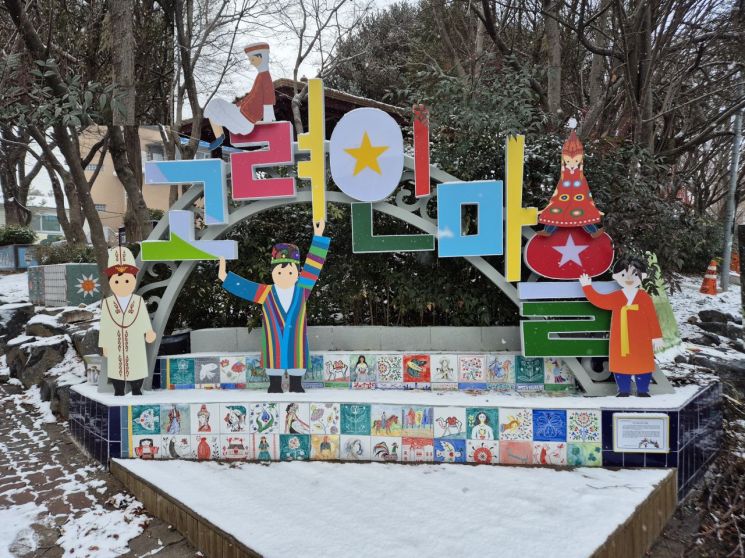 At the edge of Hongbeomdo Park, located in the heart of the Gwangju Koryoin Village, a typographic sculpture is capturing the attention of visitors. Provided by Koryoin Village
A typographic sculpture symbolizing the lives of Koryoin, erected in Hong Beomdo Park at the heart of Gwangju Koryoin Village, is captivating the attention of visitors.
According to Koryoin Village on the 29th, this sculpture serves as a monument symbolizing the hardships, perseverance, and hope of Koryoin, standing as an important medium to remember their tragic history and pass it on to the next generation.
In 1937, due to the Soviet government's forced migration policy to Central Asia, countless Koryoin were compelled to leave their homeland-like Primorsky Krai and were relocated to harsh environments such as the Central Asian steppe, the Red Desert, the Black Desert, and mountainous regions.
Starting with Ushtobe in Kazakhstan, the first destination in Central Asia, Koryoin pioneered new lives in the vast wilderness. Despite the climate and land unsuitable for farming and the extreme weather, they began cultivating rice, overcoming the barren environment.
The forced migration was not merely a hardship for one ethnic group but was also closely linked to the history of the independence movement. Independence activists who led the movement centered in Primorsky Krai also became targets of forced migration and had to relocate to Central Asia along with the Koryoin.
Even in their new settlements, they strove not to lose their ethnic identity and pride. They took the lead in passing on their identity as Koreans by educating their children in the Korean language, history, and culture. Their efforts strengthened the unity of the Koryoin community and enabled their success in the new environment.
The Koryoin, scattered across Central Asia, formed their own communities and achieved remarkable progress in various fields. They accomplished results in all areas, including agriculture, education, culture, and the arts, and became respected figures among the local people. Their perseverance and efforts were recognized even in Soviet society, earning them the nickname "heroes who create miracles wherever they go."
After the dissolution of the former Soviet Union, Koryoin, who once again set out in search of new settlements to escape ethnic discrimination and economic hardship, entered Korea and are now scattered throughout the country, enduring difficult lives. Among them, those who settled in Gwangju are creating a new history by forming their own community.
Gwangju Koryoin Village is making various efforts not only to settle but also to preserve the history and culture of their people. The typographic sculpture is a visual representation of the history of Koryoin, who built their lives even in barren environments.
A representative of Koryoin Village said, "For tourists visiting Gwangju Koryoin Village, this sculpture serves as more than just an attraction; it is an important monument where they can feel the strong vitality and pride of the Korean people."
© The Asia Business Daily(www.asiae.co.kr). All rights reserved.

















