"I don't want to buy a house"... The emergence of the 'Jip-pojok'
Last year, it was found that to buy a house in Seoul, one would need to save every penny of their salary for 9.8 years without spending anything.
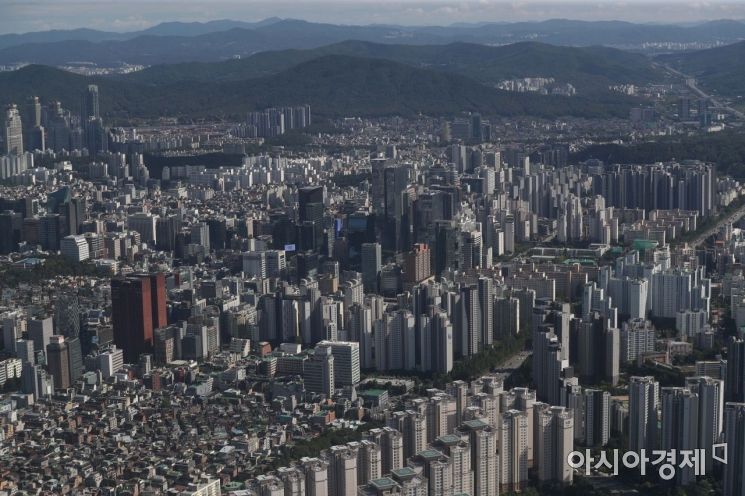 According to the KB Real Estate Monthly Housing Price Trend, as of September last year, the price-to-income ratio (PIR) of houses in Seoul was 9.8. Photo by Mun Ho-nam munonam@
According to the KB Real Estate Monthly Housing Price Trend, as of September last year, Seoul's Price to Income Ratio (PIR) was 9.8. PIR is the ratio of housing price to household income, indicating the period required to purchase a house if all income is saved. One year is classified in decimal form; for example, 0.5 means 6 months, and 0.25 means 3 months. Housing prices and household incomes are each divided into quintiles (1st quintile: lowest 20% to 5th quintile: highest 20%), resulting in a total of 25 PIR values. Typically, PIR is based on the middle-income (3rd quintile) group purchasing a mid-priced (3rd quintile) house. In the first quarter of 2014, ten years ago, Seoul's PIR was about 7.5, but it continued to rise, reaching 15.2 in 2022.
A middle-income (3rd quintile) household in Seoul would need 3.03 years to buy a low-priced house (1st quintile), but it would take 32.17 years to purchase a high-priced house (5th quintile). Low-income households (1st quintile) would need 26.37 years to buy a mid-priced (3rd quintile) house and a staggering 86.39 years to buy a high-priced house. On the other hand, high-income households (5th quintile) would take 4.73 years to buy a mid-priced house and 14.2 years for a high-priced house.
Jeonse (long-term lease) remains a heavy burden. As of September, Seoul's J-PIR was 5.47, up 0.22 points from 5.25 the previous year. Similar to PIR, this means a middle-income household would need to save their entire salary for 5.47 years without spending a single penny to afford a mid-priced jeonse house in Seoul.
"I don't want to buy a house"… The rise of the 'Jip-pojok'
According to the '2023 Housing Status Survey' recently released by the Ministry of Land, Infrastructure and Transport, the homeownership rate, which refers to the proportion of households owning a home regardless of actual residence, was 60.7% nationwide, down 0.6 percentage points from 61.3% the previous year. The occupancy rate, meaning the proportion of people living in their owned homes, was 57.4% nationwide, a decrease of 0.1 percentage points from a year earlier. In a survey on attitudes toward homeownership, 87.3% responded that "I need to have my own home," which is 2.3 percentage points lower than the previous year.
© The Asia Business Daily(www.asiae.co.kr). All rights reserved.

















