Criticism Arises That Government Measures Are Too Late
Some Areas See a 35 Percent Increase in Just One Month
Reports have emerged that the Japanese government is considering expanding the release of reserved rice stocks in response to the rising rice prices that have continued since last summer.
Local Japanese media outlets Yomiuri Shimbun and Nihon Keizai Shimbun (Nikkei) reported on the 25th that the Japanese government plans to change the operational guidelines related to reserved rice stocks, which can currently only be released in emergencies such as severe crop failures, in order to curb the upward trend in rice prices.
However, if reserved rice stocks are released to respond to the sharp rise in rice prices, the government has decided to attach the condition that it will repurchase the rice after a certain period. The timing and quantity of the reserved rice sales have not yet been determined. The Japanese government plans to seek related advice at an expert meeting scheduled for the 31st.
Japan started the reserved rice stock system in 1995 following a poor harvest in 1993. It is known to have secured about 1 million tons as reserved rice stocks. The storage period for reserved rice is five years, and after the expiration of this period, it is sold for uses such as animal feed.
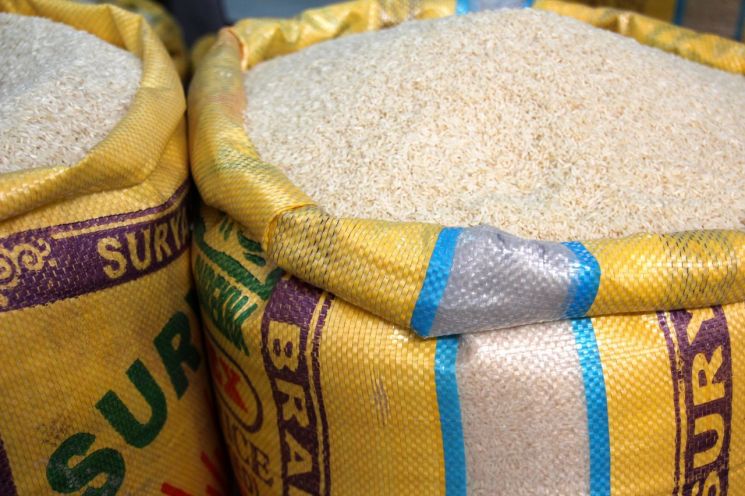
The background for promoting the expansion of reserved rice stock releases is the persistent high rice prices due to a shortage in circulation volume. The government had expected that the release of newly harvested rice from last autumn would put a brake on the rising rice prices that began around summer, but rice prices instead increased.
Nikkei reported that the wholesale price of the Koshihikari variety from Niigata rose by as much as 35% in one month. Currently, in Tokyo supermarkets, there are quite a few products where the price of 5 kg of rice exceeds 4,000 yen (about 37,000 won). In Korea, 5 kg of rice generally costs around 20,000 won.
Kazuhito Yamashita, a research fellow at Canon Global Strategy Institute who studies food and agricultural policies, criticized the government’s measures as too late, telling Yomiuri, "If reserved rice stocks had been released last summer, it would have been possible to respond before rice prices surged sharply."
© The Asia Business Daily(www.asiae.co.kr). All rights reserved.
![Clutching a Stolen Dior Bag, Saying "I Hate Being Poor but Real"... The Grotesque Con of a "Human Knockoff" [Slate]](https://cwcontent.asiae.co.kr/asiaresize/183/2026021902243444107_1771435474.jpg)
















