Annual Operating Loss of 5.2 Billion KRW, Turning to Deficit
"Earnings Shock" Due to Sluggish Duty-Free Market
First Asset Revaluation Since the 1990s
Debt Ratio Drops from Over 400% to 197%
Hotel Shilla recorded an operating loss in the fourth quarter as well, turning to a deficit on an annual performance basis. This is due to the difficulty in securing profitability amid a challenging duty-free market.
To improve its financial structure amid losses, Hotel Shilla also conducted an asset revaluation of the land for Shilla Hotels in Seoul and Jeju.
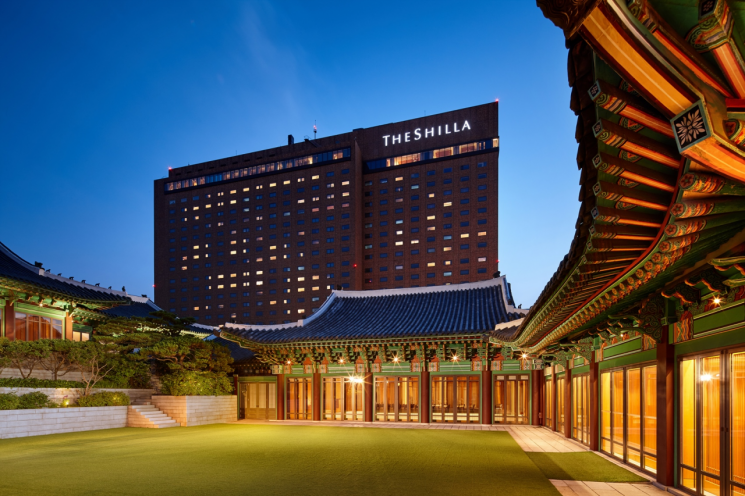
According to the Financial Supervisory Service disclosure system on the 24th, Hotel Shilla posted an annual operating loss of 5.2 billion KRW last year, turning to a deficit.
Sales increased by 10.6% compared to the previous year, reaching 3.95 trillion KRW. Along with the operating loss, net income also recorded a deficit of -61.5 billion KRW.
This fell short of market expectations (sales of 4.013 trillion KRW, operating profit of 7.7 billion KRW). The fourth-quarter results came in lower than anticipated, failing to meet the forecast.
Hotel Shilla's fourth-quarter sales were 947.8 billion KRW, with an operating loss of 27.9 billion KRW. Sales increased by 1% compared to the same quarter last year (937.6 billion KRW), but the operating loss widened from -18.3 billion KRW in the same period. Initially, the market had forecasted fourth-quarter sales of 1.0132 trillion KRW and an operating loss of -14.2 billion KRW, but both sales and operating profit fell significantly short of expectations, constituting an earnings shock.
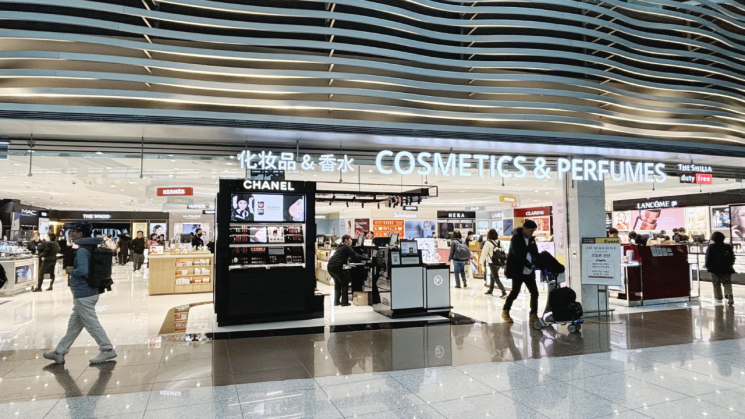
Hotel Shilla currently focuses on the duty-free business (TR) and the hotel & leisure business as its main operations. Among these, the sluggish duty-free business dragged down Hotel Shilla's performance. The TR division posted fourth-quarter sales of 773.5 billion KRW and an operating loss of 43.9 billion KRW. Sales increased slightly by 0.2% compared to the same period last year, but the operating loss expanded by about 15 billion KRW from -29.7 billion KRW in the previous year.
Looking at sales, downtown store sales declined by double digits. Domestic downtown store sales decreased by 16.4% compared to the same period last year, while airport store sales increased by 16% during the same period. Although airport store sales rose, it is estimated that high management costs limited the increase in overall operating profit.
The hotel division recorded fourth-quarter sales of 174.3 billion KRW and operating profit of 16 billion KRW, marking increases of 5.3% and 40%, respectively, compared to the same period last year. Although sales at Jeju hotels decreased by about 7.6%, Shilla Stay's occupancy rate exceeded 80%, boosting sales by approximately 11% and improving the hotel division's performance.
Shilla Hotel plans to focus on profitability improvement in the first quarter of this year. For the duty-free stores, given the slow recovery of the duty-free market due to high exchange rates and global economic downturn, the company intends to concentrate on solid management to secure profitability. The hotel division plans to respond flexibly to customer demand based on product and service competitiveness.
Hotel Shilla also undertook asset revaluation at the end of last year to improve its financial structure. The assets targeted were hotel sites in Seoul and Jeju. Asset revaluation refers to reassessing the asset prices recorded in accounting books to reflect market value (current price) more accurately. This is commonly done for land, which is less depreciated and tends to appreciate in value.
Hotel Shilla conducted its first asset revaluation since the 1990s. A Hotel Shilla official explained, "There was a gap between the book value and actual value as no additional evaluation was conducted, and the corporate value was undervalued."
The expected effect of the asset revaluation is an improvement in the financial structure. Through this revaluation, the land asset value increased from the previous book value of 191.7 billion KRW to 1.129 trillion KRW. The revaluation surplus amounted to 937.3 billion KRW. Although deferred corporate tax liabilities increased slightly due to the revaluation, revaluation surplus (capital) of 730 billion KRW was reflected due to the increase in land value.
Thanks to this, the company's debt ratio, which indicates financial health, significantly decreased. The debt ratio (total debt divided by total capital) was 444% in 2022 and 394% in 2023, but after the asset revaluation, last year's debt ratio dropped to 197%. The company's total assets stand at 3.8139 trillion KRW, liabilities at 2.5296 trillion KRW, and capital at 1.2843 trillion KRW. Capital doubled compared to the previous year (608.5 billion KRW).
© The Asia Business Daily(www.asiae.co.kr). All rights reserved.
![Clutching a Stolen Dior Bag, Saying "I Hate Being Poor but Real"... The Grotesque Con of a "Human Knockoff" [Slate]](https://cwcontent.asiae.co.kr/asiaresize/183/2026021902243444107_1771435474.jpg)

















