Huigyeongru, Gwangju Media Art Platform, and Yangnim-dong Connected for Culture and Food
Car-Free Streets Boost Foot Traffic and Sales... Exploring Further Expansion
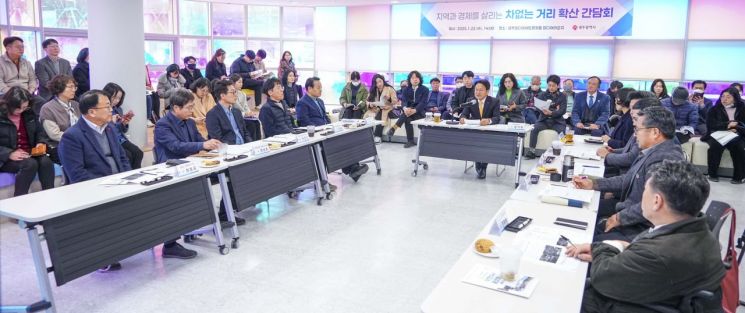 Gwangju Mayor Kang Gijeong is speaking at the "Car-Free Street Expansion Meeting" held on the afternoon of the 22nd at the Gwangju Media Art Platform in Nam-gu. Provided by Gwangju City
Gwangju City has taken another step forward in realizing the “Daejabo (Public Transport, Bicycle, and Pedestrian-Oriented) City,” an innovative urban space centered on people.
On the 22nd, Gwangju City created and fully opened “Cheongchun Bitpocha Square” at the parking lot of Gwangju Park in Nam-gu. This open square will become a space where various foods and cultures blend, transforming into a place where citizens can walk and gather.
The event was attended by Mayor Kang Gijung, Dong-gu District Chief Lim Taek, local residents from the car-free street, representatives of the merchants’ association, and members of the Daejabo Citizens’ Action Group.
“Cheongchun Bitpocha Square” is one of the strategies to realize the Daejabo City, aiming to connect urban spaces previously divided by cars, create a walkable city, and build a sustainable city by reducing greenhouse gas emissions. Together with nearby cultural resources such as Gwangju Park, Huigyeongru, and Gwangju Media Art Platform, it will be connected with the old downtown areas of Yangnim, Dongmyeong, and Seonam-dong, evolving into a citizen space where history and culture coexist?where people can walk, gather, and stay.
The city plans to verify the dual benefits of the Daejabo City, such as improving climate and environmental advantages and boosting the local economy through Bitpocha Square, thereby gaining citizens’ support. Additionally, to restructure road spaces around pedestrians, the city will expand “Cheongchun Bitpocha Street,” introduce more “diagonal crosswalks,” and operate “car-free Munhwajeondang-gil.”
Since declaring the “Daejabo City” in June last year, Gwangju City has been carrying out various projects to shift its transportation policy from a car-centric approach to one focused on public transport, bicycles, and walking. The Daejabo City initiative began with the Gwangju G-Pass, Cheongchun Bitpocha Square, and the Gwangcheon District Transportation Plan. Moving forward, the city plans to make significant progress with the opening of the first phase of Urban Railway Line 2 in 2026 and a complete overhaul of city bus routes.
To further promote everyday bicycle use beyond leisure, the city is establishing a “dedicated bicycle road along the first phase of Urban Railway Line 2,” “Gwangjucheon Bicycle Road,” and the nation’s first “bicycle-friendly pilot district” in the Cheomdan area.
Prior to opening “Cheongchun Bitpocha Square,” the city held a meeting titled “Expanding Car-Free Streets to Revitalize the Local Economy.” At the meeting, participants shared the economic effects and achievements of car-free streets implemented at over ten locations in Gwangju, discussed the environmental benefits of transitioning to a Daejabo City, and explored ways to expand car-free streets.
Car-free streets in the Gwangju area include: Geumnam-ro Car-Free Street, Chunjang-ro 4·5-ga Chunjang Goblin Summer Beer Festival X Youth Coexistence Market, City Hall Earth Day Car-Free Street, Pungam-dong Communication Theme Road, Gunbun-ro Saturday Night Market, Baegun Square Saturday Night Market, Jeonnam University Back Gate College Road, Gwangsan World Night Market, 1913 Songjeong Station Market Car-Free Street, and Sangmu Friday Market.
Participants agreed that the operation of car-free streets increased foot traffic and sales, injecting new vitality into the local community.
Mayor Kang Gijung stated, “Responding to the climate crisis by reducing greenhouse gas emissions and connecting roads divided by cars to realize a Daejabo City centered on public transport, bicycles, and walking is a challenging but essential path. Just as dots come together to form a line, I hope this becomes one of the dots leading us toward a Daejabo City, and I will continue to move forward with the support and understanding of our citizens.”
© The Asia Business Daily(www.asiae.co.kr). All rights reserved.

















