Ministry of Land, Infrastructure and Transport Announces Measures to Improve Airport Safety Facilities
Follow-up Actions After Muan Jeju Air Accident Include Expanding Runway Safety Zones and Upgrading Localizer Facilities
Seven Airports Targeted for Emergency Landing Safety Enhancements and Introduction of EMAS
The government has decided to address potential risks during emergency aircraft landings at airports nationwide as a follow-up measure to the Muan Jeju Air passenger plane accident. They are considering options such as extending the runway end safety zones or introducing special facilities to assist aircraft braking.
On the 22nd, the Ministry of Land, Infrastructure and Transport (MOLIT) announced plans to improve airport safety facilities, including localizer facilities, at the government complex in Sejong. Prior to this, MOLIT conducted special safety inspections and held meetings with related agencies and experts following last month's accident.
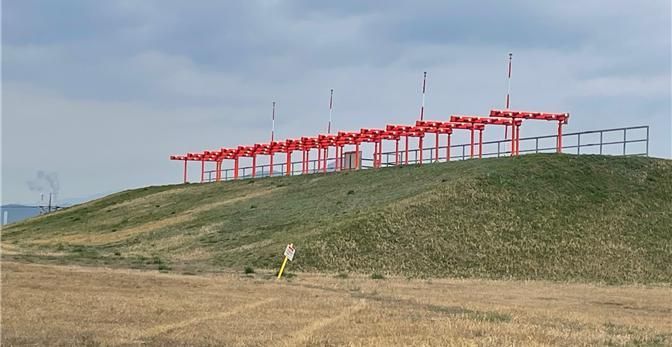
The inspection identified nine facilities across seven airports that require localizer facility improvements, including Muan Airport, Gimhae International Airport (2 locations), Jeju International Airport, Gwangju Airport, Yeosu Airport, Pohang Gyeongju Airport, and Sacheon Airport (2 locations).
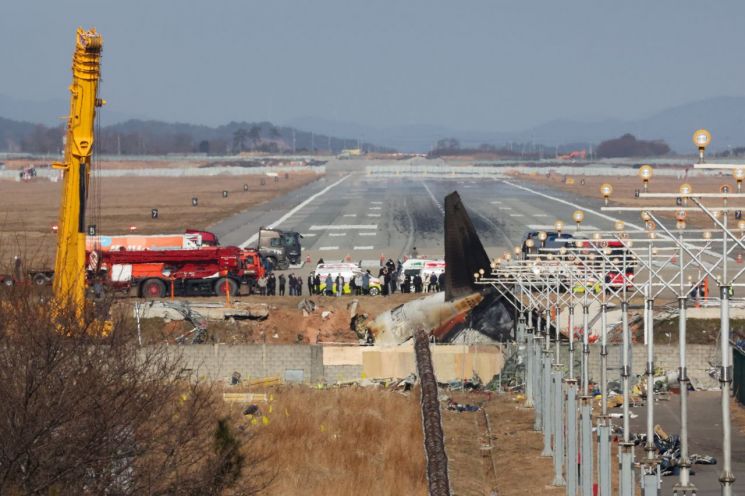 On the morning of the 1st, bereaved family members of passengers are examining the wreckage of the Jeju Air passenger plane at the accident site of Muan International Airport in Muan-gun, Jeollanam-do. Photo by Yonhap News
MOLIT will consider undergrounding the localizer facility foundations and replacing them with lightweight steel structures during the design phase. Each airport will select a method that complies with relevant installation regulations while enabling swift implementation. They plan to proceed with procurement immediately and minimize the approval and consultation periods to promote improvements within the first half of this year where possible, aiming to complete all improvements within the year at the latest.
Airports with runway safety zones shorter than the recommended 240 meters include Muan Airport, Gimhae Airport, Yeosu Airport, Pohang Gyeongju Airport, Sacheon Airport, Ulsan Airport, and Wonju Airport, totaling seven airports. These airports will work to expand safety zones, but if securing space within airport grounds is difficult, they will introduce Engineered Materials Arrestor Systems (EMAS) to prevent runway excursions.
EMAS is a facility where cement blocks break under the weight of an aircraft, providing braking force to the aircraft. To expedite its introduction, an expert consultative group will be formed this month to analyze overseas cases. Installation and maintenance standards and domestic and international application methods will be refined and announced in April.
Additionally, MOLIT plans to prioritize safety in emergency aircraft landings at seven airports currently in the basic planning or design stages, including Gadukdo New Airport and Daegu Gyeongbuk Integrated New Airport. Furthermore, they will prepare a plan to revise safety standards related to airport facilities within the first half of this year.
Next month, they will announce a plan to improve bird strike prevention and establish a comprehensive aviation safety innovation plan, including airline safety operation improvements, by April. To establish a system for continuous management and inspection of airport facilities, safety experts will be added to the Airport Development Technology Review Committee, chaired by the responsible director, and a new Airport Facility Safety Team (tentative name) will be created.
Park Sang-woo, Minister of Land, Infrastructure and Transport, stated, "This measure prioritizes urgent actions. We will promptly review and implement necessary measures not only in the aviation sector but also in road, railway, and building facility safety."
© The Asia Business Daily(www.asiae.co.kr). All rights reserved.


















