Successful First Surgery Using Advanced Medical Robot Outside the Capital Area
A New Path Opens for 10,000 Patients in the Southeastern Region to Receive Local Treatment
A path has opened for patients with intractable epilepsy in the southeastern region, who suffer from continuous seizures, to receive surgery and treatment locally.
The Inje University Haeundae Paik Hospital (Director Kim Seong-su) intractable epilepsy surgery team (Neurology Professor Kim Seung-eun, Neurosurgery Professor Kim Hae-yu) recently successfully completed surgery for intractable epilepsy using ‘Stereo-Electro-Encephalo-Graphy’ (SEEG).
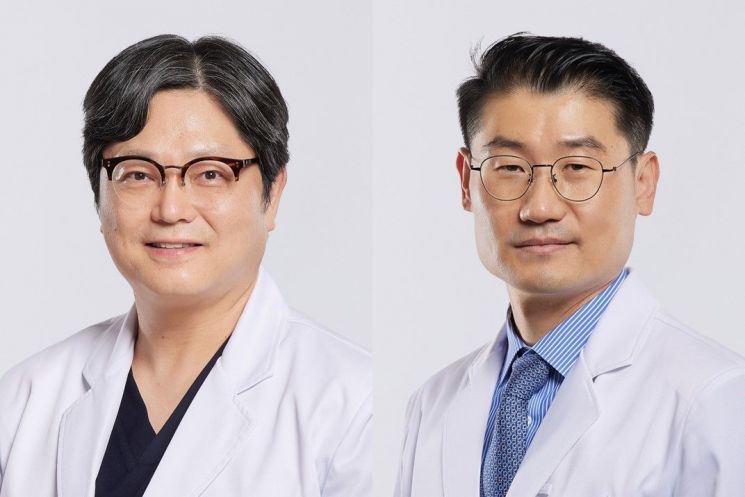 Professor Kim Seong-eun (left), Department of Neurology, Haeundae Paik Hospital, and Professor Kim Hae-yu, Department of Neurosurgery. Provided by Paik Hospital
‘Stereo-Electro-Encephalo-Graphy’ is an advanced technique that uses the medical robot system ‘Kymaro’ to accurately detect epileptic lesions and directly insert electrodes into the brain. Typically, epilepsy surgery involves opening the skull to insert electrodes into the brain to locate the seizure focus. About 10 to 20 electrodes are inserted per patient, and the major surgery takes from a minimum of 5 hours to more than 10 hours, placing a heavy burden on patients.
In contrast, robot surgery using the Kymaro system can be completed in 5 to 10 minutes. The precision and safety of the surgical process are greatly improved, resulting in significantly less postoperative pain and a substantial reduction in brain hemorrhage complications.
Despite these advantages, ‘Stereo-Electro-Encephalo-Graphy’ requires high expertise and skill, and is only performed in a limited manner at three hospitals in the metropolitan area in Korea. There are fewer than 10 experts capable of performing ‘Stereo-Electro-Encephalo-Graphy’. For this reason, fewer than 100 epilepsy surgeries are performed annually in Korea.
With Haeundae Paik Hospital’s successful first regional implementation of ‘Stereo-Electro-Encephalo-Graphy’, the treatment options through precise surgery have expanded for patients with intractable epilepsy who do not respond to anticonvulsants, as well as epilepsy patients with clearly defined lesions such as brain tumors or cerebrovascular malformations.
In particular, the success of this surgery is highly significant as it enables about 10,000 epilepsy patients in the southeastern region who require surgery to receive top-level treatment domestically without having to travel to the metropolitan area.
Neurosurgery Professor Kim Hae-yu said, “The successful SEEG surgery will be an opportunity to offer new hope to epilepsy patients in the southeastern region,” and added, “We will do our best to provide customized treatment for patients with intractable epilepsy and to elevate the level of regional medical care.”
Haeundae Paik Hospital plans to take the lead in improving patients’ quality of life by strengthening the clinical linkage system in cooperation with Korea’s top epilepsy specialized hospitals and continuously enhancing treatment capabilities using advanced robotic technology to establish itself as a leading hospital for epilepsy treatment.
© The Asia Business Daily(www.asiae.co.kr). All rights reserved.

















