'Virtual Asset Regulator' Gary Gensler Resigns
Republican Mark Uyeda Serves as Acting Commissioner
'Crypto Mom' Leads the Launch of the 'Virtual Asset Task Force'
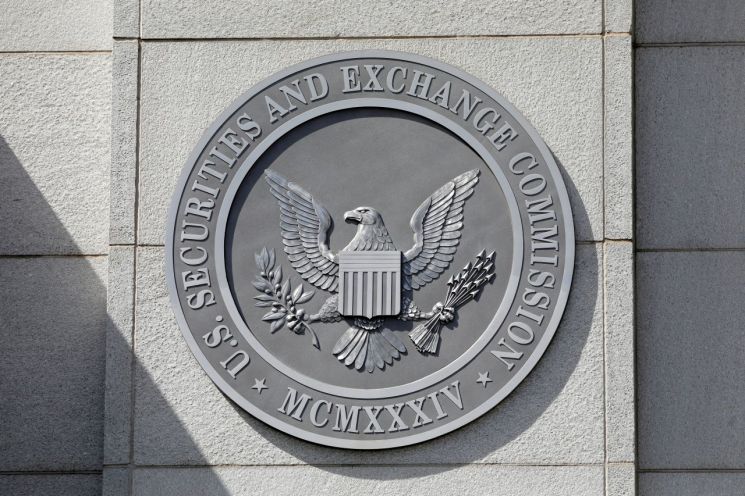 The U.S. Securities and Exchange Commission (SEC), headquartered in Washington, USA. (Reuters·Yonhap News)
The Trump administration has taken its first step in virtual asset policy. The vacancy left by Gary Gensler, a leading regulator and chairman of the U.S. Securities and Exchange Commission (SEC), was filled by Republican Mark Uyeda as the standing commissioner, who declared the 'SEC Virtual Asset 2.0 Era.'
On the 21st (local time), the U.S. SEC announced the launch of the 'Virtual Asset Task Force (TF)' led by Commissioner Hester Peirce. Commissioner Peirce, along with Acting Chairman Uyeda, has been a minority voice within the SEC's tough regulatory stance. She is also affectionately known in the industry as the 'Crypto Mom.'
The TF will help reset the SEC's regulatory direction. The SEC stated, "The TF will assist the SEC in establishing a reasonable regulatory direction," noting that "until now, the SEC has regulated virtual assets through enforcement actions applied retrospectively and retroactively." It added, "In the process, experimental and unverified legal interpretations have often been adopted," and "the lack of clarity in registration requirements and procedures has caused confusion regarding legality." This statement directly targets former Chairman Gensler.
The SEC's short-term goal is also focused on creating a comprehensive and clear regulatory framework for virtual assets. Acting Chairman Uyeda visited Korea last September and spoke at the main conference of 'Korea Blockchain Week 2024 (KBW2024),' stating, "There is a need to clarify regulations on digital assets." He suggested opposition to Gensler's approach at the time by saying, "From a policy perspective, clear boundaries must be defined regarding what constitutes a security and what does not."
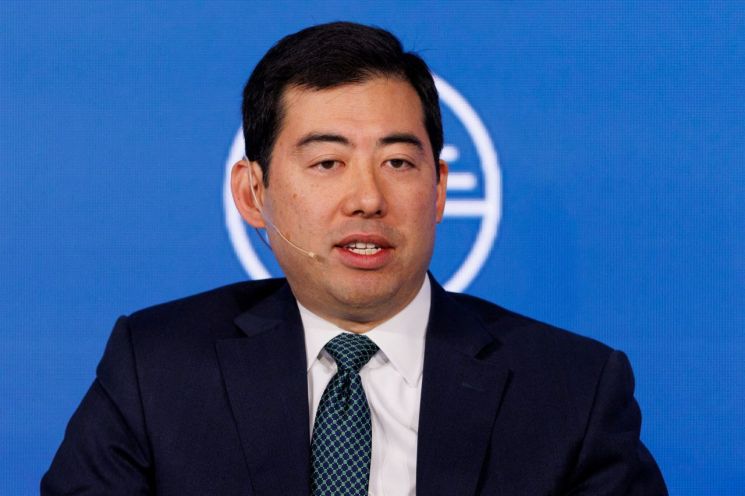 Mark Uyeda, a Republican standing commissioner serving as acting chairman of the U.S. Securities and Exchange Commission (SEC). (Photo by Reuters and Yonhap News)
The TF's discussions may also influence the clear determination of the regulatory authority over virtual assets between the SEC and the Commodity Futures Trading Commission (CFTC). The ambiguity over whether virtual assets are securities in the U.S. makes the regulatory authority unclear. If virtual assets are defined as securities in the future, the SEC will have jurisdiction; if classified as commodities, the CFTC will be responsible. The TF plans to hold public hearings and gather opinions from the virtual asset industry. It will also cooperate with federal departments and agencies, including the CFTC.
Following the TF launch news, virtual asset prices quickly recovered to $106,000. According to the global market site CoinMarketCap, as of 8:43 a.m. on the 22nd (Korean time), Bitcoin was trading at $106,003.96, up 2.71% from the previous day. Bitcoin had fallen to the low $100,000s after the previous day's surge was exhausted by the Trump inauguration but successfully rebounded.
Foreign media also paid attention to this change in the SEC. U.S. CNBC noted, "The White House's stance on cryptocurrency is significantly different from that during President Joe Biden's administration," adding, "Gary Gensler, who was the SEC chairman during the previous Biden administration, was regarded as an industry adversary." Bloomberg also reported, "The SEC is trying to distinguish the new regime from the Gensler era."
© The Asia Business Daily(www.asiae.co.kr). All rights reserved.
![Clutching a Stolen Dior Bag, Saying "I Hate Being Poor but Real"... The Grotesque Con of a "Human Knockoff" [Slate]](https://cwcontent.asiae.co.kr/asiaresize/183/2026021902243444107_1771435474.jpg)











