The Health Administration Division of Yeoju City, Gyeonggi Province (Director An Seonsuk) reported a recent increase in cases of norovirus infection, which typically occurs from winter to early spring. The infections are mainly occurring among infants and young children aged 0 to 6 who have weak personal hygiene and live in group settings. They urged strict adherence to hygiene rules.
Norovirus infection can occur by consuming water, shellfish, or vegetables contaminated with the virus. It can also spread through direct contact with infected patients or droplets from their secretions. Symptoms such as vomiting and diarrhea appear within 12 to 48 hours, and some individuals may experience abdominal pain, chills, or high fever.
Unlike conventional food poisoning viruses, norovirus can survive at subzero temperatures, making it highly infectious during the cold winter months. Due to its characteristics of easy exposure through improper habits in daily life, prevention is crucial.
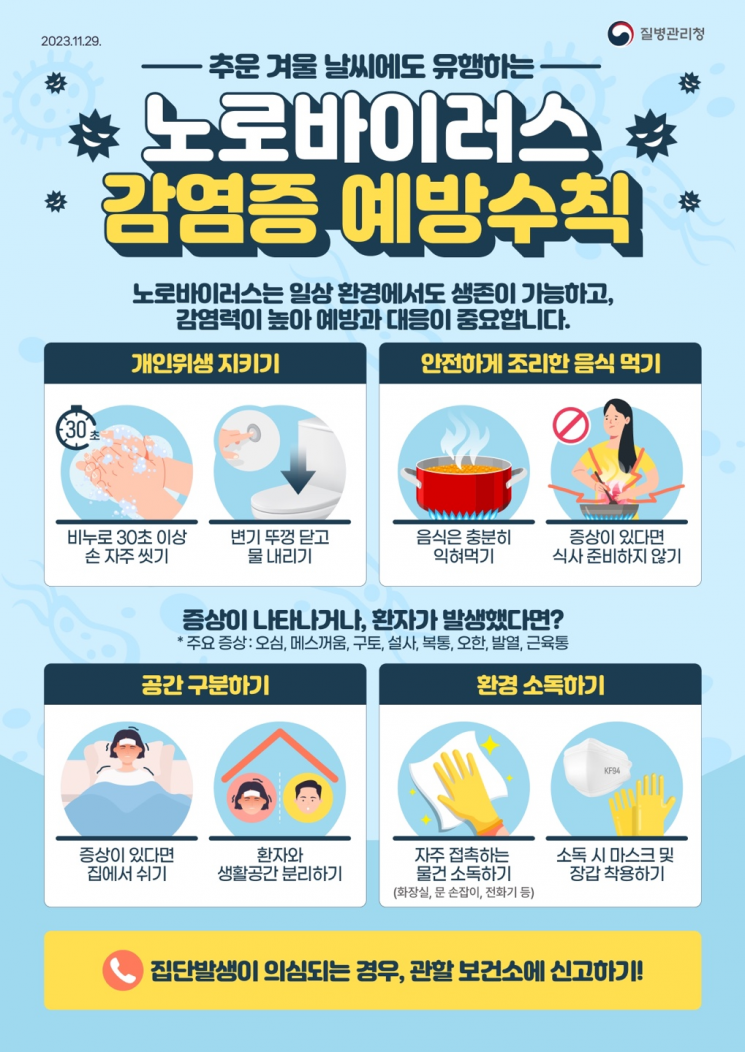
The Yeoju Public Health Center (Director Choi Yeongseong) emphasized personal hygiene and food sanitation management repeatedly ahead of the Lunar New Year holiday, when food consumption increases, by recommending "washing hands with soap for more than 30 seconds, drinking boiled water, eating thoroughly cooked food, and washing fruits and vegetables under running water" to prevent norovirus infection.
© The Asia Business Daily(www.asiae.co.kr). All rights reserved.

















