Average Daily Foreign Exchange Transactions Hit $68.96 Billion Last Year, Up 4.6%
Growth Driven by Increased Trade Volume, Domestic and Overseas Securities Investment, and Demand for Foreign Exchange Risk Hedging
Last year, the average daily foreign exchange transaction volume in South Korea reached an all-time high. The scale of foreign exchange transactions expanded due to an increase in Koreans investing in overseas stocks and a rise in demand for foreign exchange risk hedging.
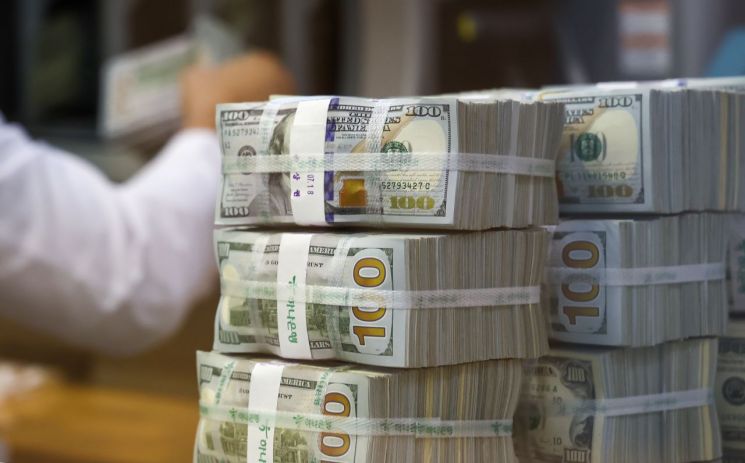
According to the "2024 Mid-Year Foreign Exchange Transaction Trends of Foreign Exchange Banks" released by the Bank of Korea on the 21st, the average daily foreign exchange transactions (spot foreign exchange and foreign exchange derivatives transactions) of foreign exchange banks last year amounted to $68.96 billion, an increase of 4.6% ($3.01 billion) compared to the previous year. This is the highest level since the statistics were revised in 2008.
The increase in export and import volumes, expansion of transaction volumes related to residents' overseas securities investment and foreigners' domestic securities investment, and increased demand for foreign exchange risk hedging due to exchange rate rises all contributed to driving up the scale of foreign exchange transactions. Last year, the total export and import amount was $1.3158 trillion, up 3.2% from the previous year, and the settlement amount of foreign currency securities by domestic investors increased by 68.8% to $645.9 billion. The monthly average purchase and sale amounts of foreigners' domestic securities investment also continued to rise.
The spot foreign exchange transaction volume slightly decreased, maintaining the previous year's level, but the demand for foreign exchange risk hedging increased, leading to a rise in foreign exchange derivatives transaction volume. The spot foreign exchange transaction volume was $25.67 billion, down 0.5% ($130 million) from the previous year. The won-dollar transactions increased by 5.1% ($950 million) to $19.46 billion, but won-yuan transactions decreased by 30.6% ($1.06 billion) to $2.4 billion, resulting in this outcome.
By bank, domestic banks' transactions decreased by 5.2% ($770 million) to $13.94 billion, while foreign bank branches' transactions increased by 5.7% ($630 million) to $11.73 billion. By counterparty, interbank transactions among foreign exchange banks decreased by 5.2% to $12.72 billion, whereas transactions with domestic customers ($7.55 billion) and non-residents ($5.41 billion) increased by 4.2% and 5.1%, respectively.
The foreign exchange derivatives transaction volume was $43.29 billion, up 7.8% ($3.14 billion) from the previous year. Forward exchange transactions ($13.42 billion) increased by 6.5% ($820 million), mainly driven by non-deliverable forward (NDF) transactions ($920 million). Foreign exchange swap transactions ($28.44 billion) increased by 8.1% ($2.14 billion) compared to the previous year, mainly due to transactions between foreign exchange banks and non-residents.
© The Asia Business Daily(www.asiae.co.kr). All rights reserved.

![Clutching a Stolen Dior Bag, Saying "I Hate Being Poor but Real"... The Grotesque Con of a "Human Knockoff" [Slate]](https://cwcontent.asiae.co.kr/asiaresize/183/2026021902243444107_1771435474.jpg)















