"Drinking Loose Leaf Tea Is the Best Choice"
A study has found that brewing tea with tea bags releases a vast amount of microplastics, which can have harmful effects on the human body.
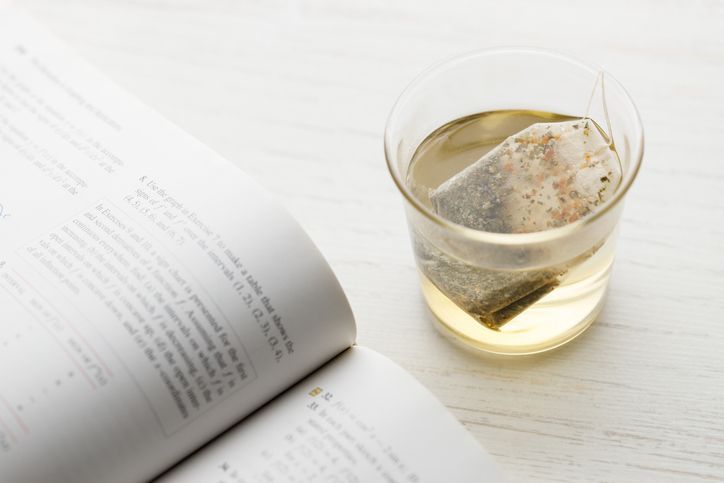
The Hong Kong South China Morning Post (SCMP) recently cited research from the Autonomous University of Barcelona, Sohag University in Egypt, and the Helmholtz Environmental Research Center in Leipzig, Germany, reporting that "millions of nanoplastics and microplastics can be released when brewing tea with tea bags."
The researchers conducted experiments comparing tea bags made from polyamide (nylon), polypropylene, and cellulose polymers. As a result, tea bags made of polypropylene released particles averaging 136.7 nm at about 1.2 billion particles per mL; cellulose tea bags released particles averaging 244 nm at about 135 million particles; and nylon tea bags released particles averaging 138.4 nm at about 8.18 million particles. The polypropylene tea bags showed the highest amount of microplastics detected, meaning that assuming a cup of tea is 100 mL, more than 120 billion microplastic particles could be released from just one cup. Heating the mug with the tea bag inside or adding more hot water is even more dangerous, as it can release more microplastics.
The researchers explained that the enormous number of plastic particles released from tea bags are absorbed by intestinal cells and travel through the bloodstream throughout the body. They stated, "Biological interaction experiments revealed that mucus-producing intestinal cells absorbed the most microplastics and nanoplastics, and that particles even entered the cell nuclei, which store genetic material." They also added that intestinal mucus plays an important role in the absorption of microplastics in the body.
Furthermore, amid a recent surge in cancer incidence among young people, microplastics have been identified as a potential cause. A report published in the renowned journal Environmental Science & Technology concluded that there is a potential link between microplastics and infertility, colorectal cancer, reduced lung function, and chronic lung inflammation. A study published last year also revealed that plastic particles can penetrate the brain and testes, be transferred from pregnant women to fetuses, and interfere with antibiotic functions.
Therefore, experts advise that to avoid microplastics while drinking tea, it is better to choose tea bags made from paper or plant-based materials, or to select loose leaf tea. They also added that rinsing tea bags under running water can be somewhat effective in removing microplastics.
© The Asia Business Daily(www.asiae.co.kr). All rights reserved.

![Clutching a Stolen Dior Bag, Saying "I Hate Being Poor but Real"... The Grotesque Con of a "Human Knockoff" [Slate]](https://cwcontent.asiae.co.kr/asiaresize/183/2026021902243444107_1771435474.jpg)















