With the inauguration of the new U.S. administration, there are forecasts of negative impacts on South Korea's electric vehicle (EV) exports. This is due to the high likelihood of the repeal of regulations on internal combustion engine vehicle emissions and mandatory EV sales rates. Concerns have also been raised that if the Inflation Reduction Act (IRA) is revised, companies related to EVs and batteries that have invested in the U.S. could suffer significant damage.
According to the Korea Environment Institute on the 17th, Kim Seong-jin, a research fellow at the Carbon Neutrality Research Office, and Kim Hyun-gyu, an associate research fellow at the National Climate Crisis Adaptation Center, recently stated in ‘KEI Focus’ that “if regulations on internal combustion engine vehicle emissions and mandatory EV sales rates are repealed, the growth rate of the EV market in the U.S. will significantly slow down,” and “as a result, a decrease in exports and market share of Korean EV manufacturers is expected.”
The reason cited is the anticipated repeal of Environmental Protection Agency (EPA) regulations under the incoming Donald Trump administration. The researchers explained, “Key climate and environmental policies promoted by the Biden administration’s EPA, such as stricter vehicle emission standards and incentives for EV expansion, are expected to be largely reduced or abolished,” adding, “The national policy focus is expected to shift from environmental protection to deregulation and resource development, especially fossil fuels.”
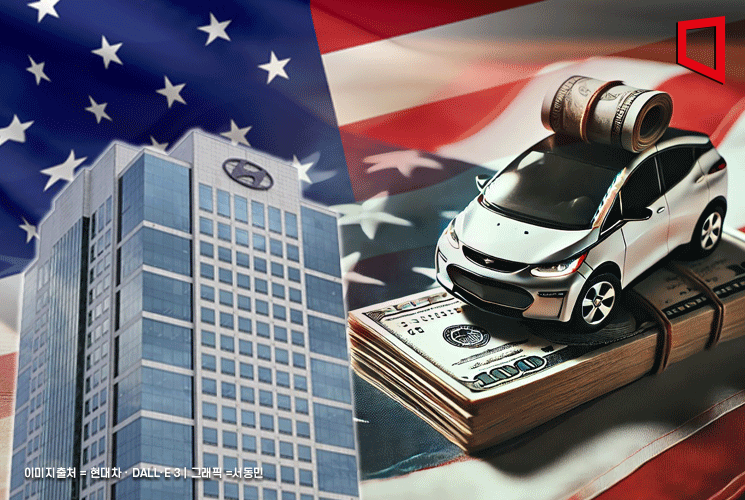
The changes in climate and environmental policies are expected to proceed rapidly. The report predicts, “If the administration secures a majority in both houses as in Trump’s first term, it will likely make full use of the Congressional Review Act, which allows the rejection of federal regulations,” and “major regulations will be repealed through immediate suspension of pending regulations, postponement of the effective dates of recently posted regulations, and the issuance of new executive orders.”
The Biden administration has so far implemented policies favorable to EVs. A representative regulation is the multi-pollutant emission standards. In April last year, President Biden set stricter carbon dioxide emission standards for light and medium vehicles. Passenger cars released in 2032 must reduce carbon emissions by at least 49% compared to six years earlier. There is also a policy to expand the share of battery electric vehicles to 56% of new car sales within eight years. The report states that if these incentives disappear, the entire EV industry could be adversely affected.
The fate of the Inflation Reduction Act (IRA) and the clean industry tax credit is also crucial. The IRA is a law established by the Biden administration in August 2022 to reduce government debt and greenhouse gas emissions. In this process, tax credits for clean energy were significantly strengthened. Producing clean energy in the U.S. qualifies for related tax benefits, and buyers receive tax credits of up to $7,500. Domestic automobile and battery companies have also invested heavily in production facilities to benefit from the IRA.
However, President-elect Trump has criticized the IRA as a “new green scam” and has announced plans to repeal it. He particularly views the IRA’s EV tax credits and investments in renewable energy negatively. The reasons cited include technical defects of EVs, enormous infrastructure costs, intermittency, and excessive space consumption, which are said to harm the U.S. economy. Accordingly, the report mentions a high possibility of reductions or abolishment of various financial supports such as tax benefits for EV consumers and renewable energy facilities.
The report warns, “South Korea accounts for 32% (approximately $34.9 billion) of the total IRA investment amount,” and “if the advanced manufacturing production tax credit benefits of the IRA are reduced or abolished during Trump’s second term, significant damage to Korean companies operating in the U.S. is expected.” However, it added, “Since the advanced manufacturing production tax credit requires large-scale facility investments in the U.S., changes to the legislation are expected to be limited.”
The researchers advised that detailed countermeasures are urgently needed. The report proposed, “To respond to the climate and environmental policy changes expected under the second Trump administration, the government, research institutions, and companies should jointly establish task forces (TFs) for each detailed policy and regularize discussions to prepare timely countermeasures.”
Meanwhile, President-elect Trump, ahead of his inauguration, has referred to the Biden administration’s climate policies as “kamikaze” (suicide squads during World War II) and has indicated plans to abolish them. His campaign manifesto, ‘Agenda 47,’ clearly outlines the direction of environmental policy, mostly aiming to eliminate President Biden’s policies.
© The Asia Business Daily(www.asiae.co.kr). All rights reserved.
![Clutching a Stolen Dior Bag, Saying "I Hate Being Poor but Real"... The Grotesque Con of a "Human Knockoff" [Slate]](https://cwcontent.asiae.co.kr/asiaresize/183/2026021902243444107_1771435474.jpg)
















