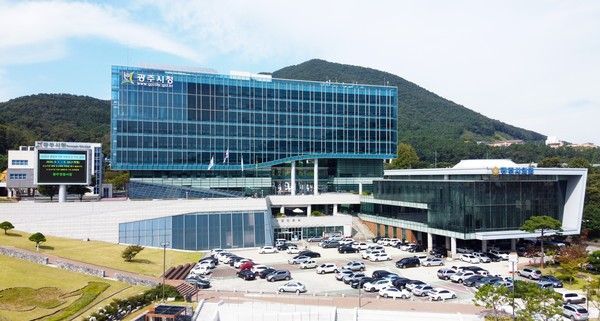
Gwangju City, Gyeonggi Province (Mayor Bang Se-hwan) announced on the 16th that it has changed and announced the regional development load allocation plan to ease restrictions on projects outside the sewage treatment area.
This amendment adjusted the regional development load allocation standards in accordance with the 2023 implementation evaluation results conducted annually under the Phase 2 Han River Basin Total Maximum Daily Load (TMDL) management plan, ensuring compliance with the allocated load for each unit watershed.
The key point is the expansion of the allocation for projects outside the sewage treatment area from the previous limit of 25% of the unit watershed’s available capacity to 40%. The target watersheds are Gyeongan B1, Hangang F6, Hangang F7, and Hangang F8, which have low development demand or sufficient available capacity.
Since 2021, Gwangju City has been managing target water quality and total pollutant discharge through the Phase 2 TMDL system, which is in effect until 2030. With this measure, the city plans to meet local development demands while promoting balanced development for environmental protection.
Mayor Bang Se-hwan stated, “This change reflects our commitment to significantly improving regional development conditions while thoroughly continuing environmental management to comply with target water quality until 2030. We will spare no policy support to ensure sustainable development even in areas outside the sewage treatment zone.”
For more details, please refer to the announcement posted on Gwangju City’s official website.
© The Asia Business Daily(www.asiae.co.kr). All rights reserved.

















