Fatbergs Transformed by Gene-Edited Bacteria
From Grease to Perfume Ingredients
More companies are researching the recyclability of 'fat clumps,' the main culprit that clogs bathroom or kitchen drains. These fat clumps are formed by the accumulation of food waste or human fat, and advances in biotechnology have opened the way to break down and reprocess these foreign substances.
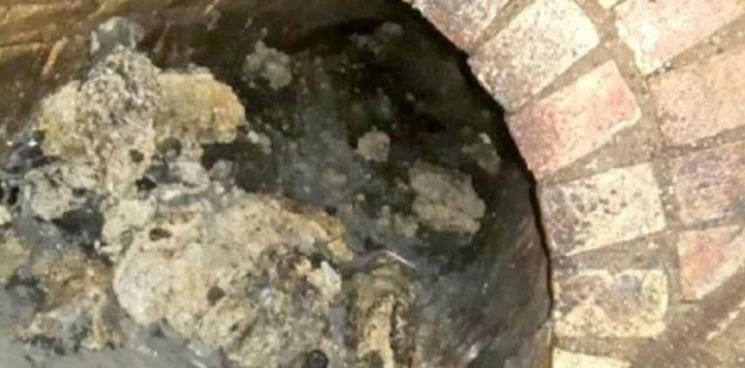
On the 15th (local time), the British BBC reported that drain fat clumps could become the raw material for a new 'industrial revolution.' The fat clumps that cause drain blockages are mainly formed by the accumulation of food waste, human fat, hair, and other materials. In English-speaking countries, they are commonly called fatbergs.
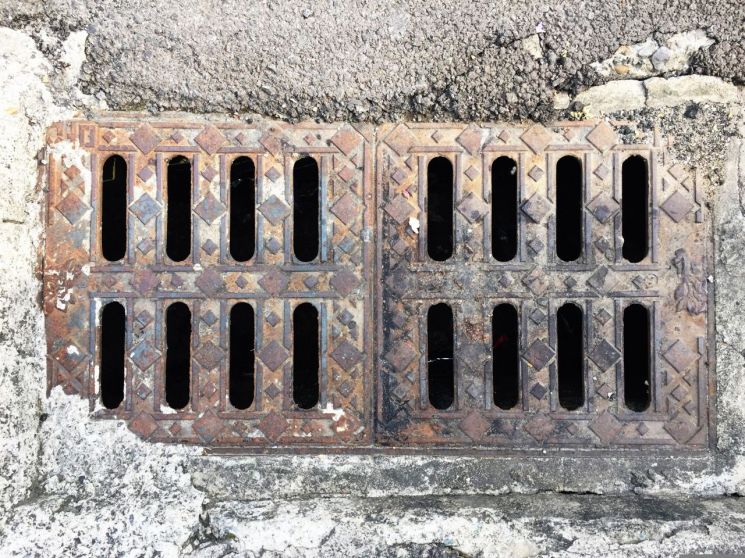
Removing fatbergs has long been a tough task. They have a slippery, unpleasant texture and emit foul odors, making them unsanitary. However, rapid advances in biotechnology have opened the way to 'recycle' fatbergs. For example, fatbergs extracted from drains can be reprocessed into biofuel.
First, the fatberg is placed in a tube and sterilized by passing hot steam through it. After harmful pathogens are eliminated, genetically modified microorganisms called bacteria are introduced. The bacteria carry out biochemical reactions that convert the fatberg into fuel.
The applications of bacterial biochemical reactions are endless. By slightly modifying genes, completely different chemical reactions can be induced, and by utilizing this method well, foul-smelling fatbergs can even be transformed into perfume ingredients.
In fact, Professor Steven Wallis of the University of Edinburgh, a prestigious university in Scotland, succeeded in converting fat clumps into perfume ingredients using gene-edited bacteria. Professor Wallis said, "It was a crazy idea, but it actually worked," and revealed that the 'fatberg perfume ingredients' are already being developed in collaboration with famous perfume companies.
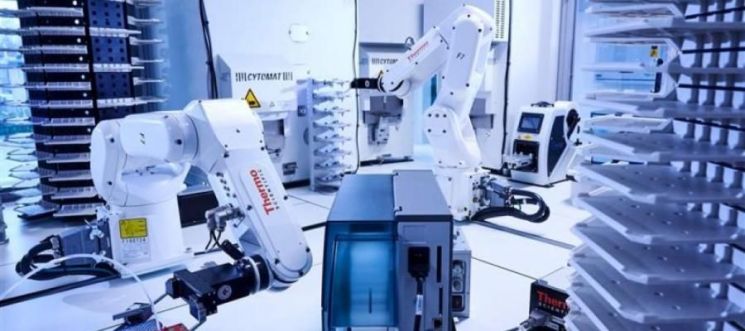 A robotic facility of the "Genome Foundry" at the University of Edinburgh in the UK, manufacturing gene-edited bacteria. Photo by the University of Edinburgh
Using bacteria to recycle waste or produce industrial raw materials is currently being attempted in various industries. For example, biodegradable plastics are plastics that can be decomposed by bacteria or fungi, and unlike conventional plastics made from fossil fuels, they can naturally decompose when buried in soil or discarded in the ocean, making them environmentally friendly.
However, the problem is cost. So far, scanning the genomes of microorganisms like bacteria and performing so-called 'gene editing'?attaching new genes or cutting existing ones?requires significant research and development (R&D) and infrastructure investment. Dr. Joanna Saddler of the University of Edinburgh told the BBC, "Biotechnology has grown explosively compared to 4 to 5 years ago. It is a very fast-moving field," but added, "Funding is needed to realize its potential."
© The Asia Business Daily(www.asiae.co.kr). All rights reserved.
![Clutching a Stolen Dior Bag, Saying "I Hate Being Poor but Real"... The Grotesque Con of a "Human Knockoff" [Slate]](https://cwcontent.asiae.co.kr/asiaresize/183/2026021902243444107_1771435474.jpg)


















