Development of a Light-Activated Compound That Attacks Lysosomes in Cancer Cells
Inhibition of Autophagy, the Cause of Drug Resistance, Proven Effective in Animal Models... Published in Adv. Sci.
A technology has been developed to eliminate cancer cells resistant to anticancer drugs by exposing them to light.
The research team of Professors Taehyuk Kwon and Dooyoung Min from the Department of Chemistry at UNIST (President Jongrae Park), in collaboration with Professor Taeho Park's team at POSTECH, developed a photoresponsive compound that can inhibit autophagy in cancer cells, which is known to cause resistance to anticancer drugs.
 (From the bottom left, counterclockwise) Professor Kwon Tae-hyuk, Researcher Park Min-gyu, Professor Min Doo-young, Researcher Kim Seo-yoon, Researcher Yang Ji-hyun (O2MEDI), Researcher Yoon Kwang-soo, Researcher Lee Yoo-jin. Provided by UNIST
This compound is activated by light and selectively attacks only the lysosomes, the cellular compartments where autophagy occurs.
The cancer cells' highly adaptable nature has been a major obstacle in developing anticancer drugs. Autophagy, which breaks down waste materials inside cells, is one of these adaptive mechanisms. Cancer cells are known to expel anticancer drugs through autophagy, replenish deficient energy sources with the degraded waste components, and evade the immune system.
The research team developed a photoresponsive compound composed of morpholine and iridium to inhibit this autophagy. Morpholine targets only the lysosomes in the cells, while iridium induces oxidative damage upon light exposure.
When the developed photoresponsive compound was administered to mice implanted with drug-resistant pancreatic cancer cells and irradiated with infrared light, even pancreatic cancer tissues resistant to the anticancer drug gemcitabine shrank and completely disappeared within seven days.
Analysis showed that this photoresponsive compound destroys the lysosomal membrane upon light exposure and simultaneously prevents the fusion of lysosomes with autophagosomes. Autophagosomes are temporary compartments where cellular waste is isolated, and autophagy begins only when autophagosomes fuse with lysosomes. The research team explained that they plan to identify additional proteins that cause oxidative damage induced by the developed compound.
Researcher Minkyu Park from the Department of Chemistry participated as the first author in this study, and 'O2MED' conducted toxicity evaluation and anticancer efficacy assessment using animal experimental models.
Professor Taehyuk Kwon stated, "This will help treat major intractable cancers that develop drug resistance through autophagy," and added, "We are also verifying the efficacy of combination therapies with existing anticancer drugs besides gemcitabine."
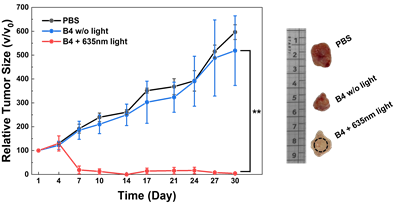 Effect of Developed Photosensitizer on Drug-Resistant Pancreatic Cancer Remission. Provided by UNIST
The research results were published on January 13 in the international journal Advanced Science. The research was supported by the National Research Foundation of Korea, the National Cancer Center, the Small and Medium Business Information Promotion Agency, the Research & Development Special Zone Promotion Foundation, and Ulsan National Institute of Science and Technology.
© The Asia Business Daily(www.asiae.co.kr). All rights reserved.
![Clutching a Stolen Dior Bag, Saying "I Hate Being Poor but Real"... The Grotesque Con of a "Human Knockoff" [Slate]](https://cwcontent.asiae.co.kr/asiaresize/183/2026021902243444107_1771435474.jpg)












