"Cases the CIO Cannot Prosecute... Exclusive Jurisdiction of the Seoul Central District Court"
"Warrant Involving Both the CIO's and Seoul Western District Court's Illegalities"
The side of President Yoon Seok-yeol has filed a petition for a review of the legality of the arrest warrant with the court, arguing that the arrest warrant against President Yoon is illegal.
Yoon Gap-geun, a lawyer representing President Yoon, stated, "The legal team of President Yoon Seok-yeol filed a petition for a review of the legality of the arrest on the 15th at the Seoul Central District Court."
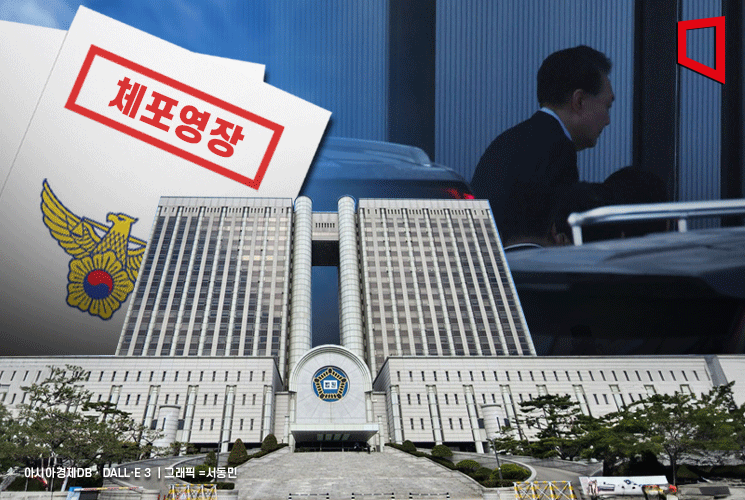
Earlier that afternoon, lawyer Seok Dong-hyun from President Yoon's side said that President Yoon was not considering a review of the legality of the arrest, but the legal team filed the petition with the court on the same day.
The legal team said, "The Corruption Investigation Office for High-ranking Officials (CIO) without investigative authority illegally intruded into the presidential residence on the 15th with an illegal arrest warrant issued by a court without jurisdiction and ultimately carried out the arrest of the president."
The legal team argued, "First, the CIO has no investigative authority over the president's charges of rebellion under the CIO Act," adding, "Nowhere in the CIO Act is it stipulated that the CIO can investigate the president's charges of rebellion. Therefore, the CIO's investigation into the president's rebellion charges is an unauthorized illegal investigation."
Additionally, the legal team stated, "Second, the CIO's request for an arrest warrant violates exclusive jurisdiction," explaining, "If the CIO has both investigative and prosecutorial authority, it can prosecute at the Seoul Central District Court or another competent court under Article 31 of the CIO Act. However, for crimes where the CIO has investigative authority but no prosecutorial authority, the case must be transferred to the Seoul Central District Prosecutors' Office according to Article 26 of the CIO Act."
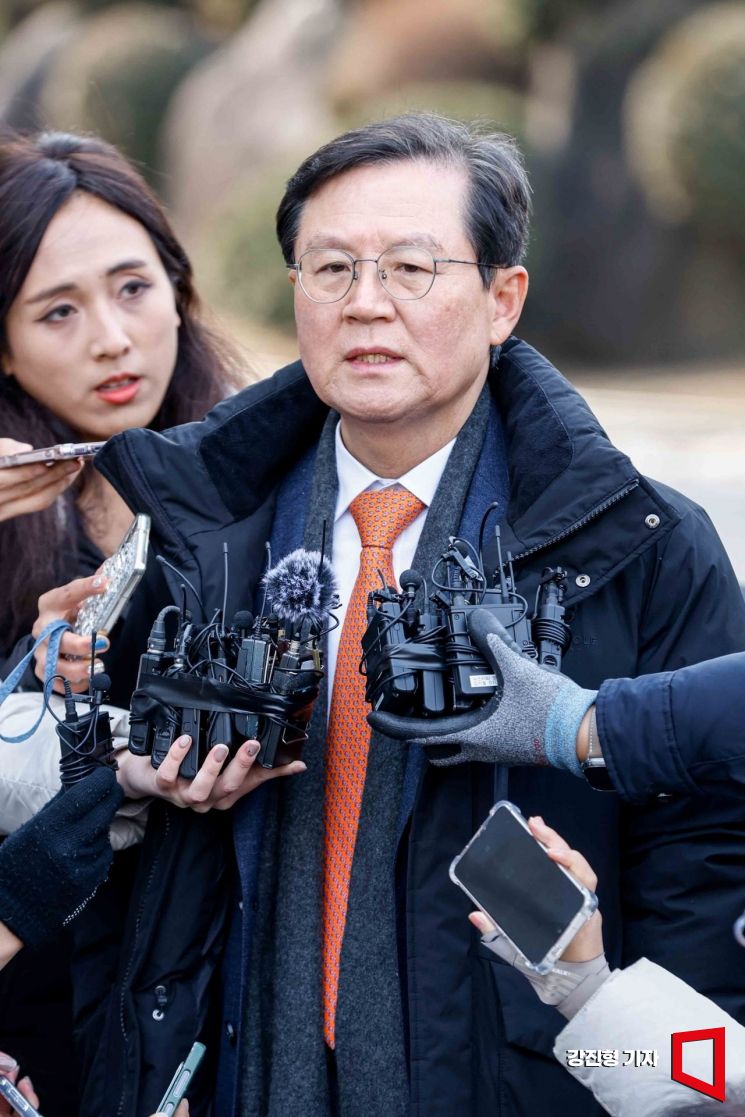 Yoon Gap-geun, attorney for President Yoon Seok-yeol, is attending the 'Impeachment Trial Hearing of President Yoon Seok-yeol' held at the Constitutional Court in Jongno-gu, Seoul on the 14th, and is expressing his position to the press. Photo by Kang Jin-hyung
They continued, "The Seoul Central District Prosecutors' Office, which receives the transferred case, prosecutes at the Seoul Central District Court, which means that for cases where the CIO has no prosecutorial authority, the Seoul Central District Court has exclusive jurisdiction," they added.
Article 31 (Jurisdiction of Trial) of the CIO Act states, "The first trial of high-ranking official crimes prosecuted by CIO prosecutors shall be under the jurisdiction of the Seoul Central District Court. However, considering the crime location, evidence location, special circumstances of the defendant, etc., CIO prosecutors may file a prosecution at a competent court according to the Criminal Procedure Act," thereby designating the Seoul Central District Court as the jurisdiction for cases prosecuted by the CIO while allowing certain exceptions.
Article 26 (Submission of Related Documents and Evidence by CIO Prosecutors) Paragraph 1 of the CIO Act states, "When CIO prosecutors investigate high-ranking official crimes other than those specified in Article 3 Paragraph 1 Item 2, they must promptly send related documents and evidence to prosecutors belonging to the Seoul Central District Prosecutors' Office."
In other words, this provision requires the CIO to send investigation records and evidence to the Seoul Central District Prosecutors' Office for cases it cannot prosecute directly.
The legal team emphasized, "Article 31 of the CIO Act is a provision concerning jurisdiction when the CIO prosecutes cases, so it clearly does not apply to cases the CIO cannot prosecute," adding, "Therefore, for crimes where the CIO has no prosecutorial authority, the Seoul Central District Court, which is the competent court for the Seoul Central District Prosecutors' Office receiving the case, has jurisdiction. Thus, warrants for compulsory investigation measures conducted before prosecution must be requested from the Seoul Central District Court, which has exclusive jurisdiction."
They added, "Nevertheless, the CIO violated exclusive jurisdiction by requesting a warrant from the Seoul Western District Court, which has no jurisdiction. This is a clear violation of jurisdiction by requesting a warrant from a court without authority to conduct compulsory measures, and the warrant issued by the Seoul Western District Court cannot escape this illegality."
The legal team stated, "Ultimately, the CIO's investigation and warrant request in this case are illegal investigations without investigative authority, and the warrant request and issuance violating exclusive jurisdiction are invalid in themselves," adding, "Based on this arrest warrant, which involves the illegal acts of both the CIO and the Seoul Western District Court, the CIO directed the police to intrude into the presidential residence and arrest the president. The police involvement in executing the arrest warrant violates current criminal procedure law and committed many illegal acts, including violations of the Military Secrets Protection Act."
They continued, "This is a disruption of the constitutional order, repeatedly compounding illegality that undermines the rule of law, and it clearly constitutes acts of rebellion by those involved. We will thoroughly track down those responsible for the illegal acts that occurred during the execution of this arrest warrant and hold them strictly accountable," they warned.
Finally, the legal team said, "The legal team of President Yoon Seok-yeol will actively fight against the illegal investigation and illegal arrest of the president," adding, "This is not merely a personal issue of the president but an effort to restore the broken legal order in South Korea's criminal procedures."
© The Asia Business Daily(www.asiae.co.kr). All rights reserved.


















