Market Expected to Exceed 1,000 Units This Year
Competition Intensifies Among Robot Companies Like Marosol and VD Company
The commercial cleaning robot market is rapidly growing. Demand for cleaning robots is surging in terminals, shopping malls, convention centers, hospitals, hotels, factories, and corporations. The overall market size has doubled compared to the previous year. Growth is expected to continue this year, intensifying competition among companies.
According to the industry on the 16th, the domestic commercial cleaning robot market grew from 300 units in 2023 to 600 units last year, doubling in size. This year, the market is expected to expand further to over 1,000 units. In Japan, the market has already grown to annual sales of 7,000 units, and China has reached 12,000 units sold. Global market research firm Straits Research forecasts that the worldwide cleaning robot market will grow from $1.122 billion last year to $2.218 billion by 2031, doubling in size.
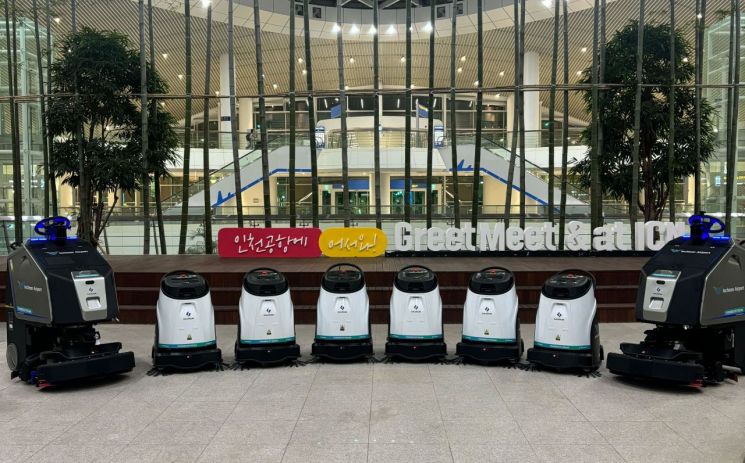
The increase in demand for cleaning robots is driven by labor shortages. The industry explains that companies want automation through robots because labor costs are high and it is difficult to find people willing to do the demanding cleaning work. Recently released cleaning robots not only have powerful cleaning functions but also autonomous driving capabilities, allowing them to perform cleaning tasks anytime without human operation.
As the market grows, competition is expected to be fierce this year. The leader is Marosol, a robot company that sells the 'Gausium.' Gausium holds over 70% of the global cleaning robot market, and Marosol provides its proprietary control solution 'Solink' through strategic partnerships. Combining Gausium's high-performance cleaning robots with Marosol's Solink enables 24-hour real-time monitoring services. This robot, deployed at Incheon Airport in the second half of last year, can remotely designate cleaning zones, perform cleaning at scheduled times, and dispatch multiple units simultaneously to heavily soiled areas requiring rapid cleaning. It automatically avoids people and obstacles during cleaning, reducing the risk of safety accidents. A Marosol representative explained, "Cleaning robots handle large areas, allowing existing janitors to focus only on zones difficult for robots to clean, improving cleaning efficiency and the working environment for janitors."
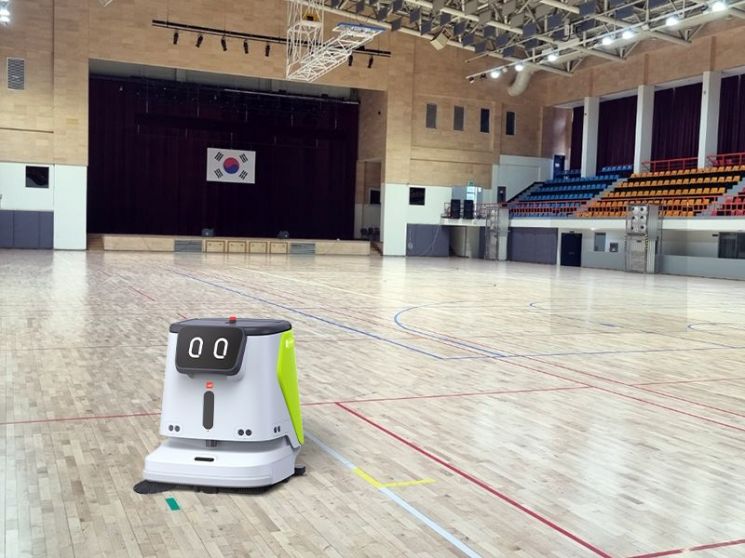
VD Company, a serving robot company, also saw rapid sales growth with its cleaning robot 'Clever,' launched at the end of 2023. It was introduced in 100 stores within 12 months, which VD Company says is twice as fast as the 23 months it took for serving robots to be adopted in 100 stores. This robot is a multi-functional autonomous cleaning robot that combines four functions: wet cleaning, dry cleaning, sweeping, and mopping. It can automatically supply water, drain, and charge through a separate workstation. With location recognition and navigation solutions, it operates efficiently even in complex scenarios, cleaning buildings autonomously without human intervention, even during early morning hours.
VD Company explained that Clever cleaned an area of about 1,330㎡, four times the size of Yeouido, during the 12 months since its launch. VD Company CEO Ham Pan-sik said, "Cleaning robots are spreading in the market faster than serving robots. Based on last year's growth, we expect even more explosive market expansion this year."
© The Asia Business Daily(www.asiae.co.kr). All rights reserved.
![Clutching a Stolen Dior Bag, Saying "I Hate Being Poor but Real"... The Grotesque Con of a "Human Knockoff" [Slate]](https://cwcontent.asiae.co.kr/asiaresize/183/2026021902243444107_1771435474.jpg)

















