Gwangju Institute of Health and Environment Analyzes Nine Types of Pathogens
Concerns Over Spread During Lunar New Year Holiday... Strict Hygiene Management Urged
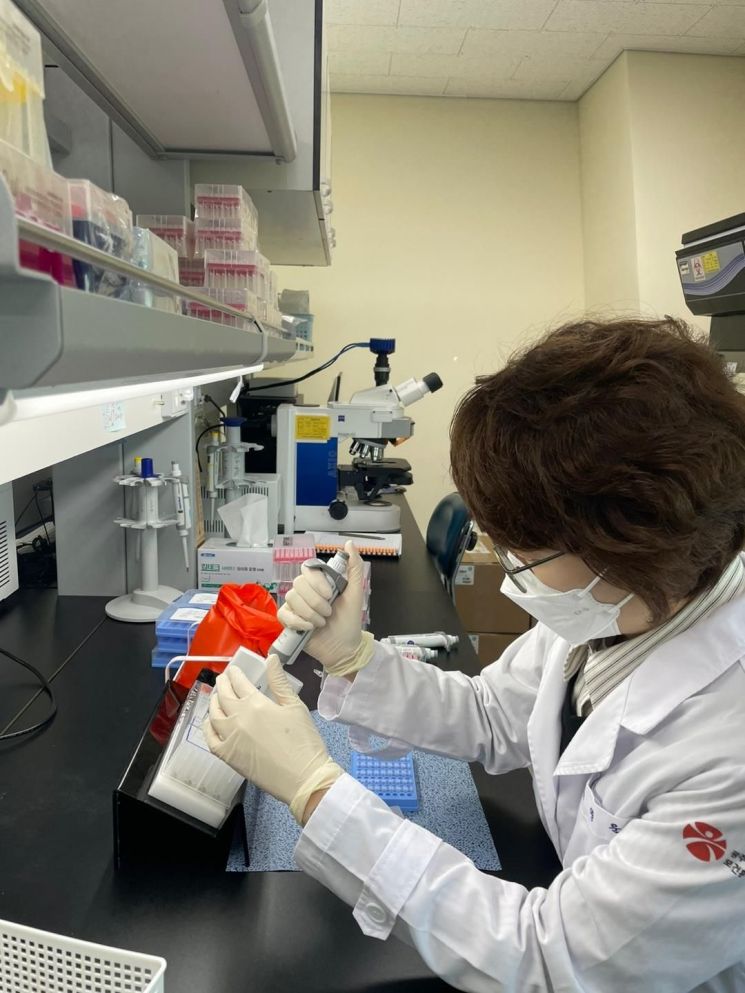 A researcher at the Gwangju Institute of Health and Environment is testing for the pathogens causing respiratory viral infections prevalent in the region. Provided by Gwangju Institute of Health and Environment
The Gwangju Institute of Health and Environment has urged the public to strictly follow personal hygiene guidelines to prevent respiratory infectious diseases, as various respiratory viruses such as influenza, respiratory syncytial virus, and metapneumovirus are spreading in the Gwangju area ahead of the Lunar New Year holiday.
The Gwangju Institute of Health and Environment analyzes nine types of causative pathogens every week from patients with cold symptoms who visit sentinel medical institutions in the Gwangju area.
During the past four weeks, the average detection rate of causative pathogens for respiratory viral infections in Gwangju was highest for influenza at 41.9%, followed by respiratory syncytial virus at 11.1%, and metapneumovirus at 6.0%. The rate for COVID-19 was 0.6%.
The detection rate of the influenza virus, which causes the flu, has remained above 40% each week since the fourth week of December last year, and this upward trend continues. This is 2.5 times higher than the average detection rate of 16.3% during the same period last year.
The analysis of the "sewage-based infectious disease surveillance system," which Gwangju Institute of Health and Environment operates as a supplement to the existing clinical patient-centered surveillance system, also showed that the concentration of influenza virus in domestic sewage increased in the second week of January compared to the first week.
The influenza virus, which causes the flu, is mainly transmitted through patients' coughs or nasal discharge, and it can be easily contracted. It presents with systemic symptoms such as fever above 38 degrees Celsius, headache, and muscle pain, as well as respiratory symptoms similar to COVID-19, including sore throat, cough, and phlegm.
The Gwangju Institute of Health and Environment has requested thorough personal hygiene management during the Lunar New Year holiday, when many people travel, such as practicing proper cough etiquette and washing hands correctly.
Jung Hyuncheol, Director of the Gwangju Institute of Health and Environment, stated, "The institute operates a pathogen surveillance system based on cooperating hospitals to quickly identify causative pathogens," and added, "We will do our best to protect public health by operating a sewage surveillance system to supplement the clinical surveillance system."
© The Asia Business Daily(www.asiae.co.kr). All rights reserved.
![Clutching a Stolen Dior Bag, Saying "I Hate Being Poor but Real"... The Grotesque Con of a "Human Knockoff" [Slate]](https://cwcontent.asiae.co.kr/asiaresize/183/2026021902243444107_1771435474.jpg)
















