Last month, the number of employed people decreased by more than 50,000, marking a return to negative growth for the first time in 3 years and 10 months. This is attributed to the combined effects of the termination of job programs and a contraction in consumer sentiment. Due to the ongoing population decline, the annual increase in employment was also only about half of the previous year's level.
According to the 'December 2024 and Annual Employment Trends' released by Statistics Korea on the 15th, the number of employed people in December last year was 28,041,000, down 52,000 from a year earlier. This is the first decrease in 46 months since February 2021, when employment fell by 473,000. The employment rate for those aged 15 and over also dropped by 0.3 percentage points to 61.4%, marking a decline for the first time in 46 months.
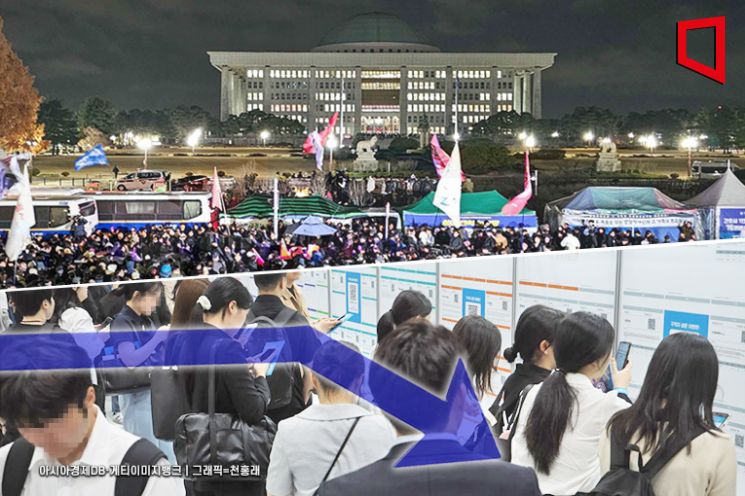
By industry, construction saw the largest decrease (-157,000), followed by manufacturing (-97,000) and wholesale and retail trade (-96,000), all showing significant declines. Employment increased in accommodation and food services (12,000) and transportation and warehousing (19,000), but the growth itself slowed. In the previous month, employment in these sectors had increased by 24,000 and 42,000 respectively.
Consumer sentiment, which froze after the imposition of martial law, appears to have partially affected the employment sector. When asked how much the successive political events were reflected, Seowoon Joo, Director of the Social Statistics Bureau at Statistics Korea, explained, “Employment in wholesale and retail trade was already declining, but the extent of the decrease slightly increased,” adding, “Transportation and warehousing, as well as accommodation sectors, may have also been partially influenced psychologically.”
The number of unemployed people rose by 171,000 from a year earlier to 1,115,000. The unemployment rate increased by 0.5 percentage points to 3.8% compared to the same month last year. By gender, the male unemployment rate rose by 0.2 percentage points to 3.1%, while the female rate increased by 1.0 percentage point to 4.7%.
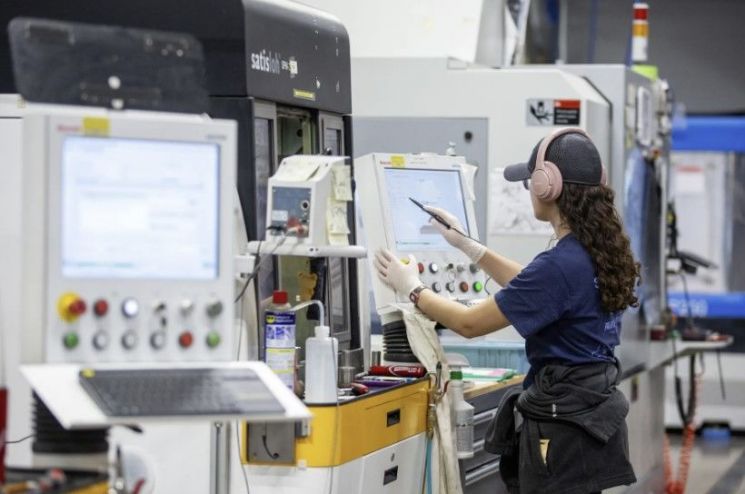
On an annual basis, the number of employed people was 28,576,000, an increase of 159,000 from the previous year. The growth rate shrank to about half of the previous year's increase (327,000). The average annual employment number decreased by 218,000 in 2020 when the COVID-19 pandemic began, then turned positive with an increase of 369,000 the following year, and recorded a high growth of 816,000 in 2022, exceeding the long-term trend, before gradually slowing down.
Employment growth was led by health and social welfare services (83,000), information and communications (72,000), and professional, scientific, and technical services (65,000). However, decreases in wholesale and retail trade (-61,000), business facility management, business support and rental services (-52,000), and construction (-49,000) constrained the overall growth.
As the pace of employment growth adjusted, young people entering the labor market for the first time faced difficulties. Employment among youth (ages 15?29) decreased by 144,000. The youth employment rate fell by 0.4 percentage points to 46.1%, while the unemployment rate remained unchanged at 5.9% compared to the previous year.
Due to the low birthrate trend, the working-age population is gradually shrinking, leading to a continuous decline in youth employment. From 2018 to 2021, the working-age population decreased by only 90,000, but last year it dropped by 338,000 in just one year. This year, it is expected to decline even more, by 415,000. Accordingly, the Ministry of Economy and Finance estimated that the increase in employed people this year will shrink by about 60,000 to 120,000.
The employment rate for those aged 15 and over rose by 0.1 percentage points to 62.7%, the highest since statistics began in 1963. The employment rate for ages 15 to 64, based on the OECD standard, also reached a record high of 69.5%, up 0.3 percentage points from the previous year.
The population categorized as 'inactive'?those not seeking jobs without any particular reason?reached 2,467,000 last year, the highest since 2003. This increase was seen across all age groups, including those aged 60 and over (41,000), people in their 30s (29,000), and those in their 20s (18,000).
Jo Sung-jung, Director of the Human Resources Policy Division at the Ministry of Economy and Finance, stated, “We will review and supplement job support measures for vulnerable employment groups such as youth, centered on the Job Inspection Team,” adding, “We will actively promote youth employment through the full-scale operation of the Youth Employment All-Care Platform targeting unemployed and inactive youth, and by holding concentrated recruitment events to foster and spread a positive employment atmosphere among young people.”
© The Asia Business Daily(www.asiae.co.kr). All rights reserved.


















