The 2nd Virtual Asset Committee Convenes... Legislative Tasks Reviewed
Second-Phase Law to Reflect Industry Characteristics as an "Integrated Law"
Stricter Listing Regulations for Exchanges... Disclosure Obligations Similar to Capital Markets
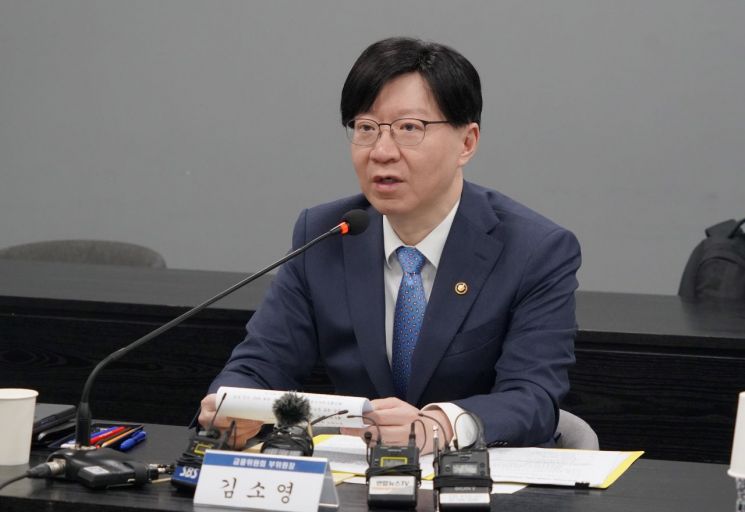
Kim So-young, Vice Chairman of the Financial Services Commission, announced on the 15th, "Starting today with the Virtual Asset Committee, we will officially begin the second phase of legislative discussions on the 'Virtual Asset User Protection Act'." With the launch of the 'second term of the Trump administration' scheduled for the 20th (local time) and active global discussions on virtual asset legislation, it is observed that our government is also accelerating the organization of regulatory frameworks.
Vice Chairman Kim held the 2nd Virtual Asset Committee meeting at the Government Seoul Office that morning and emphasized, "Since our virtual asset legislation aims for an 'integrated law' system, the second phase of legislative discussions requires a comprehensive and systematic approach encompassing operators, markets, and users." Kim also serves as the chairperson of the Virtual Asset Committee.
The Financial Services Commission implemented the first phase of the 'Virtual Asset User Protection Act' last July, which focused on user protection. However, there have been continuous calls for a comprehensive integrated law that reflects the characteristics of virtual assets and the specific nature of individual business activities.
The Financial Services Commission expects that the U.S. will prioritize policies such as clarifying virtual asset regulatory agencies, establishing stablecoin regulations, and revising accounting standards. The European Union (EU) implemented the comprehensive 'Markets in Crypto-Assets (MiCA)' regulation at the end of last year, while Hong Kong, Singapore, and others are also aiming to become 'virtual asset hubs' by organizing operator licensing and stablecoin regulations.
Authorities are expected to speed up preparations for establishing a stablecoin regulatory framework. In fact, the meeting was held with the participation of the Director of the Financial Settlement Bureau of the Bank of Korea. The Bank of Korea has argued for the necessity of stablecoin regulation, citing the significant impact stablecoins, which are pegged one-to-one with currency value, have on financial and foreign exchange markets. Terra and Luna, which caused serious global damage in the 'Terra-Luna incident,' are also types of stablecoins.
Vice Chairman Kim stated, "For stablecoins linked to fiat currencies, it is necessary to establish a separate regulatory framework for operators and transactions, considering financial system stability and characteristics related to monetary policy." He added, "We intend to review recent global regulatory trends and discuss overall regulatory directions, including issuer and reserve asset regulations and user protection measures."
During the Virtual Asset Committee discussions, key issues requiring review in the second phase of legislation were selected, and opinions on legislative directions were exchanged. From the perspective of virtual asset operators, discussions focused on entry and business conduct regulations. Overseas legislative examples covering industry types such as virtual asset trading, brokerage, custody, advisory, and evaluation were reviewed. There were also suggestions to introduce regulations on unfair business practices to protect users and prevent conflicts of interest, as well as to impose obligations to establish internal control standards.
The need to include 'transaction support (listing),' currently a self-regulatory area, within the scope of public regulation was raised. There were also opinions that virtual asset disclosures should be strengthened to a level comparable to capital market disclosures. The necessity of introducing periodic disclosure systems such as 'business reports' and ad hoc disclosure systems like 'major event disclosure' was also mentioned.
Regarding stablecoins, the regulatory establishment status of various countries was reviewed. Recent global market discussions indicate that issuers are subject to strict management obligations for reserve assets, and users' redemption rights are explicitly guaranteed to protect users.
The Financial Services Commission will immediately form a task force (TF) and a working group with related agencies for the second phase of legislation. Issues reviewed through practical examination will be re-discussed by the Virtual Asset Committee and included in the second phase bill planned for the second half of the year.
However, discussions on whether to allow corporate accounts for virtual asset investments, which had raised expectations in the industry as part of this year's Financial Services Commission work plan related to virtual assets, were not addressed in this meeting.
© The Asia Business Daily(www.asiae.co.kr). All rights reserved.

















