The Gyeonggi-do Construction Headquarters saved 3.3 billion KRW in budget by recycling construction waste asphalt concrete (waste asphalt concrete) generated during road pavement repair work last year.
Construction waste (waste asphalt concrete) generated during road pavement repair work on local roads generally incurs additional costs (such as service fees) for disposal.
Since signing the nation's first "Business Agreement on Recycling Waste Asphalt Concrete" with circulating asphalt concrete manufacturers nationwide in May 2012, the Construction Headquarters has been recycling waste asphalt concrete as raw material for circulating asphalt concrete, achieving cost savings and other results.
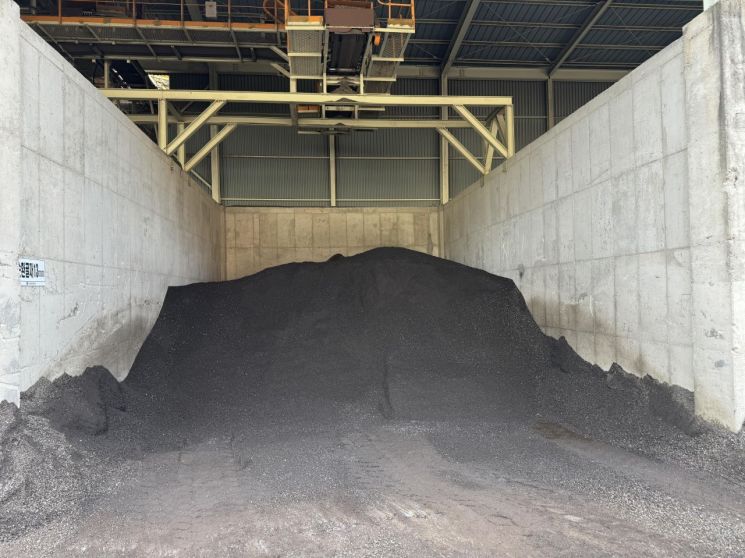 Gyeonggi-do Construction Headquarters is producing recycled asphalt by reusing waste asphalt. Photo by Gyeonggi-do Construction Headquarters
Last year, 124,307 tons of waste asphalt concrete from 39 projects, including the repaving project of Local Road No. 23 in Namsa-eup, Yongin, were recycled. This recycling helps prevent natural damage caused by aggregate extraction, blocks the inflow of harmful substances into the soil, and reduces greenhouse gas emissions.
In particular, in December last year, the Busan Metropolitan City Construction Safety Testing Office visited the Construction Headquarters for benchmarking regarding waste asphalt concrete recycling processing work.
Kim Yong-cheon, head of the Gyeonggi-do Construction Headquarters, said, "We are practicing ESG management by saving imported raw materials and protecting nature while contributing to solving waste problems," and promised, "We will pursue development that harmonizes the environment and economy through sustainable construction policies."
© The Asia Business Daily(www.asiae.co.kr). All rights reserved.

















