Yeongyang-gun, Gyeongbuk, which had a population of 70,000 in the 1970s, is currently facing the risk of falling below the 15,000 mark with a population of about 15,400.
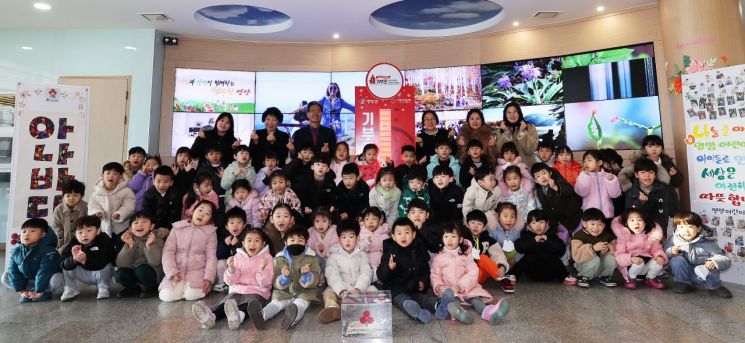
It is undoubtedly a critical time when population growth policies are urgently needed. Let us look at Yeongyang-gun’s first steps in population policy for the year 2025 to address this issue.
Last December, after a nine-month-long journey, a great achievement was made with the successful attraction of a pumped-storage power plant. Governor O Do-chang said at the time, “What we gained through attracting the pumped-storage power plant was not only the plant itself and additional benefits but also the potential of Yeongyang-gun.”
Through the pumped-storage power plant project, about 150 jobs will be created, and the large workforce involved in the construction will bring vitality to lodging facilities and restaurants. Additionally, the Yeongyang Fire Station, scheduled to open this March, will employ 106 resident staff members, which is expected to be a significant turning point for increasing the resident population.
Moreover, by utilizing the Local Extinction Response Fund, a stay-type rural village with 10 units will be established in Yeongyang-eup, and a residential-type small farm will be created in Cheonggi-myeon. This combines rental rural houses and agricultural experience facilities (smart farms) to introduce a new model that balances housing and income.
This is an attempt to transform the area into a space that can capture two benefits at once. By preparing new settlement facilities centered on returnees and retirees due to the increasing demand for returning to farming and rural living, it will form a population inflow model tailored to Yeongyang-gun’s characteristics and lay the foundation for the region’s future growth engine.
In addition to the incoming population, administrative support will continue to be developed for populations affected by the deepening concentration in the metropolitan area and the resulting outflow from local areas.
Starting this year, the expanded ‘Marriage Expense Support Project’ will change from providing 3 million KRW per couple to 3 million KRW per spouse, offering a total benefit of 6 million KRW. The ‘Young Couple Making Project’ will expand the marriage incentive from a one-time payment of 5 million KRW to 5 million KRW annually for three years, totaling 15 million KRW, easing the burden of marriage regardless of fluctuating prices.
The ‘Childbirth Incentive’ will also be doubled in support: for the first child (for 3 years), from 100,000 KRW to 200,000 KRW per month / 2.4 million KRW per year; for the second child (for 3 years), from 150,000 KRW to 300,000 KRW per month / 3.6 million KRW per year; and for the third child (for 5 years), from 200,000 KRW to 400,000 KRW per month / 4.8 million KRW per year, creating an environment where parents can fully enjoy the joy of having and raising children.
Currently, many factors such as economic instability, high childcare costs, and the burden of raising children are affecting the population. Population decline is causing various social changes, including family structure and housing types, making diversified national policies essential.
Governor O Do-chang stated, “We will make great efforts to find more practical and tangible solutions and carry out administration accordingly,” adding, “It is a time when social awareness improvement is needed to fundamentally address the root causes of low birth rates in the long term. We must reduce the burden of marriage by establishing a family-friendly culture.”
© The Asia Business Daily(www.asiae.co.kr). All rights reserved.
![Clutching a Stolen Dior Bag, Saying "I Hate Being Poor but Real"... The Grotesque Con of a "Human Knockoff" [Slate]](https://cwcontent.asiae.co.kr/asiaresize/183/2026021902243444107_1771435474.jpg)
















