Canada, the Largest Importer and Exporter to the U.S.
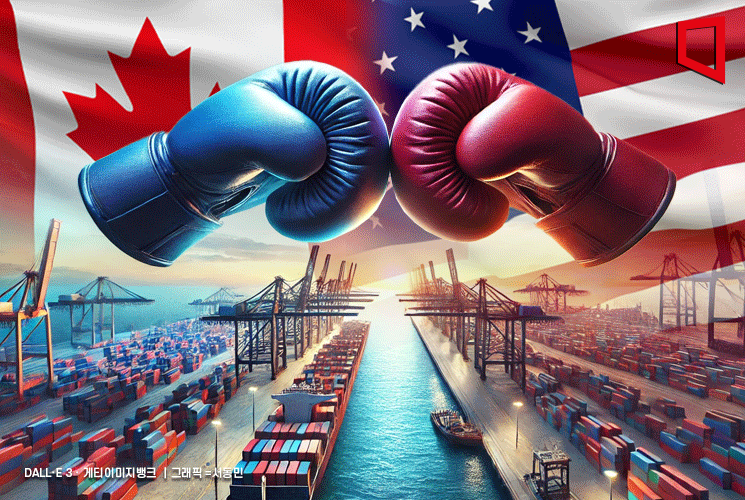
Canada, which had been considering countermeasures against U.S. President-elect Donald Trump's threat of a '25% tariff,' has now introduced 'retaliatory tariffs.' As the arrival of 'Tariff Man' Trump, who shows no distinction between enemies and allies, at the White House draws near, tensions over a trade war are also escalating.
On the 12th (local time), Canadian Prime Minister Justin Trudeau said in an interview with MSNBC regarding Trump’s tariff threat, "As before, we are prepared to respond with tariffs if necessary," adding, "Thickening the border with Canada, the largest export partner of about 35 U.S. states, could ultimately result in the loss of American citizens' jobs and livelihoods."
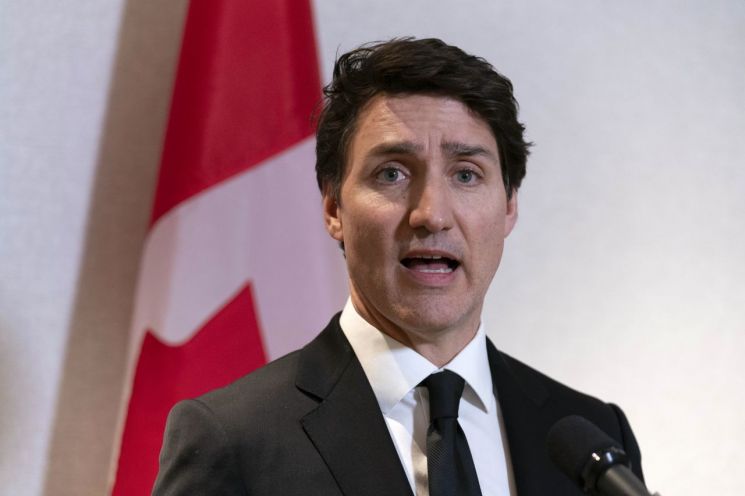 Canadian Prime Minister Justin Trudeau is holding a press conference on the 9th (local time) in Washington DC after meeting with Jay Timmons, President of the National Association of Manufacturers (NAM). Photo by AP Yonhap News
The retaliatory tariff card that Prime Minister Trudeau has now played is in response to the tariff threat Trump had previously announced targeting neighboring countries. Last November, Trump threatened to impose a 25% tariff on all products imported from Mexico and Canada until issues related to crime and drugs entering the U.S. through these countries were resolved.
In response, Trudeau countered, "Less than 1% of illegal immigrants and less than 1% of fentanyl entering the U.S. come from Canada. This is not our problem," and stated that Canada has invested billions of dollars in border security at Trump’s request.
Canada has already experienced a trade war with the Trump administration. In 2018, during Trump’s first term, when the U.S. imposed tariffs on Canadian steel and aluminum, Canada retaliated with tariffs on U.S. products such as home appliances, bourbon whiskey, and boats. Recently, reports have emerged that Canadian authorities are reviewing dozens of items for retaliatory tariffs, including steel, furniture, orange juice, and animal feed.
Bloomberg News pointed out that "Canada purchases more U.S. products than any other country," emphasizing that if the two countries engage in a trade war, both sides will inevitably suffer damage. Canada’s exports to the U.S. in 2023 amounted to 592.7 billion Canadian dollars (approximately 605 trillion Korean won), accounting for more than three-quarters of its total exports, showing a high dependence on the U.S. However, considering that from January to November last year, the per capita purchase of U.S. products by Canadians ($7,700) was seven times that of Americans’ per capita purchase of Canadian products ($1,100), Canada is also a trade partner that the U.S. cannot ignore.
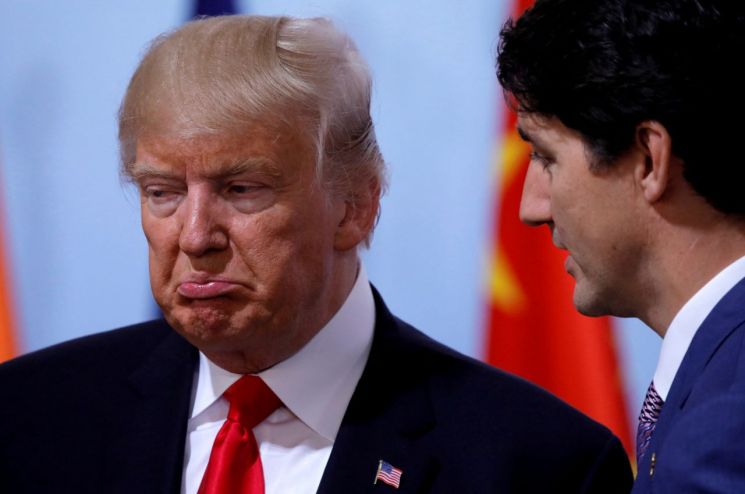 Donald Trump, President-elect of the United States, and Justin Trudeau, Prime Minister of Canada, are attending the G20 summit held in Hamburg, Germany, on July 8, 2017 (local time), and are engaged in conversation. Photo by Reuters-Yonhap News
With the imminent launch of Trump’s second term administration, which threatens tariffs indiscriminately against both foes and allies, global concerns over a trade war are rising. Especially, Steven Mnuchin, nominated as chairman of the White House Council of Economic Advisers (CEA) and selected as Trump’s 'economic strategist,' has proposed an average tariff rate of 20?50% as the 'optimal tariff' that can maximize U.S. welfare by improving trade terms, which is expected to cause significant damage worldwide.
In response, Kristalina Georgieva, Managing Director of the International Monetary Fund (IMF), said, "Just the threat of Trump’s tariffs is causing long-term borrowing costs (bond yields) worldwide to soar," and predicted that the resulting 'strong dollar' phenomenon will have the most severe impact on emerging markets, Asia, and countries and regions integrated into the global supply chain.
However, there is also a positive perspective. Jamie Dimon, chairman of JP Morgan and known as the 'Emperor of Wall Street,' explained, "Like all tools, misuse causes harm, but the tough measures Trump uses as a negotiator can sometimes be effective," adding that if tariffs are used correctly, they can help address issues such as unfair competition and national security.
© The Asia Business Daily(www.asiae.co.kr). All rights reserved.



















