Trump Warns Denmark with 'Tariff Bomb'
Novo Nordisk Relies on U.S. Market for 60% of Sales
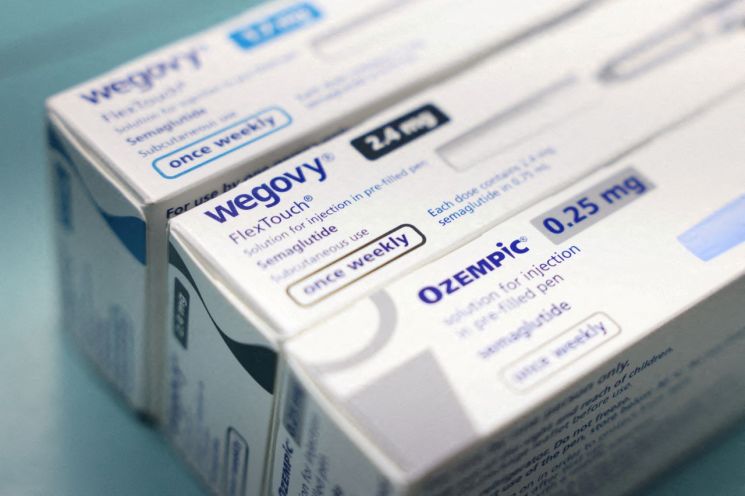 Images of Wegovy, a popular obesity treatment drug, and Ozempic, a diabetes treatment drug, both major products of Danish pharmaceutical company Novo Nordisk. Photo by Reuters and Yonhap News.
Donald Trump, the President-elect of the United States, has declared that he is willing to engage in a trade dispute with Denmark over Greenland, causing concerns for Novo Nordisk, Denmark's largest pharmaceutical company. Since Novo Nordisk relies on the North American market for more than 60% of its sales, a trade conflict between the U.S. and Denmark that leads to a sharp increase in export tariffs to the U.S. could significantly reduce its price competitiveness.
Trump pressures Denmark with 'tariff bomb'... Damage to Novo Nordisk inevitable
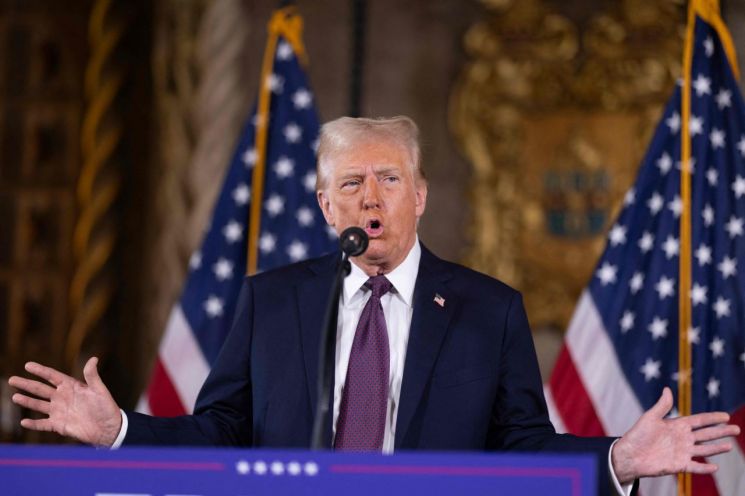 On the 7th (local time), Donald Trump, the President-elect of the United States, is giving a speech at a press conference held at his Mar-a-Lago residence in Florida. At the press conference, President-elect Trump strongly reiterated his intention to purchase Greenland. Photo by AFP and Yonhap News.
According to CNN on the 12th (local time), Novo Nordisk, Denmark's largest pharmaceutical company, is concerned about the possibility of tariff threats from Denmark following the Trump administration's rise to power. With North American sales accounting for more than 60% of total sales, if the Trump administration imposes heavy tariffs on goods imported from Denmark, sales disruptions are inevitable.
At a press conference held on the 7th at his Mar-a-Lago estate in Florida, the second since his election victory, Trump stated, "If the Greenland residents' independence or desire to join the United States is confirmed by vote, Denmark, which holds Greenland as an autonomous territory, will not be allowed to block it," adding, "I cannot rule out military options, and high tariffs may be imposed on Denmark."
Currently, Novo Nordisk exports its main products to the U.S., including Ozempic, a type 2 diabetes treatment, and Wegovy, a GLP-1 class diet treatment. Especially with Wegovy accounting for 74% of the global obesity treatment market, sales have surged, driving growth. Wegovy's sales in the North American market amount to $3.85 billion (approximately 5.4 trillion KRW), while global sales outside North America are $2.59 billion, showing a dominant sales volume in North America. If export tariffs to the U.S. rise, the economic impact would inevitably be significant.
The Danish economy, which heavily depends on Novo Nordisk, is also at risk of shaking. Novo Nordisk's market capitalization is about $300 billion, comparable to Denmark's total GDP of $360 billion last year. Additionally, Novo Nordisk employs about 21,000 employees within Denmark alone, making it a major corporation.
 The logo of Novo Nordisk headquarters located in Copenhagen, Denmark. Photo by Reuters and Yonhap News.
On the other hand, even if tariffs are newly imposed on Danish imports, the direct damage to the U.S. is expected to be relatively small. According to CNN, as of 2023, most of the goods the U.S. imports from Denmark are pharmaceuticals, totaling about $5.7 billion. This accounts for only about 1% of total U.S. imports.
In contrast, the value of Greenland is estimated to be much higher. David Barker, a real estate developer and former economic expert at the New York Federal Reserve Bank under the U.S. Federal Reserve (Fed), told The New York Times (NYT) in an interview, "Excluding military and security aspects and considering inflation, the Trump administration's proposed purchase price for Greenland is estimated to be at least $12.5 billion and up to $77 billion." Considering the rare earth elements and various natural resources believed to be buried in Greenland, valued at over $1 trillion, the price could rise further.
Some speculate that even if the Trump administration does not actually proceed with purchasing Greenland, it may still raise tariffs. The idea is that causing a trade dispute itself could lead to foreign capital investing in the U.S., which would benefit the American economy. Brett House, a professor at Columbia University, told CNN, "Trump is focusing on creating as much uncertainty as possible," explaining, "The more uncertain the external environment becomes, the more reasons companies have to invest in the U.S."
© The Asia Business Daily(www.asiae.co.kr). All rights reserved.



















