The Australian government is increasingly likely to record its third consecutive surplus budget due to a larger-than-expected increase in corporate tax revenue, which is expected to serve as a positive factor in evaluating the ruling Labor Party's economic management capabilities in the federal election anticipated in May.
On the 11th (local time), the Australian Financial Review (AFR), an Australian economic specialist publication, cited data from the Australian Federal Treasury, reporting that a robust labor market and a weaker Australian dollar caused corporate taxes to surge, reducing the government budget deficit from the initially expected AUD 28.5 billion to about half, AUD 14 billion, over the five months from July to November last year.
During this period, tax revenues from not only corporate taxes but also personal income tax, superannuation, and goods taxes all exceeded expectations. Personal income tax increased by AUD 7.6 billion thanks to a low unemployment rate of 3.9%, and tax revenue from superannuation rose by AUD 1.8 billion due to higher returns in the strong stock market.
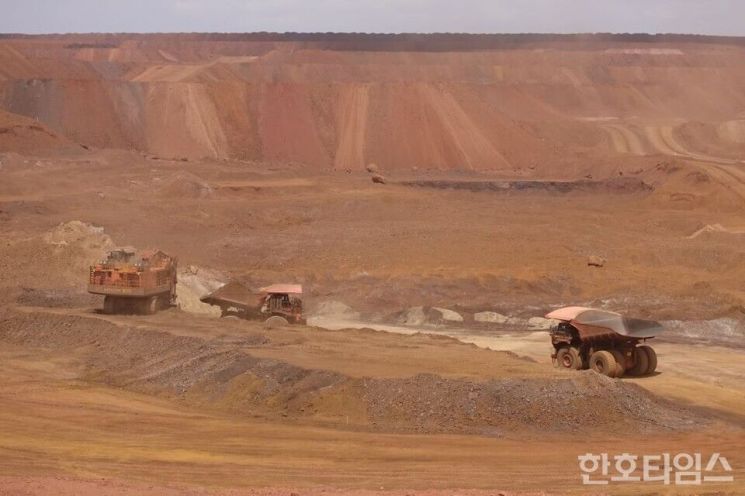
Recently, the decline in the Australian dollar's value has been shown to have a positive impact on national income and government tax revenue. Currently, with the USD exchange rate falling to 61 cents, the Australian dollar is 3.5% lower than Treasury forecasts, and it is analyzed that a 5% decline would improve the annual budget by about AUD 11 billion. This depreciation of the Australian dollar brings higher profits to Australian mining companies such as BHP and Rio Tinto, which supply major commodity exports priced in US dollars like iron ore, coal, and gas, thereby increasing income tax and Goods and Services Tax (GST) revenues.
The Australian federal budget typically runs a deficit in the initial months of the fiscal year but turns to surplus as tax revenues increase. Accordingly, if the current trend continues, the deficit for the 2025 fiscal year (July 2024 to June 2025) is expected to be much smaller than the Treasury's forecast of AUD 26.9 billion.
Peter Downs, director of Outlook Economics based in Canberra, said, "The budget is set to record another substantial surplus," adding, "If the current economic trends persist, there is a possibility of a surplus in 2025." He further noted, "If the unemployment rate remains in the 3% range, iron ore prices stay near USD 100 per ton, and the USD exchange rate hovers around 62 cents, a surplus will occur."
In the 2025 budget submitted by the Australian Labor Party government last May, there were criticisms due to an increase of AUD 26 billion in fiscal spending on elderly care, disability support, pharmaceuticals, and childcare. However, tax revenues increased more than expected due to an additional one million workers paying income tax and rising commodity export prices.
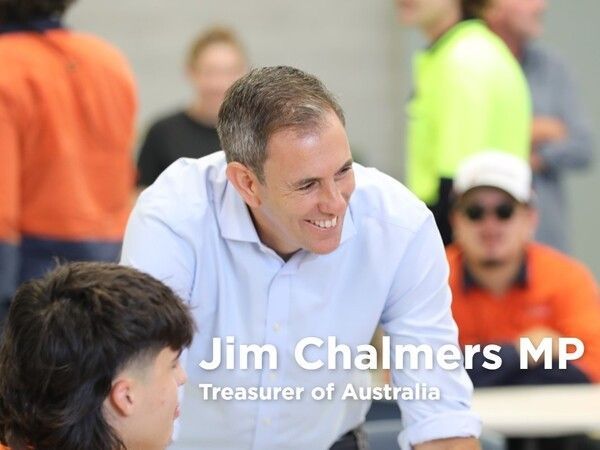 Jim Chalmers, Australian Federal Treasurer (Photo by Jim Chalmers official website https://jimchalmers.org)
Federal Treasurer Jim Chalmers commented on the strong budget outlook and the possibility of a third surplus, saying, "Responsible budgeting and economic management have been hallmarks of the Albanese Labor government's first term," and added, "We recorded consecutive surpluses in the first two years and nearly halved the inherited deficit in the third year." He emphasized, "The budget situation has improved by AUD 200 billion compared to the last election, and debt has decreased by AUD 177 billion, which will reduce future interest costs."
With the fiscal deficit shrinking and the likelihood of a third surplus budget increasing, the ruling Labor Party's fiscal credibility is expected to rise, becoming an advantageous factor in the federal election scheduled for April to May this year.
According to a public opinion poll conducted in December last year, the opposition Liberal-National Coalition's support stood at 51% compared to Labor's 49%. Consequently, there is analysis suggesting that Labor may fail to secure a majority to govern alone and might form a minority government in coalition with the Greens and independents.
Jung Dong-chul, Hanho Times Reporter
※This article was written using content provided by Hanho Times (www.hanhotimes.com).
© The Asia Business Daily(www.asiae.co.kr). All rights reserved.
!["I'd Rather Live as a Glamorous Fake Than as a Poor Real Me"...A Grotesque Success Story Shaking the Korean Psyche [Slate]](https://cwcontent.asiae.co.kr/asiaresize/183/2026021902243444107_1771435474.jpg)

















