Over 38 Track Facility Accidents Annually
Inspection Frequency and Precision Must Be Increased
On the 8th, a gondola operating at a resort in Muju, Jeonbuk, stopped, leaving over 300 passengers stranded in mid-air for about 30 minutes. On that day, Muju experienced heavy snowfall and a significant drop in temperature, forcing the passengers to endure the cold and fear. According to the Korea Meteorological Administration, as of 11 a.m. that day, the temperature at Seolcheonbong Peak in Deogyusan, Muju, was -16.1 degrees Celsius, with winds blowing at 4.3 meters per second.
Passenger A, who was on the gondola, said, "It suddenly stopped, and the wire rope swayed, causing the gondola to shake up and down about 4 to 5 meters," adding, "I was scared and so cold that my body was trembling." The resort activated an emergency engine to rescue all passengers, but during the process, a woman in her 50s lost consciousness and was transported to the hospital. The resort reported that the power outage was caused by an overload and is investigating the exact cause.
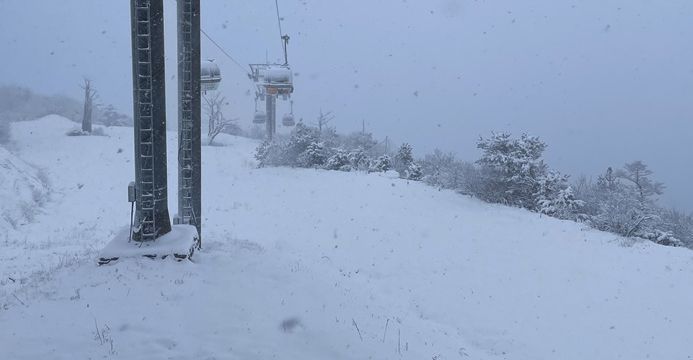
Incidents and accidents involving gondolas at ski resorts during winter are occurring repeatedly. Experts emphasize the need to increase the frequency of inspections and strengthen inspection procedures, as mechanical defects are a major factor.
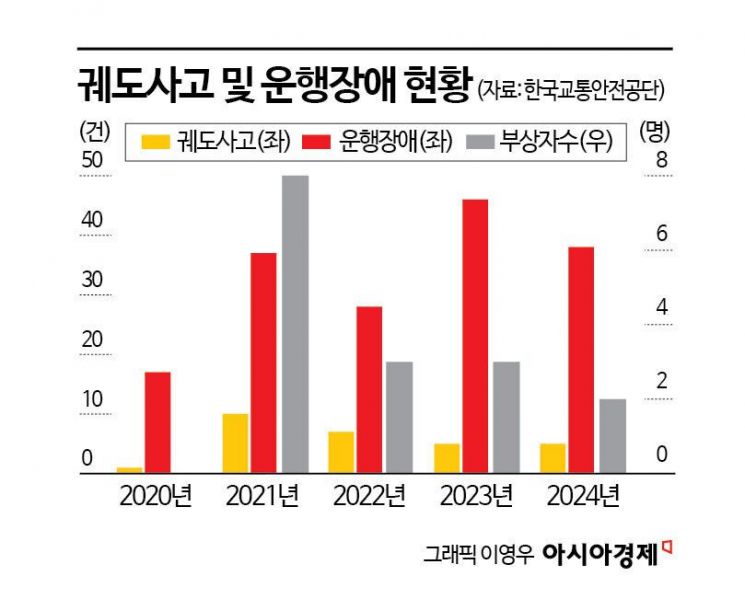
According to the Korea Transportation Safety Authority on the 13th, over the past five years (2020?2024), there have been more than 38 accidents annually involving track facilities (transportation devices using wire ropes such as cable cars, monorails, and lifts). Among these, operational failures accounted for an overwhelming 85.5%, while track-related accidents made up 14.5%. During the same period, a total of 16 people were injured in these accidents.
Since gondola accidents occur in mid-air, passenger rescue and accident recovery take considerable time. During this process, passengers are exposed to hypothermia for extended periods, and the risk of falling increases, which could potentially lead to casualties. The aging rate of track facilities installed nationwide is also relatively high. According to the Korea Transportation Safety Authority, as of the second half of 2023, there are 242 track facilities nationwide, of which 64.4% are aging machines over 10 years old.
Experts stress the need to increase the frequency and precision of mechanical inspections. According to related laws such as the Track Transportation Act, the regular inspections conducted by the Korea Transportation Safety Authority occur only once a year, and even then, they are not thorough inspections that completely dismantle all components such as cable cars and railways. Regular inspections conducted by track facility operators every three months are carried out internally, raising concerns that inspection procedures or items may be omitted.
Professor Gong Ha-seong of the Department of Fire and Disaster Prevention at Woosuk University stated, "Regular inspections conducted internally by operators are likely to have lower inspection precision and may omit inspection procedures, with no way to monitor this," emphasizing, "The frequency of inspections by the Korea Transportation Safety Authority, which are conducted once a year, should be increased and made more thorough to strengthen management measures." He added, "It is also necessary to educate passengers on emergency response procedures and establish related manuals to shorten rescue times."
© The Asia Business Daily(www.asiae.co.kr). All rights reserved.
![Clutching a Stolen Dior Bag, Saying "I Hate Being Poor but Real"... The Grotesque Con of a "Human Knockoff" [Slate]](https://cwcontent.asiae.co.kr/asiaresize/183/2026021902243444107_1771435474.jpg)

















