Most regions nationwide have been issued cold wave warnings, and the strongest cold wave of this winter is forecasted to continue through the weekend. As the severe cold persists, influenza (flu) is also rampant, raising alarms for health management.
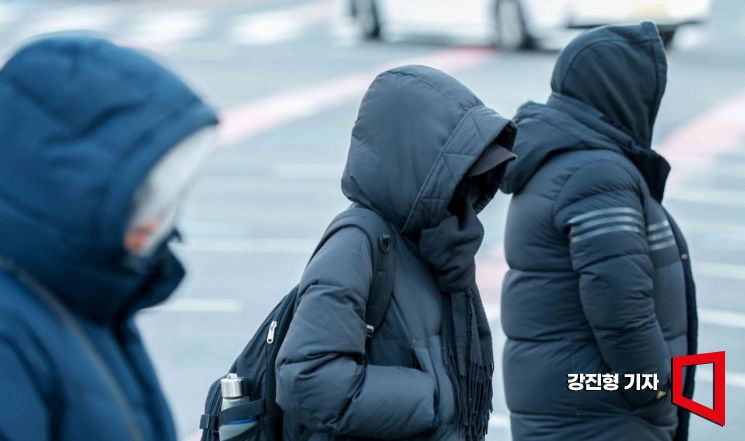 On the 9th, when a cold wave advisory was issued across the Seoul metropolitan area including Seoul, office workers wearing thick coats and winter gear are heading to work at the Sejongno intersection in Jongno-gu, Seoul. Photo by Kang Jin-hyeong
According to the Korea Meteorological Administration on the 10th, the cold wave peaked with morning temperatures dropping to around minus 20 degrees Celsius in Gangwon and northern Gyeonggi regions. Temperatures fell to minus 12.2 degrees in Seoul, minus 11.7 degrees in Incheon, and minus 12.9 degrees in Daejeon.
The daytime high temperatures are expected to range between minus 6 degrees and 4 degrees Celsius. Most areas will have daytime temperatures hovering around 0 degrees, with northeastern inland Gyeonggi and inland and mountainous areas of Gangwon expected to remain below minus 5 degrees even during the day. This severe cold is expected to continue through the weekend. Temperatures will remain below average until Saturday the 11th, then gradually rise from the 12th, recovering to levels similar to or slightly below the average.
Heavy snowfall centered around the Jeolla region and Chungnam is causing ongoing damage. As of 6 a.m. that day, there were no casualties from the cold wave and heavy snow, but 20 passenger ships on 14 routes, including Incheon to Baengnyeong and Mokpo to Hongdo, were suspended due to heavy snow. Access to 168 sections of eight national parks, including Mudeungsan, Jirisan, and Naejangsan, was also prohibited. Additionally, 21 local roads in Chungnam, Jeonbuk, Jeonnam, and Gyeongnam were closed.
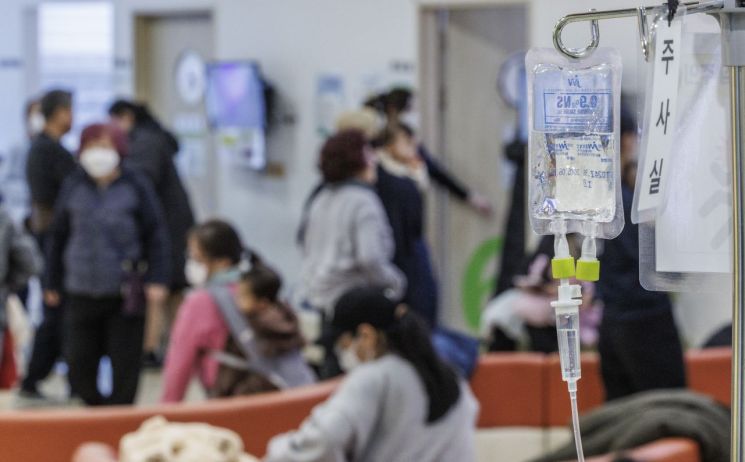
Meanwhile, health management is also under threat as flu patients have reached the highest levels since 2016. According to the Korea Disease Control and Prevention Agency, during the first week of this month (December 30, 2024 ? January 5, 2025), the number of suspected flu patients showing symptoms per 1,000 outpatients visiting sentinel surveillance medical institutions was 99.8. This is 1.4 times higher than last week's 73.9 and 13.7 times higher than four weeks ago.
The number of patients hospitalized due to the flu has also increased, rising from 795 at the beginning of last year (based on sentinel medical institutions) to 1,452 this year, an increase of 1.8 times. The government urged people to get vaccinated now, emphasizing that vaccination is definitely effective in preventing flu infections.
© The Asia Business Daily(www.asiae.co.kr). All rights reserved.


















