Australia's annual inflation rate has stabilized, raising expectations for an interest rate cut in February this year.
On the 8th (local time), the Australian daily Sydney Morning Herald cited data from the Australian Bureau of Statistics (ABS), reporting that Australia's annual inflation rate as of November last year rose slightly from 2.1% in the previous month to 2.3%.
The core inflation rate, excluding volatile items such as energy and food, fell from 3.5% in October last year to 3.2%.
The items that had the greatest impact on inflation in November were food (2.9%), alcoholic beverages and tobacco (6.7%), and leisure and culture (3.2%). Electricity bills and motor fuel each dropped by 21.5% and 10.2%, respectively.
Rising Expectations for Interest Rate Cut in February
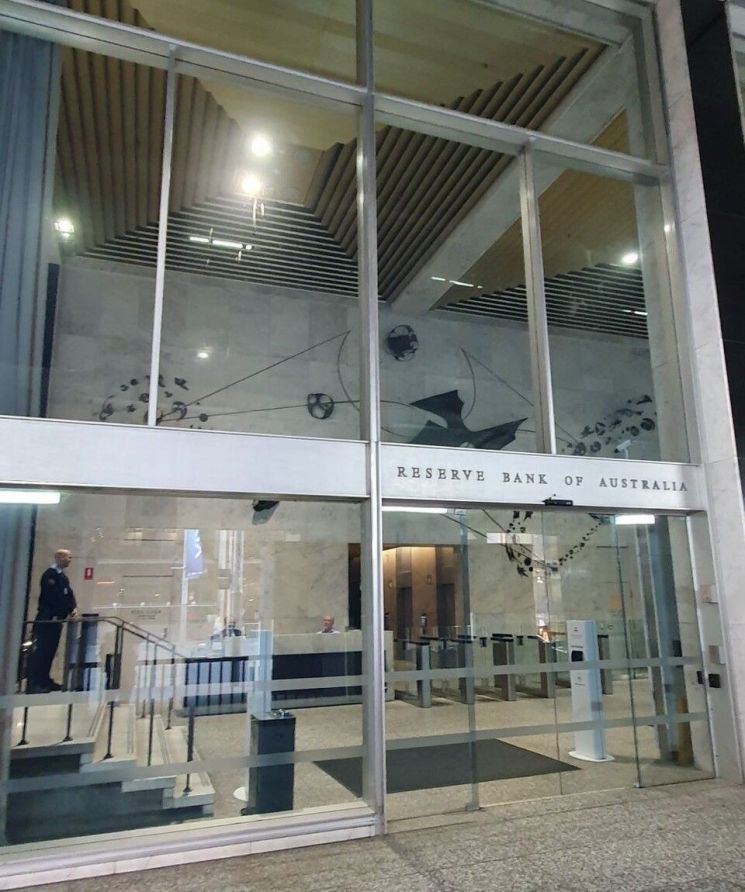
As the inflation rate approaches the RBA's target range of 2-3% annually, forecasts for an interest rate cut in February this year are gaining momentum.
According to Bloomberg data, before the release of this inflation report, the probability of an interest rate cut in February was projected at 67%, but it rose to 74% after the announcement.
With the federal election scheduled around May this year, the Australian Labor Party government is clearly welcoming the possibility of a rate cut before the election. Recent polls have shown that voters have expressed significant dissatisfaction with the government over high inflation issues.
Federal Treasurer Jim Chalmers said, "Inflation does not always ease in a straight line," adding, "This statistical data shows significant progress the government has made toward price stability."
He emphasized, "When we took office, inflation was above 6%, but now it has come down to the 2% range."
Opposition Criticizes Government for "Failing to Curb Inflation"
Angus Taylor, the Liberal Party's finance spokesperson, criticized, "With core inflation still above 3%, Treasurer Chalmers has completely failed to curb inflation," and added, "The government is trying to hide the price problem."
RBA Maintains Cautious Stance
RBA Governor Michelle Bullock kept the interest rate steady at 4.35% at the last meeting of 2024, stating, "Confidence in controlling inflation is growing." Nevertheless, the RBA maintains a cautious position, indicating it will not cut rates until the core inflation rate stabilizes within the target range of 2-3%. According to this standard, 3.2% still exceeds the RBA's target.
Strong Labor Market Suggests Current Rate May Be Maintained
The state of the labor market is also expected to influence interest rate decisions.
According to the ABS, the number of job advertisements in November last year was 344,000, an increase of 14,000 from August, marking the first rise since May 2022. The unemployment rate also fell to 3.9%, maintaining a robust labor market.
Harry Murphy-Cruise, an economist at Moody's Analytics, said, "The November inflation data is generally positive news for those waiting for a rate cut," but added, "However, due to the increase in job ads and low unemployment, the RBA will approach cautiously."
Meanwhile, the strong labor market, declining productivity, and increased government spending could raise inflation risks, leading to forecasts that the RBA is likely to maintain the current interest rate for the time being.
Catherine Birch, an economist at ANZ Bank, one of Australia's four major banks, said, "The 0.6% decrease in new housing construction costs in November will have a significant impact on core inflation in the fourth quarter," adding, "Service-driven price pressures are still ongoing."
While the November inflation statistics have raised expectations for a rate cut, as long as the correlation between the labor market and inflation persists, the RBA is unlikely to make changes easily.
Jung Dong-chul, Hanho Times Reporter
※This article was written using content provided by Hanho Times (www.hanhotimes.com).
© The Asia Business Daily(www.asiae.co.kr). All rights reserved.

















