No Export Restrictions for US Allies like Korea
Industry: "No Policy Impact on Korea but Supply Instability"
Expect Strengthened Stance with Trump Administration Launch
With news that the Biden administration in the United States is considering export control policies that limit the purchase quantities of artificial intelligence (AI) semiconductors to non-allied countries, domestic industry insiders expect this stance to be further strengthened following the Trump administration's tenure.
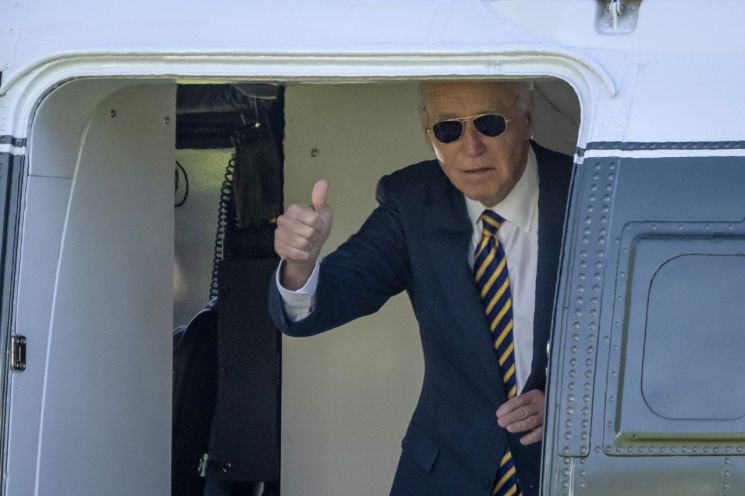
According to Bloomberg on the 8th (local time), the Biden administration is discussing plans to categorize countries into three tiers and restrict the export of AI chips used in data centers. The purpose is to ensure that AI development primarily occurs in countries friendly to the U.S.
The top tier consists of U.S. allies such as Japan, Korea, Taiwan, Germany, and the Netherlands. These countries will continue to be able to freely purchase American semiconductors as before. In contrast, hostile countries like China, Russia, and North Korea will be banned from importing U.S. semiconductors.
Most other countries will have a cap set on the total computing power they can import. Bloomberg cited sources saying that if these countries comply with security requirements and human rights standards requested by the U.S. government, they may be allowed to purchase semiconductor quantities exceeding the cap.
The export restriction policy is expected to utilize the "Verified End User" (VEU) regulation. VEU is a comprehensive licensing rule that permits exports only to companies pre-approved by the U.S. government for designated items.

The industry believes that Korea will likely not be affected by the policy, but it is already in a situation where AI semiconductor supply is not stable. Kim Dong-hwan, CEO of FortyTwoMaru, analyzed, "The reason for Korea's previous supply issues was not due to export restrictions but because there was no available quantity," adding, "The situation has changed, but it is not entirely good news."
An anonymous industry insider also explained, "The uncertainty in Korea's procurement is more influenced by NVIDIA's lead time and companies' sourcing capabilities rather than trade policy issues," and added, "Since chip export restrictions to U.S. adversary countries were already in place, the fundamental situation has not changed."
Such export restriction policies are expected to be further strengthened ahead of the Trump administration's inauguration. Another industry insider said, "Since the Trump administration pursues a protectionist trade stance, it might introduce semiconductor export policies stricter than the current administration's."
Our government holds the position that a more cautious approach is necessary following the Trump administration's inauguration. Song Sang-hoon, Director of the Information and Communication Policy Office at the Ministry of Science and ICT, stated, "With the prevalence of nationalism worldwide, we must carefully review matters related to the smooth supply of AI chips."
© The Asia Business Daily(www.asiae.co.kr). All rights reserved.


















