"Supply Chain Issues Have Greater Impact on Prices"
Skeptical of Trump Administration's Efficiency Department
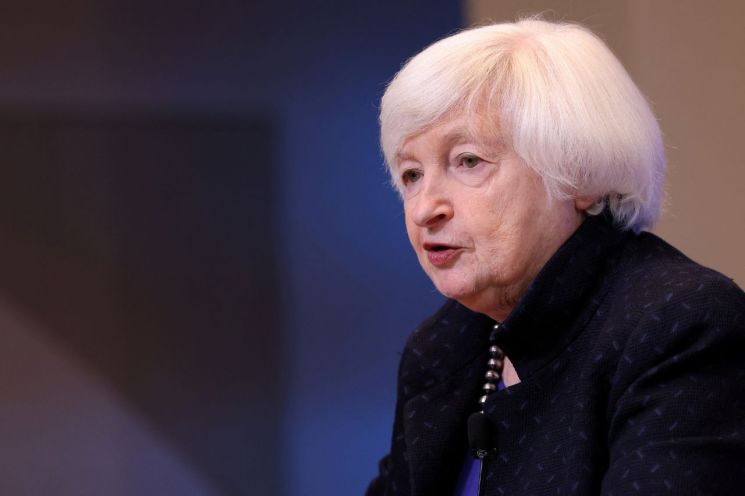
Janet Yellen, the outgoing U.S. Treasury Secretary, acknowledged that the stimulus spending during the COVID-19 pandemic may have had some impact on subsequent inflation issues.
According to U.S. CNBC on the 8th (local time), Secretary Yellen made these remarks in an interview with the network.
However, Secretary Yellen added that the inflation surge began primarily due to supply chain problems caused by significant disruptions in logistics during the COVID-19 pandemic and the resulting shortages of essential goods.
Yellen's comments partially acknowledge claims that the Biden administration's expanded stimulus spending during the pandemic contributed to the worsening inflation in the U.S., which was one of the factors behind Donald Trump's victory in the U.S. presidential election last November.
Yellen said she believes the $1.9 trillion COVID relief bill and other expenditures were necessary, and when asked if she regretted it, she avoided a direct answer. Instead, she emphasized the need to remember that when President Biden took office, the pandemic was out of control with thousands dying each month, and high unemployment was threatening people's livelihoods. She said, "It was really important to spend money to alleviate this pain."
Regarding criticism that the Biden administration caused a sharp increase in the U.S. federal government's fiscal deficit, Yellen argued that the administration prioritized deficit reduction. She said, "One factor in the increase in government debt is the rising cost of servicing unpaid debt due to interest rate hikes," adding, "However, discretionary spending remains historically low."
When asked about the Government Efficiency Department (DOGE), a government external advisory body that President-elect Trump announced he would establish after taking office, Yellen responded skeptically. The DOGE aims to cut massive government spending to improve efficiency. Yellen said, "It's hard to understand how the math related to that would apply." She also added, "Many people think defense spending should be increased, and so-called mandatory spending programs like Social Security, Medicaid, and Medicare are widely popular, making budget cuts difficult."
After President Biden blocked Nippon Steel's acquisition of US Steel, these companies strongly opposed the decision as politically motivated and filed a lawsuit on the 6th. The lawsuit targets President Biden, Secretary Yellen, CFIUS, and Attorney General Merrick Garland. It alleges that during the presidential election campaign, President Biden improperly interfered with the review process of the Committee on Foreign Investment in the United States (CFIUS), which is under the U.S. Treasury Department, to gain support from the steel union.
Yellen, who chairs CFIUS, declined to disclose specific details about the merger review but said, "CFIUS, as always, analyzed and prepared specific details about this situation and conveyed them to the President."
© The Asia Business Daily(www.asiae.co.kr). All rights reserved.

















