Issued to mobile phones in the name of individuals aged 14 and over
Used for identity verification at government offices, hospitals, etc.
The government will begin issuing mobile foreigner registration cards following the pilot issuance of mobile resident registration cards.
On the 9th, the government announced that mobile foreigner registration cards can be issued and used starting from the 10th through the Ministry of the Interior and Safety's 'Mobile ID' app. Mobile foreigner registration cards can be issued to all registered foreigners aged 14 and above who possess a smartphone registered in their name, and they hold the same legal effect as physical registration cards.
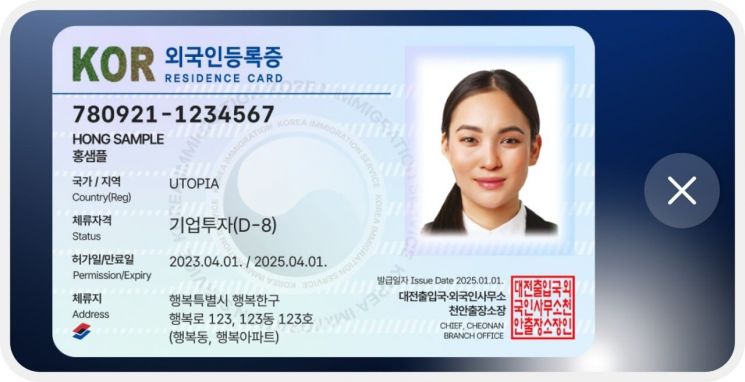 Mobile Foreigner Registration Card Detailed Screen. Provided by the Ministry of the Interior and Safety.
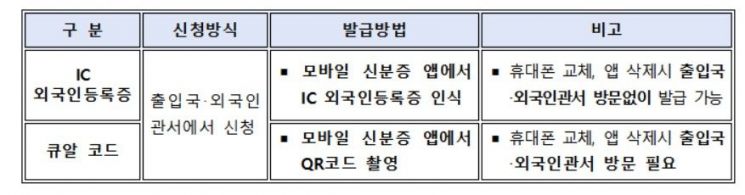
There are two methods for issuing mobile foreigner registration cards: the 'IC foreigner registration card method' and the 'QR code scanning method.' The IC method involves recognizing the IC foreigner registration card within the Mobile ID app to issue the mobile registration card. The IC foreigner registration card looks the same as the existing foreigner registration card but contains an embedded IC chip and can be applied for at immigration and foreigner-related offices. With this method, even if the phone is changed or the app is deleted, the mobile foreigner registration card can be reissued without visiting immigration or foreigner offices.
The QR code method involves scanning a QR code displayed at immigration or foreigner offices using the Mobile ID app to issue the card. However, if this method is used, changing the phone or deleting the app requires visiting immigration or foreigner offices to reissue the mobile foreigner registration card.
Like other mobile IDs, the mobile foreigner registration card applies blockchain and encryption technologies to prevent personal information leakage and unauthorized use, ensuring a high level of security. In case of a loss report, the card is locked to prevent theft and personal information leakage.
Additionally, the mobile foreigner registration card has a feature that shows only the information required by the other party. For example, when verifying age for purchasing tobacco or alcohol, the existing foreigner registration card exposed the registration number's latter digits and residence information, but the mobile registration card only displays the name and date of birth.
The mobile foreigner registration card can be used in places requiring identity verification such as government offices, convenience stores, and hospitals. The government plans to collaborate with related agencies and commercial banks to enable its use in major public services and mobile financial services of major banks.
© The Asia Business Daily(www.asiae.co.kr). All rights reserved.


















