Survey on Manufacturing Logistics Costs and Opinions... Burden Soars for Companies with High Maritime Transport Share
Delivery Delays and Profitability Deterioration Due to Soaring Logistics Costs, Cases of Export Abandonment and Reduction Occur
As maritime freight rates, which soared last year, are expected to continue this year, concerns are growing over securing export competitiveness for local companies.
Given the high proportion of exports in the regional economy, it appears necessary to strengthen logistics support policies to enhance export competitiveness.
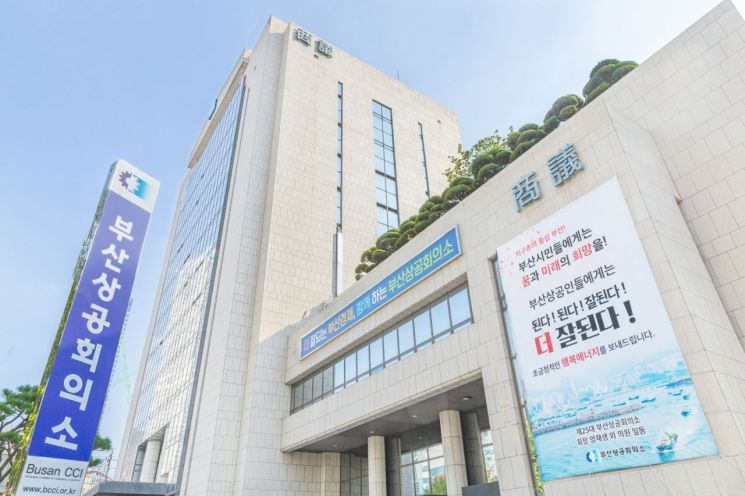
The Busan Chamber of Commerce and Industry (Chairman Yang Jae-saeng) announced the results of the "Survey on Logistics Costs and Opinions of Manufacturing Companies in Busan" on the 8th, which examined logistics costs and the impact of recent logistics-related issues among 275 major local manufacturing companies.
According to the survey, the average logistics cost as a percentage of sales for major manufacturing companies in Busan was 6.9%. This is similar to the national level, indicating that Busan is not particularly high. However, when looking at individual companies, 32.4% have logistics costs exceeding 10% of sales, suggesting that many companies are significantly affected by recent logistics cost issues such as the sharp rise in maritime freight rates.
When asked about the level of logistics cost burden compared to the end of 2023, before the surge in maritime freight rates, 35.3% responded that the burden had increased, which is much higher than the 5.5% who said it had decreased. Among export companies whose maritime transport accounts for more than 50% of total logistics costs, 48.2% reported an increased burden, indicating that the burden is accumulating mainly among export companies.
The burden structure of maritime freight rates was also unfavorable to local companies. The party responsible for maritime freight costs is determined by export-import contract terms, and 67.1% of export contracts and 54.7% of import contracts showed that local companies bear the maritime freight costs, meaning local companies inevitably shoulder the high freight rates.
Direct damage cases caused by increased logistics costs included delivery delays and fluctuations (29.5%) and giving up or reducing exports due to loss of profitability (28.0%), both showing high rates. This was followed by difficulties in procuring raw and subsidiary materials (21.8%), increased inventory management costs (9.5%), and difficulties in securing export shipping space (5.1%).
The most needed support measure to alleviate the burden of maritime freight rates was direct support for export logistics costs, accounting for 76.7%. This was followed by storage support such as logistics warehouses (10.9%), extension of terminal delivery dates (5.5%), and container procurement support (4.4%).
The outlook for maritime freight rates was predominantly that high levels would continue this year. The largest proportion (40.9%) anticipated normalization after 2026, indicating that many companies are concerned about prolonged high rates. This is because the Shanghai Containerized Freight Index (SCFI), a representative freight index, remains about 1000 points higher than in 2023, and geopolitical uncertainties such as the inauguration of the Trump administration's second term and the Russia-Ukraine war could trigger further freight rate increases.
A representative from the Busan Chamber of Commerce and Industry’s research team stated, “After a sharp rise, maritime freight rates have not stabilized, causing cumulative damage to export companies. Moreover, with the upcoming inauguration of the Trump administration’s second term, factors such as tariff increases are expanding uncertainties in the export environment. Considering the regional economy’s characteristic of having an overwhelmingly high proportion of small and medium-sized enterprises vulnerable to external variables, it is necessary to expand special policy support, including logistics cost assistance, to secure export competitiveness for local companies.”
© The Asia Business Daily(www.asiae.co.kr). All rights reserved.
!["The Woman Who Threw Herself into the Water Clutching a Stolen Dior Bag"...A Grotesque Success Story That Shakes the Korean Psyche [Slate]](https://cwcontent.asiae.co.kr/asiaresize/183/2026021902243444107_1771435474.jpg)
















