"Monitoring Continuously Since 2014"
Concerns have been raised about the "second COVID-19 crisis" caused by the "Human Metapneumovirus (HMPV)," but health authorities stated that "no unusual trends have been observed domestically."
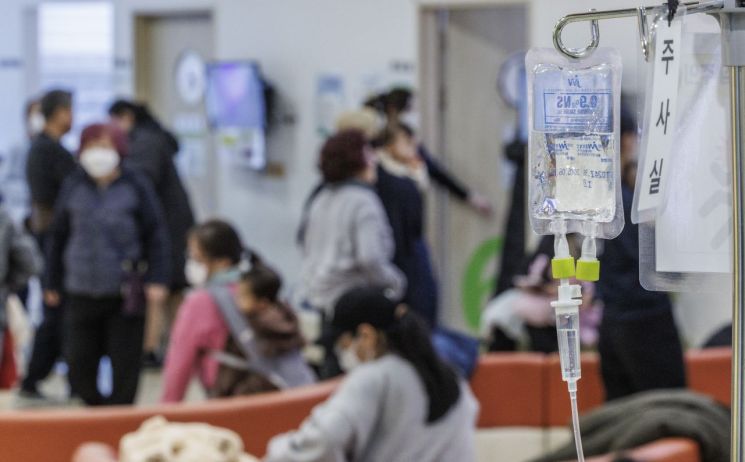 On the afternoon of the 6th, a pediatric specialty hospital in Seongbuk-gu, Seoul, was crowded with patients and guardians seeking medical consultations. Photo by Yonhap News
On the 8th, the Korea Disease Control and Prevention Agency (KDCA) explained, "HMPV is a common virus worldwide and has been continuously monitored as part of the Level 4 acute respiratory infection surveillance in South Korea since 2014."
They added, "Except during the COVID-19 pandemic period, it circulates annually at a certain level among children and the elderly, accounting for 2-3% of respiratory infections in children under five years old," and "no unusual trends such as a large-scale outbreak have been observed domestically."
HMPV infection is a type of acute respiratory infection. The virus spreads directly through respiratory droplets or indirectly through contact with secretions from infected individuals or contaminated objects.
Infection causes symptoms similar to the common cold, such as fever, cough, sputum, runny nose, and nasal congestion. In severe cases, it can cause lower respiratory tract infections like bronchiolitis and pneumonia. There are no preventive vaccines or antiviral drugs, so symptomatic treatment with antipyretics is used.
According to the KDCA's surveillance of acute respiratory virus pathogens, the detection rate of HMPV was 5.3% as of the last week of last year, an increase of 2.1 percentage points over four weeks. The overall rate for last year was 4.5%, the same as the previous year.
Among acute respiratory viruses as of the last week, influenza virus accounted for half, followed by respiratory syncytial virus (RSV, 11.2%), rhinovirus (7.4%), and COVID-19 virus (5.5%), in that order.
HMPV has recently spread in countries such as China and India, raising concerns in some quarters about a "second COVID-19 crisis." However, according to the KDCA, Chinese authorities have also forecast a lower-than-usual level of outbreak this year.
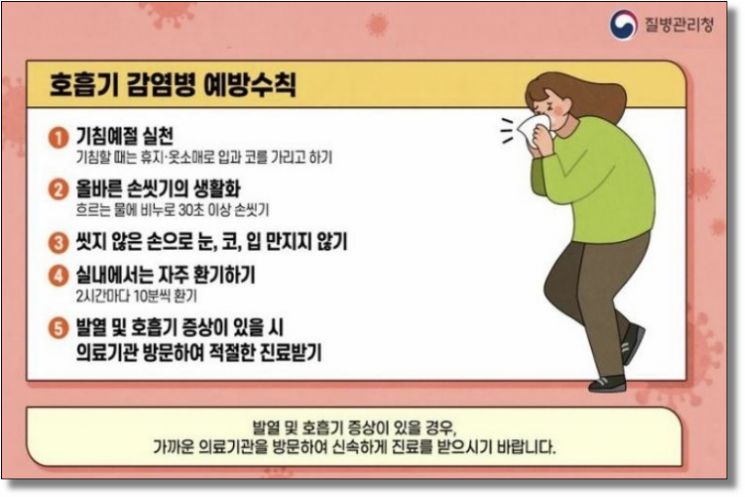
Ji Young-mi, head of the KDCA, stated, "With the recent significant influenza outbreak and the increase in RSV infections, HMPV infections are also rising, requiring continuous caution." She urged people to wash hands before and after going out, practice proper cough etiquette, wear masks when respiratory symptoms occur, and ventilate indoor spaces for more than 10 minutes every two hours.
© The Asia Business Daily(www.asiae.co.kr). All rights reserved.


















